


iPhones are notorious for collecting a lot of “junk files” that clutter the device and make it annoying to maintain, along with the added bonus of using up storage space that you could be using for apps or data you actually need.
Unfortunately, it can be tedious and confusing to hunt down all your junk files manually, since they are scattered across apps and directories on your device. To help you, we created an in-depth guide summarizing different types of “junk files” that commonly appear on an iPhone and how to systematically eliminate them.
Identify Junk Files on Your iPhone
What exactly are junk files on iPhone? The items listed below are normally considered “junk.” Take a look at each item and its description to decide if it’s something you can remove.
| Photos and videos | Your Photo Library is a prime suspect for clutter build-up, such as similar and duplicate photos, old or unwanted images, and large video files you don’t need. You can use the Photos app’s limited cleaning features or use a third-party tool like Clever Cleaner ✅ to speed things up. |
| Unused apps | Apps from Apple or third parties that you don’t need or have stopped using take up unnecessary space. Either delete them completely or use the Offloading feature to keep your data while removing the app itself. |
| App cache | Apps like social networks and media streaming services store temporary files to load quicker and retrieve items faster. You can clear your caches by either restarting your iPhone or manually through each app’s settings. |
| In-app downloads | Many streaming apps allow you to download content for offline consumption (sometimes automatically). You can usually delete them from the app’s download page. |
| Browser cache | Similar to app cache, web browsers like Safari, Chrome, and Firefox store caches for the websites you visit. You can easily access Safari’s cache clearing through Settings, or use each browser’s built-in options like Chrome’s Clear Browsing Data feature. |
| Messages and attachments | Old text messages and large message attachments you don’t need can needlessly consume space. Review and remove these through the Messages app. You can also set automatic message deletion timeframes. |
| Downloaded files | Files you’ve downloaded from different sources are sometimes consolidated in the Files app, and you can use that (or any preferred file manager) to delete unwanted files on your iPhone. |
| Unwanted and duplicate contacts | Old, unwanted, and duplicate contacts quietly build up and get carried over to each new device (if iCloud is enabled). Fortunately, iOS has several built-in cleaning tools for cleaning your address book. |
To check your storage settings and see what consumes the most space, open the Settings app, choose General, and select iPhone Storage.
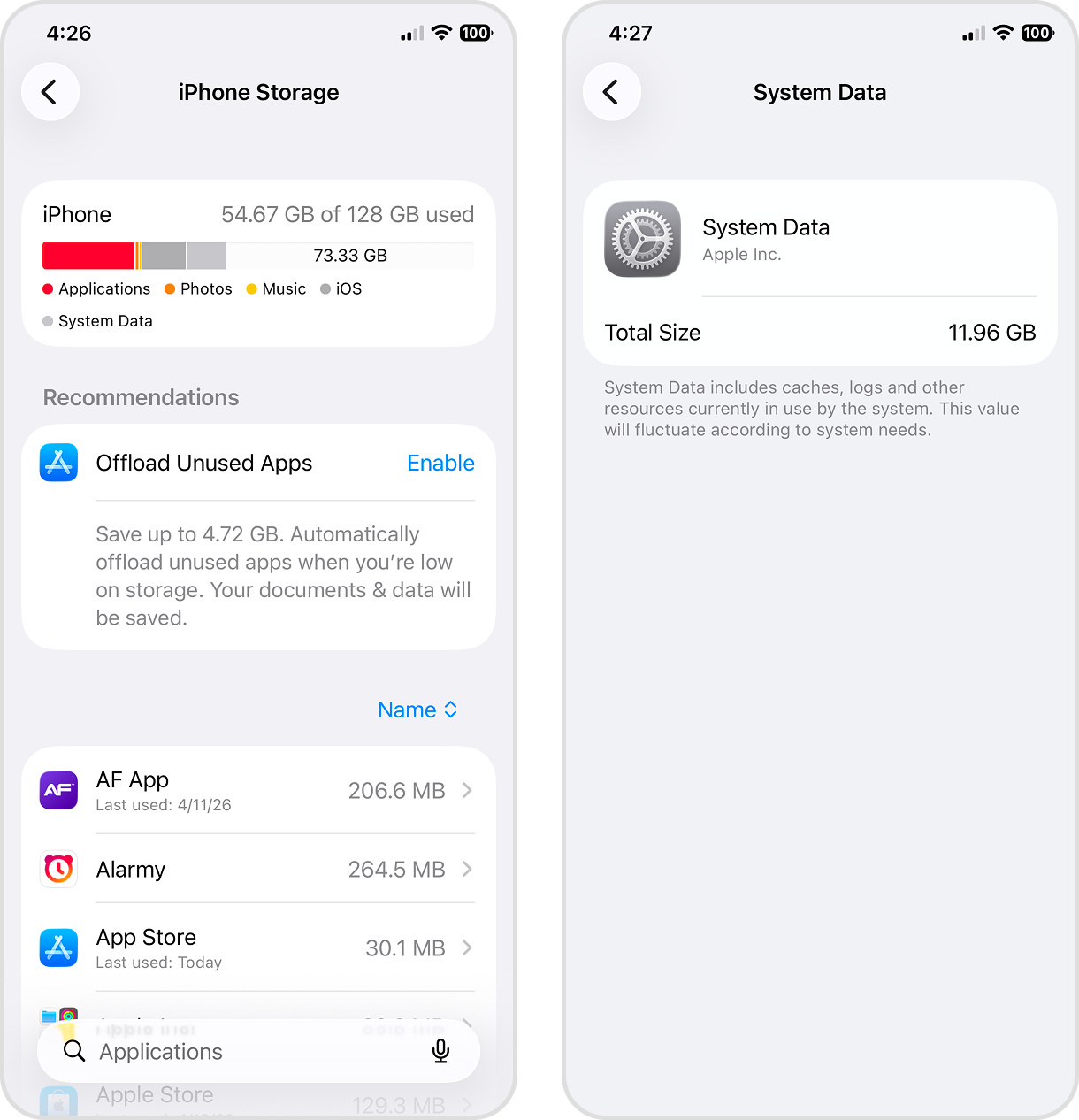
View the graph at the top for a summary of used and available storage, the list of apps sorted by size, and the exact amount of System Data usage at the bottom. This type of data can have hidden junk files and is usually managed by iOS automatically, but there are ways to manually clear system data if it gets too large.
Methods to Clean Junk Files Manually
Once you take a peek at your device storage, it’s time to clear the junk from your iPhone. If you’re ready to make room for the items you really need, here are several methods for de-junking your device.
Method 1: Restart Your iPhone
When you restart your iPhone, this removes the temporary files, or caches, that consume system storage. While the system data refills as caches are created and resources are needed, and your system normally takes care of temporary files itself, you can manually free up a bit of space temporarily.
Restart your iPhone using the steps below depending on your device model:
- iPhone X, 11, and later: Press and hold the side button (right) and either volume button (left).
- iPhone 6, 7, 8, or SE (2nd or 3rd generation): Press and hold the side button (right).
- iPhone 5 and earlier or SE (1st generation): Press and hold the top button.
When you see the restart screen, drag the power-off slider. Your iPhone should turn off after a few seconds. Alternatively, if your buttons aren’t working, you can access the Shut Down option from the General page in the Settings app:
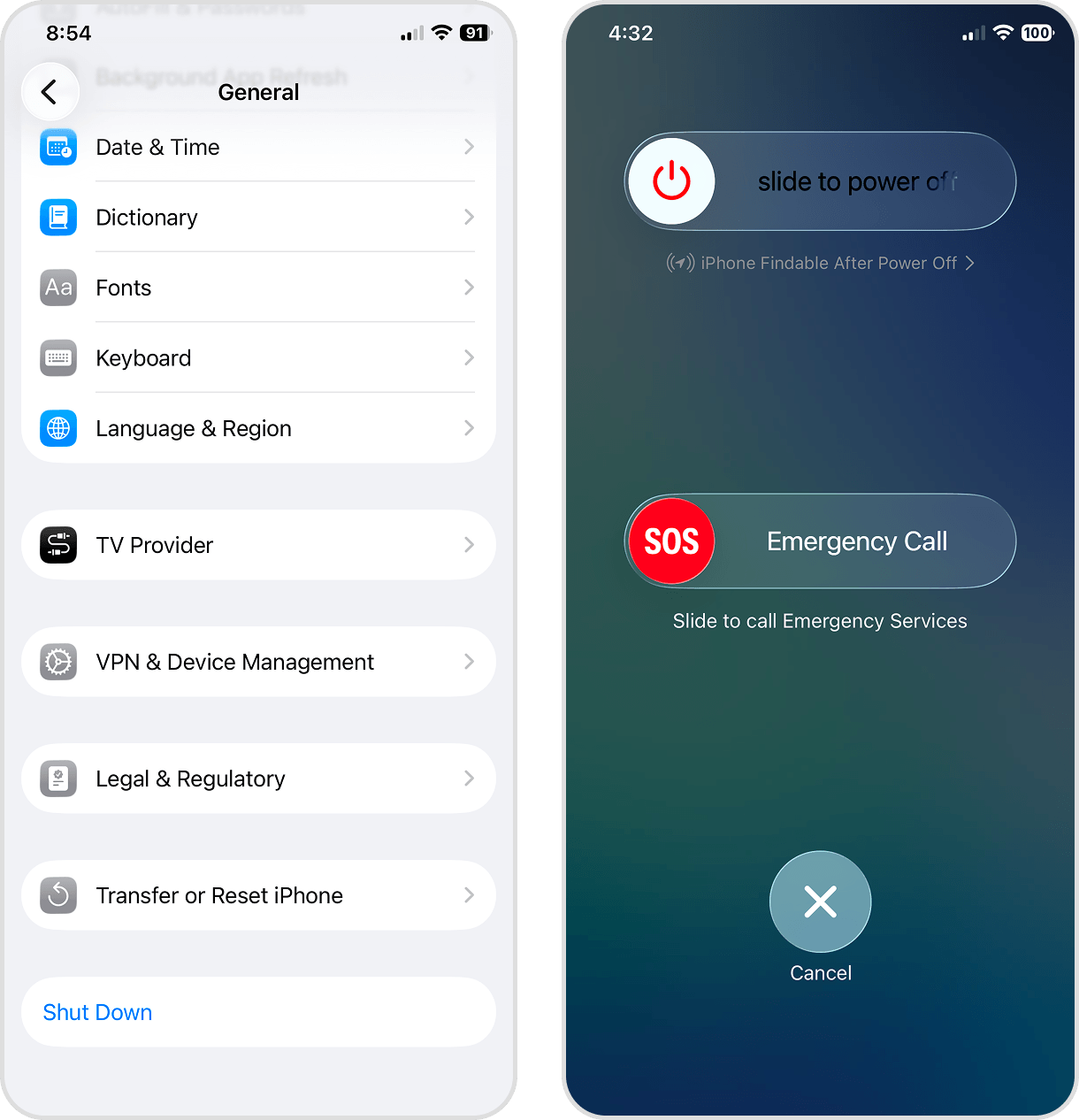
To turn your device back on, press and hold the side or top button until you see the Apple logo.
Method 2: Manage Your Photo Albums
One of the most effective ways to clean junk files from iPhone is by managing your photo library. Photos and videos often take up the largest portion of storage space, especially with today’s high-resolution cameras. Let’s explore two methods that can help you clean up your photo collection efficiently.
Use the Features of the Photos App
The first option is to clean your photos manually using the Photos app. If you don’t have that many photos and videos, or you know exactly where to look, you can simply delete them from your library individually using the Select and Delete (🗑️) buttons.
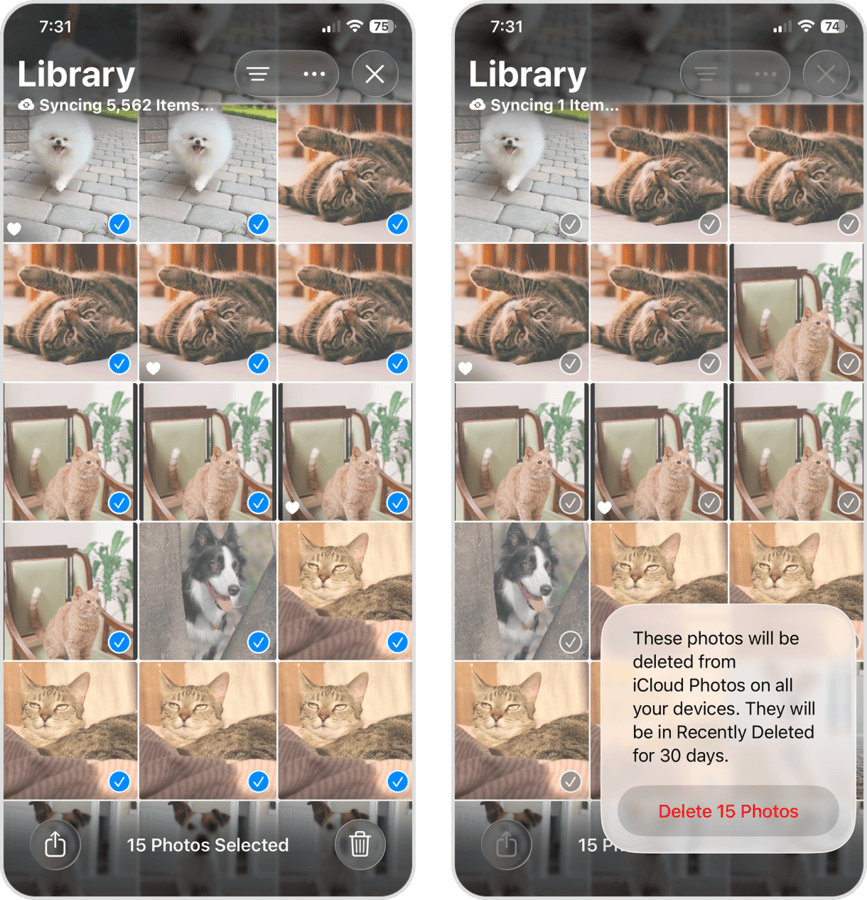
But if you have a lot of junk files to go through, the Photos app also provides auto-generated and user-created Collections that you can use to clean up your library more efficiently. Here’s a quick overview of useful Collections:
- Media types: Your library is automatically organized into “type” categories, such as Videos, Selfies, Live Photos, Portraits, Bursts, Screenshots, and more. These collections are useful for tracking down unwanted photos and videos based on their context; for example, you might find several similar-looking selfies or accidental Burst photos.
- Utilities: iOS also creates administrative categories that help you manage your media, like Favorites, Duplicates, Receipts, Recently Saved, etc. For example, the Duplicates album displays all instances of exact media copies side by side so you can easily merge or delete them.
- Albums: Aside from albums you created, the Photos app generates its own albums and automatically populates them based on their contents. For example, People & Pets saves and clusters together photos and videos of known subjects. Do you have dozens of similar-looking photos of your pet cat (surely you don’t need all of them)? You’ll find them here.
Use Clever Cleaner: A Powerful AI-Driven Junk Photo Remover
If you don’t want to clear junk from your iPhone library manually, a more efficient option is to use third-party cleaning apps. You can download them directly from the app store, and they’re designed specifically to make cleaning up junk files on your device a lot more convenient.
For this guide, we’ll be using an app called Clever Cleaner. It works with almost every type of media you normally deal with in the Photos app, including photos, videos, screenshots, Live Photos, duplicates, and near-duplicates. So, depending on what you consider junk in your library, you can deal with these categories directly in the app. Our demonstration focuses on Similars, which automatically rounds up duplicate and similar photos on your device (unlike the native Photos app, which only detects exact copies) to effectively remove them.
- Download Clever Cleaner from the App Store.
- Grant Full Access to your Photo Library–don’t worry, it’s safe. Then, wait for the app to scan your media library (the process is pretty quick, although the exact time depends on how many items you have).
- On the main screen, tap Similars in the middle of the page. Then, select a cluster of similar photos you want to review.
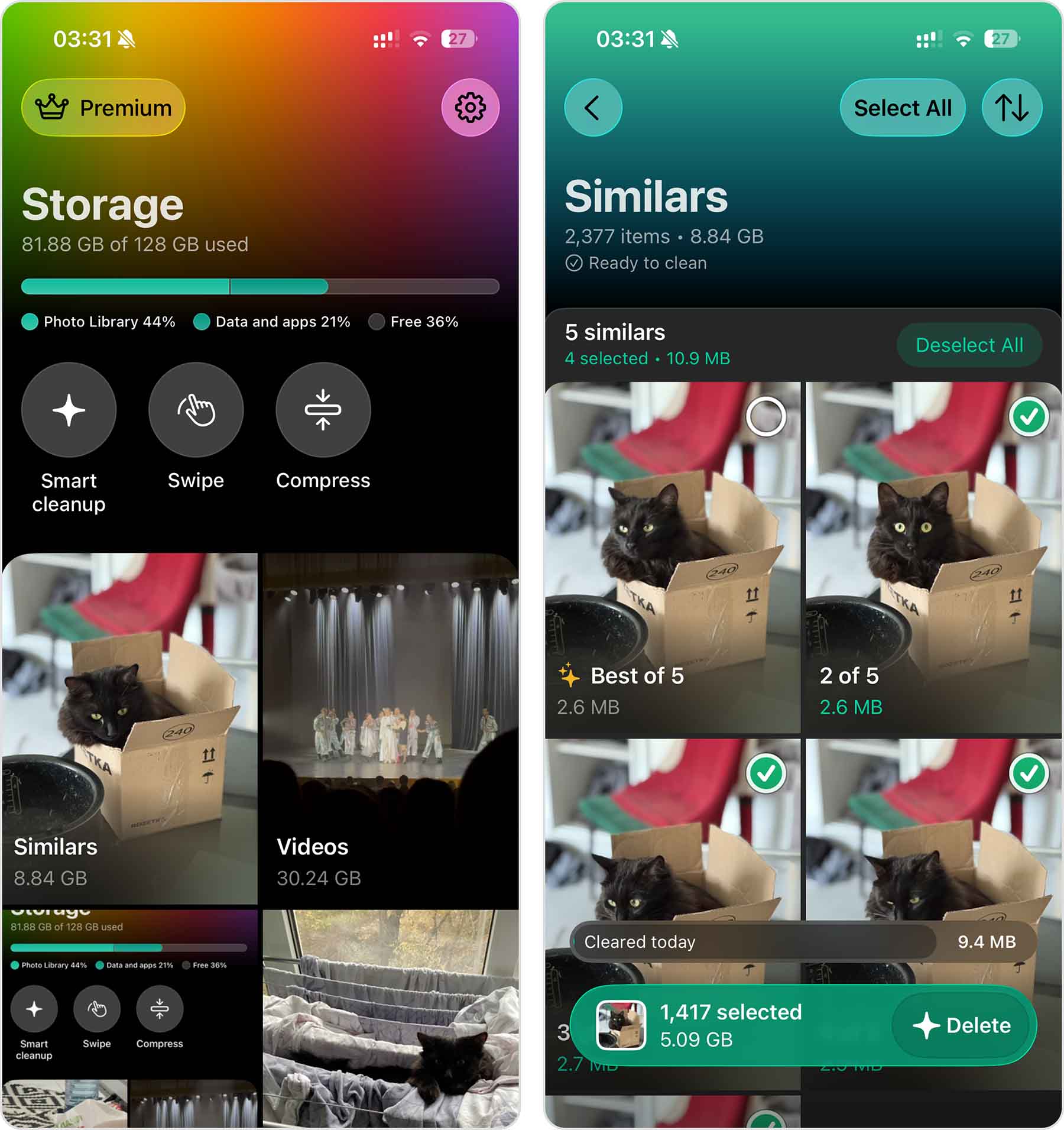
- Each set of similar photos will be displayed on-screen. Clever Cleaner automatically chooses the “best” photo in each set, then selects the rest for deletion. You can also make the selection manually.
- Once you’ve reviewed the set, tap the X icon in the top left corner to go back and check the other groups of similar and duplicate photos.
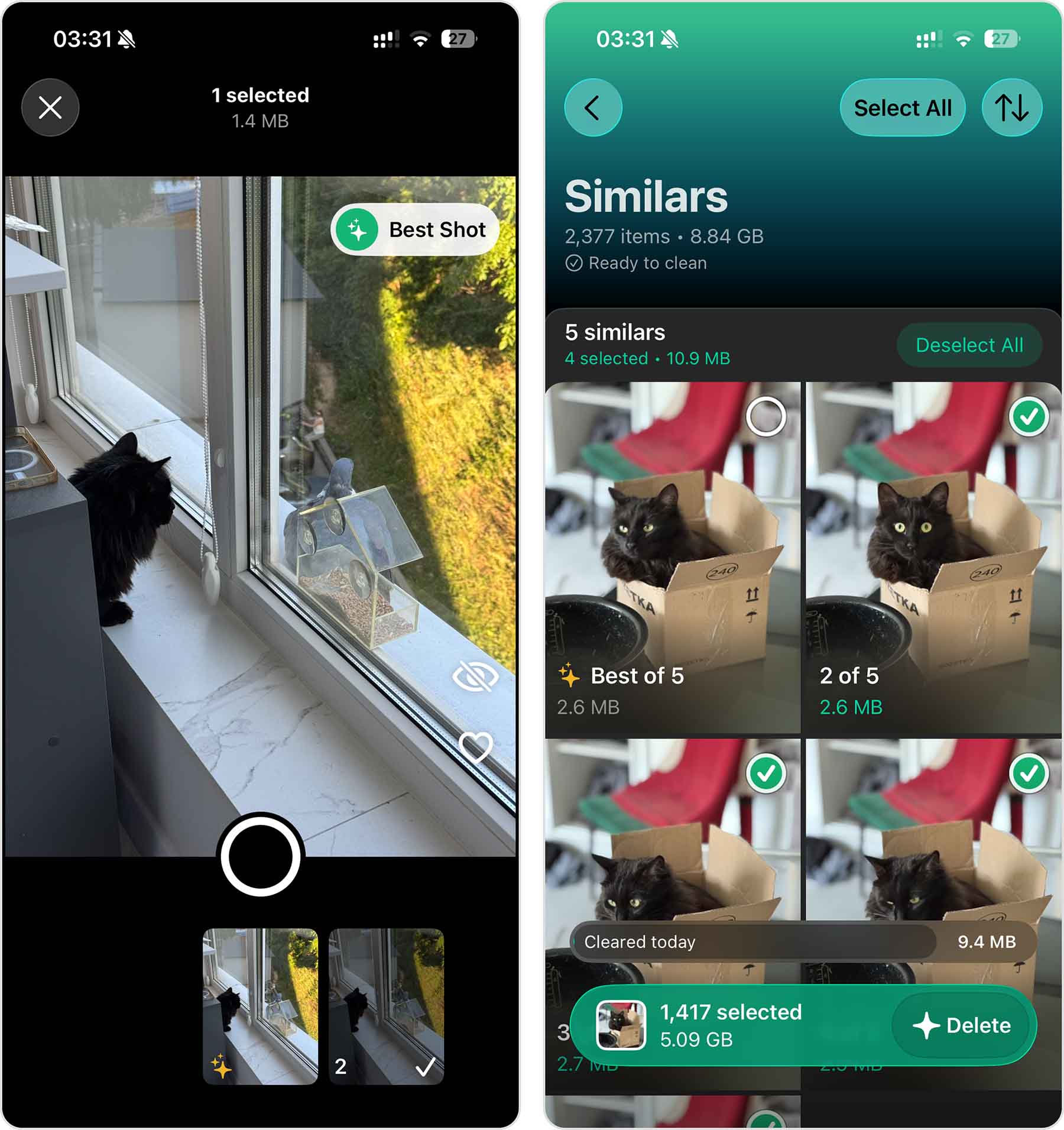
- You can repeat steps 4-5 for each set of photos Clever Cleaner detected. To review all deleted photos, tap Delete at the bottom of the page, where you can also see how many photos you selected and how much space they take up.
- Use the red Delete button at the bottom of the page.
- Finally, tap Delete in the pop-up dialog to confirm the action.
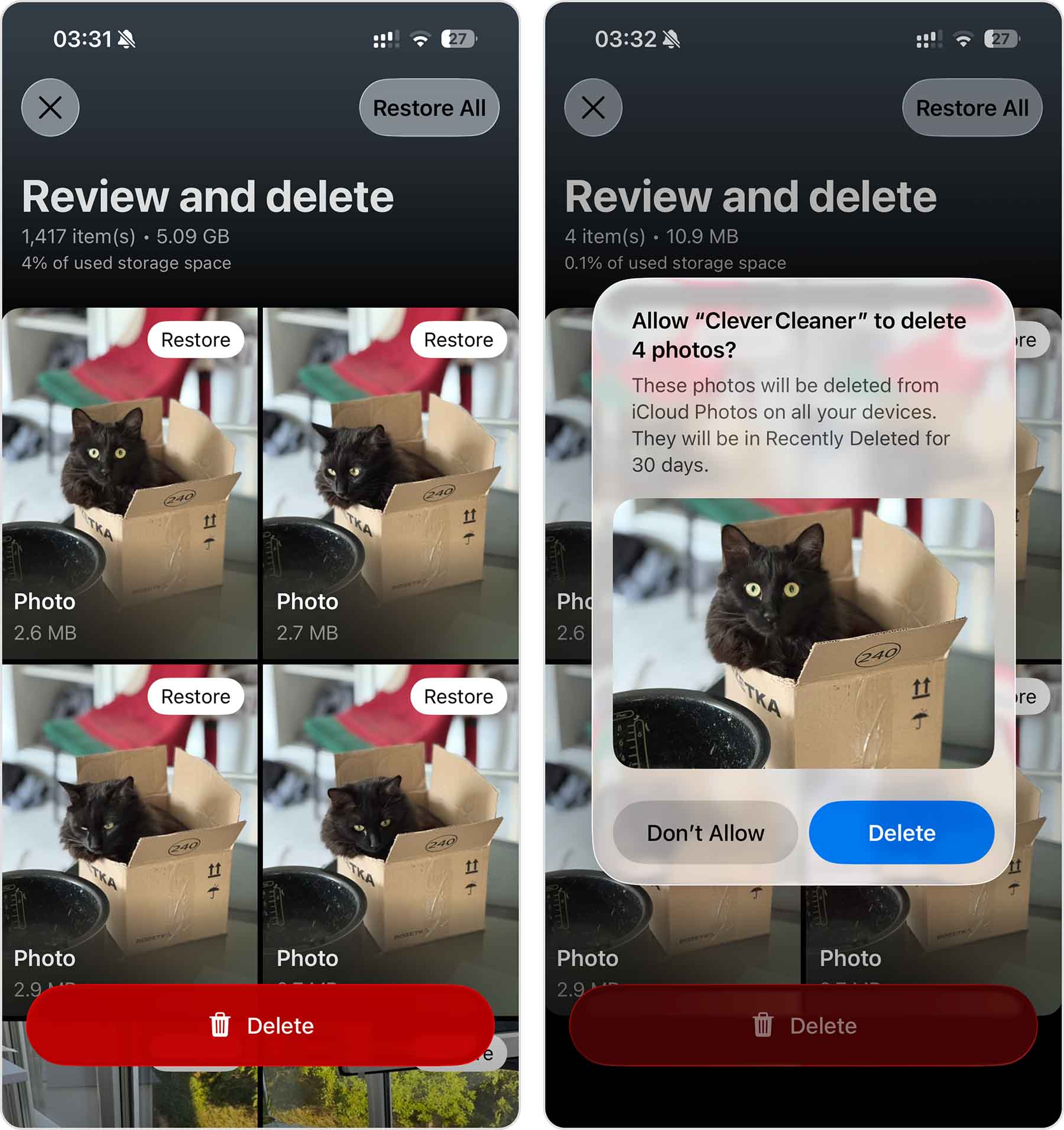
- You can automate the process further by tapping Select All and then Delete in step 3, instead of reviewing each cluster separately.
Alternatively, if you want to catch even more junk in your iPhone library, you can use Smart Cleanup from the app’s main screen. This feature handles everything that doesn’t require manual review in one go: it removes duplicate and similar photos, compresses screenshots, and compresses Live Photos. Or, if you want more precision, use the Swipe feature to review photos and videos one by one and utilize swipe gestures to take action.
Method 3: Remove Unnecessary Apps
Have you ever downloaded a game you only played once or an app you decided you didn’t like? That’s a perfect recipe for a crowded home screen and App Library, as well as gigabytes of wasted storage space. We’ll show you a simple way to eliminate unwanted apps without manually hunting them down.
- Open the Settings app.
- Tap General.
- In the General menu, select iPhone Storage.
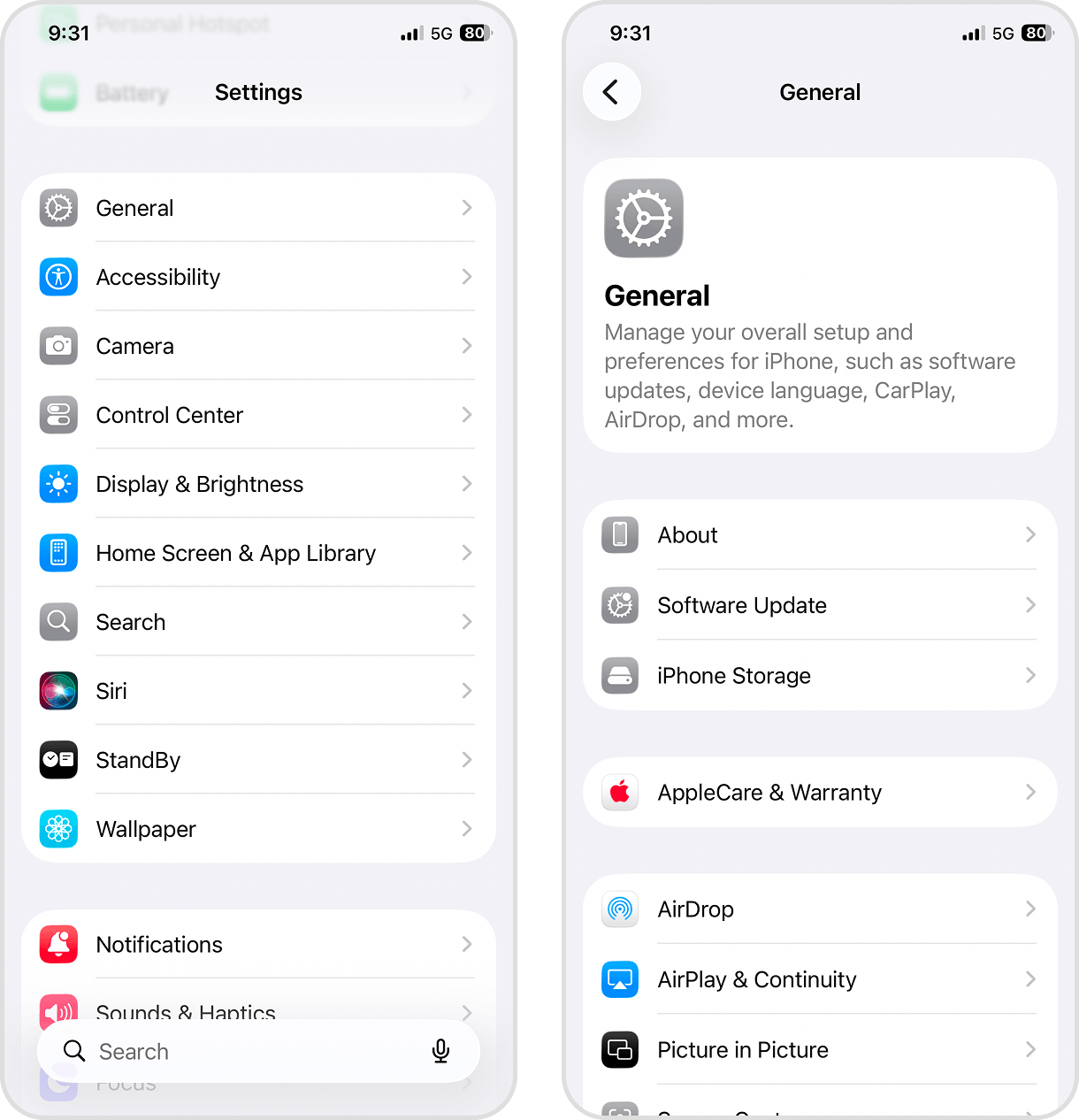
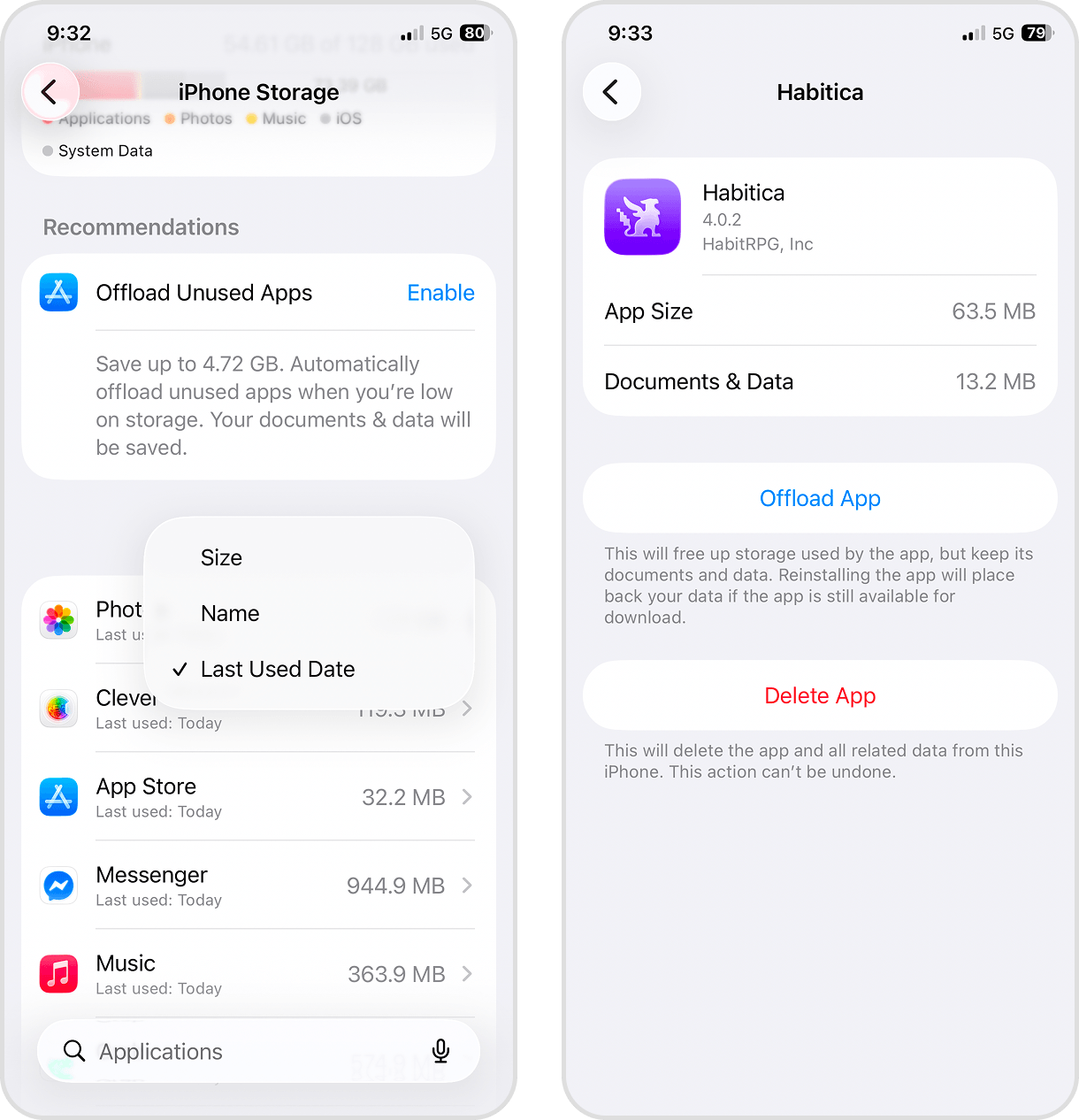
- Scroll down to the list of apps. You can sort the list by Last Used Date to easily find apps you haven’t used in a while, or sort it by Size to prioritize removing large apps to free up iPhone storage space. Tap an app to view its storage page.
- Tap the Delete App button and confirm in the dialog window that appears.
Method 4: Clear App Cache
App caches are useful for speeding up app performance, but you can end up with gigabytes worth of temporary files cluttering up your device that you may never use again. Almost all types of apps generate app cache data, but the most notorious examples are messaging apps that pre-emptively save attachment thumbnails, social media apps that store video fragments for seamless scrolling, and multimedia apps that temporarily save songs in the playlist you’re streaming.
Fortunately, many apps have built-in tools that allow you to clear their cache data (buried somewhere in their Settings page). To demonstrate, here’s how to clear the cache in the Telegram app:
- Open the Telegram app (or whatever app whose cache you want to clear).
- Tap Settings at the bottom of the screen.
- In the Settings page, scroll down to the 5th section and select Data and Storage.
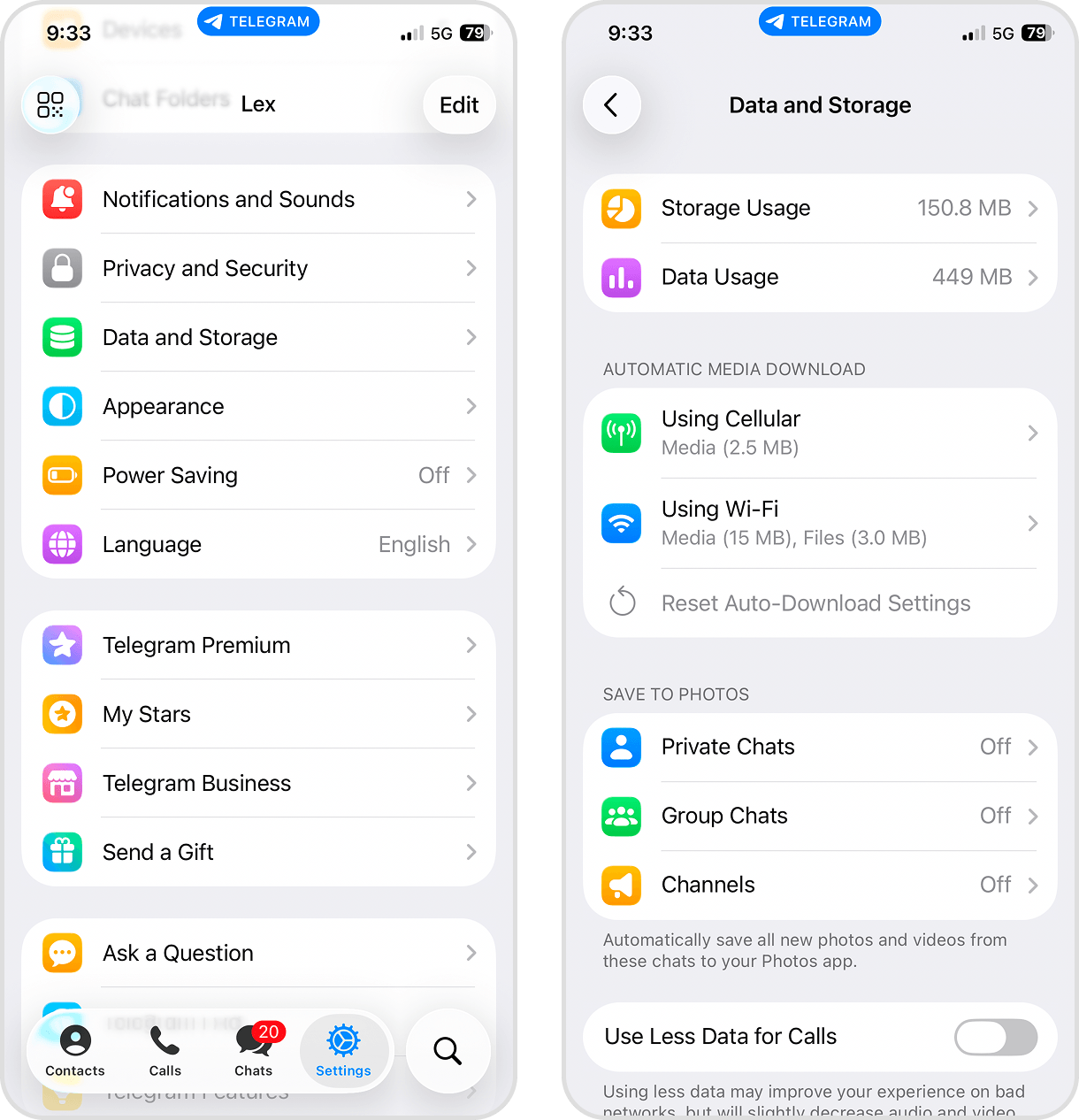
- Tap Storage Usage.
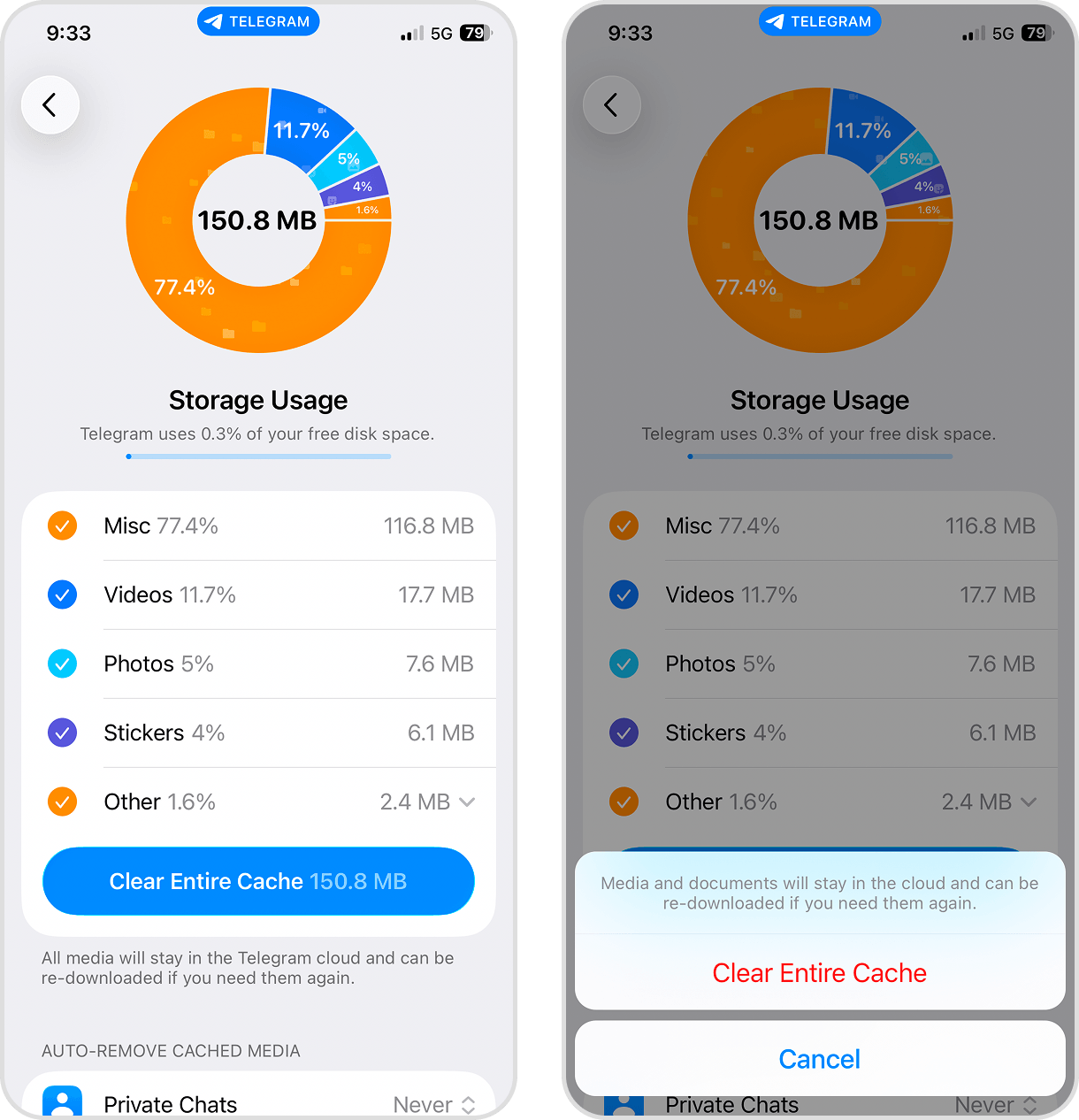
- Finally, under the Storage Usage pie, tap the Clear Entire Cache button.
Method 5: Clean Up Old Offline Content
Many streaming apps allow you to download media for offline viewing or listening. For example, Netflix and YouTube let you download movies and videos, while Spotify lets you download songs. If you have offline content you don’t plan on consuming soon, it’s better to delete it–you can always stream or download it again later.
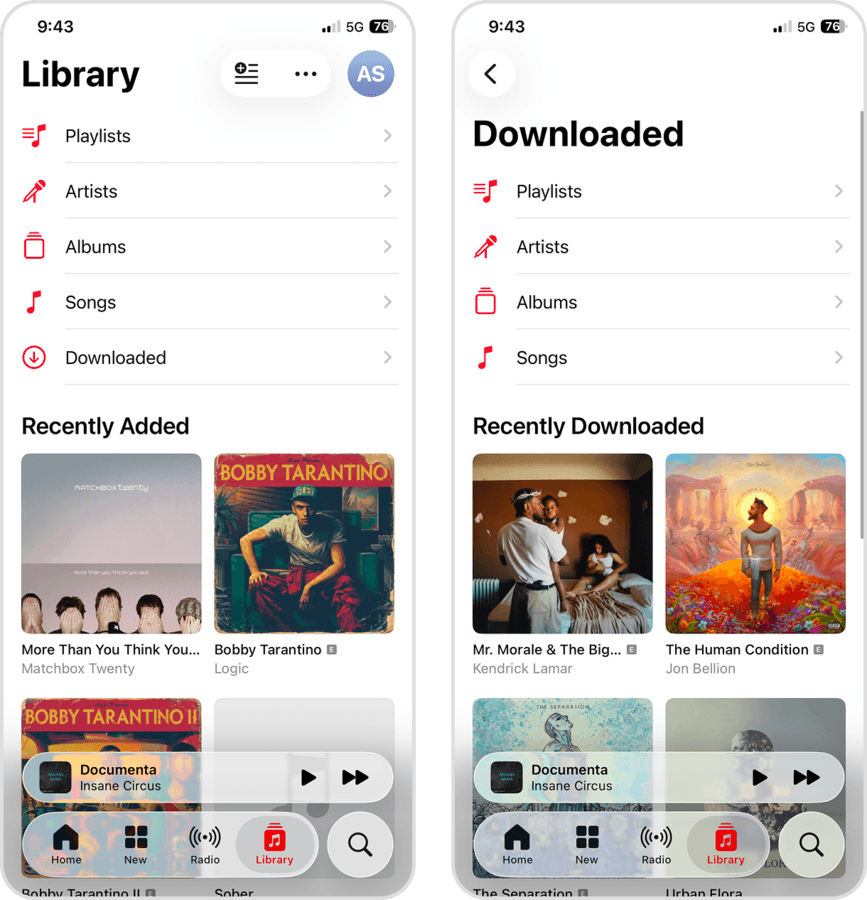
To demonstrate, here’s how to delete downloaded songs from Apple’s own Music app:
- Open the Music app (or whatever app whose offline content you want to clear).
- On the bottom menu, tap Library. Then, tap Downloaded.
- Tap Songs.
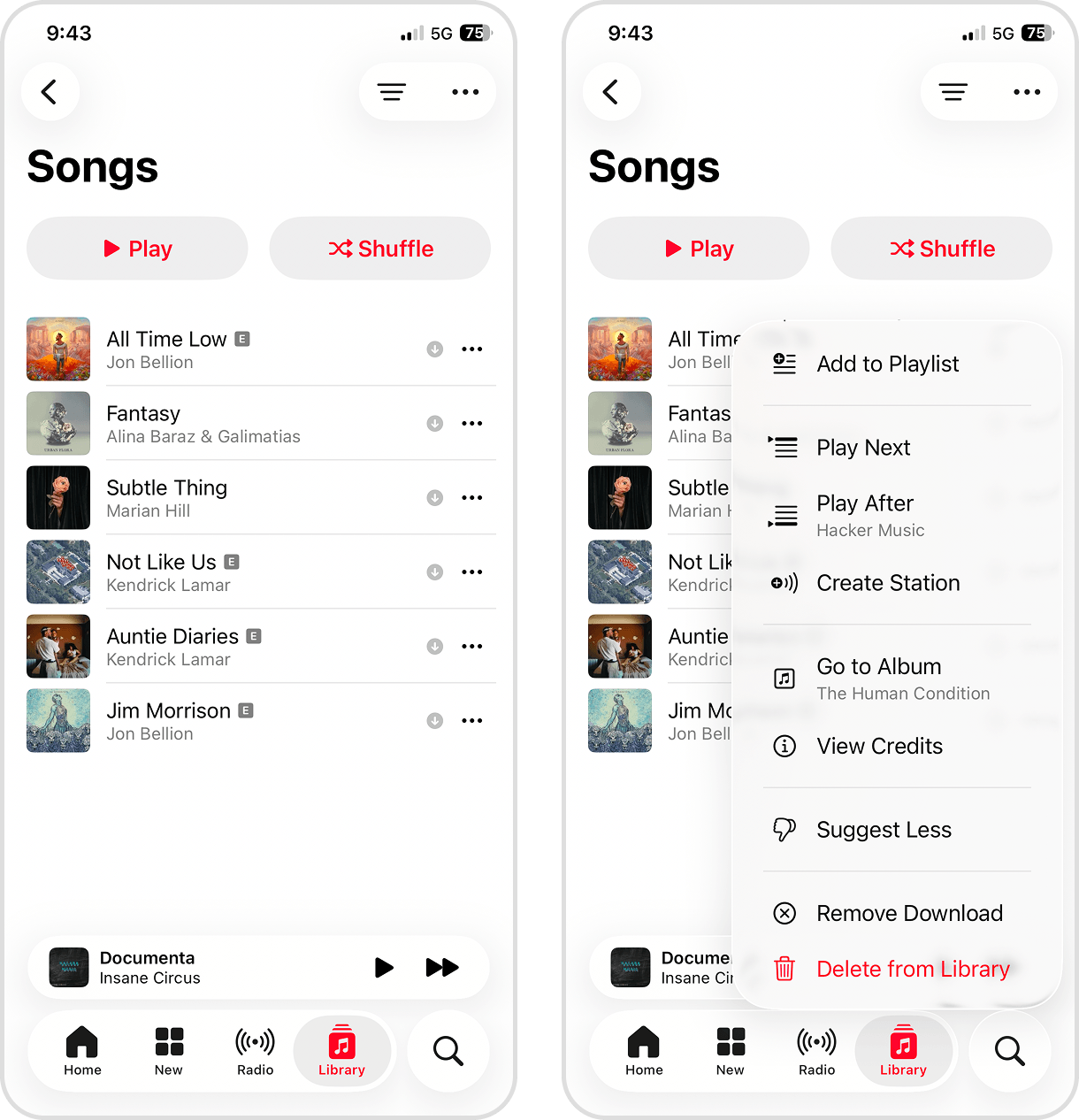
- Beside each song you want to remove from your downloads, tap the meatball menu button.
- In the context menu that appears, tap Remove Download.
Method 6: Clear the Browser Cache
Like other applications, browsers utilize caches to perform faster, such as saving assets from frequently visited websites. Fortunately, all mainstream browsers allow you to clear their caches manually. Safari’s cache can be cleared via the Settings app; we’ll show you how to find it.
- Open the Settings app.
- Scroll down to the bottom of the Settings page and select Apps.
- Locate and select Safari.
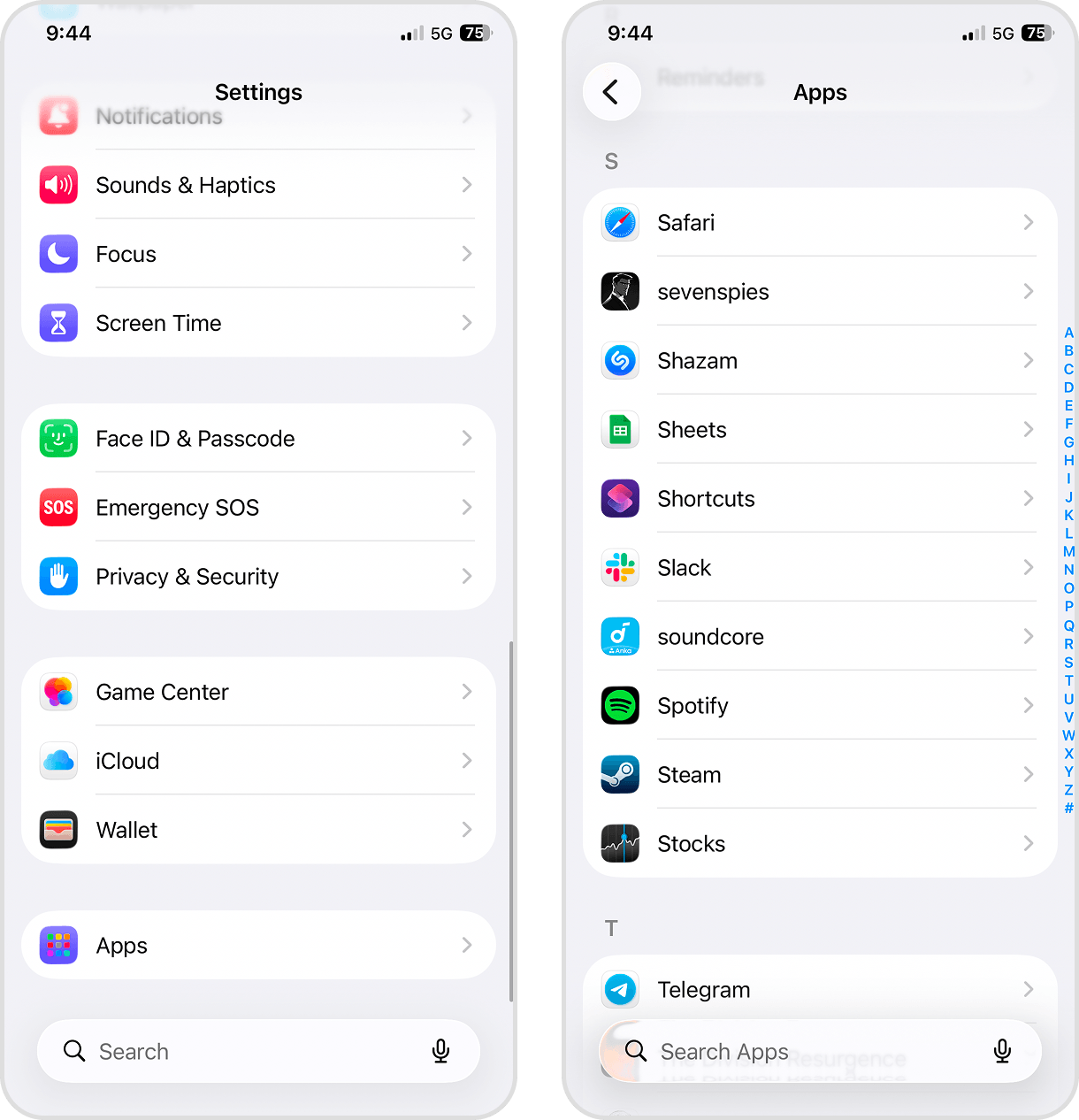
- Scroll down to the very bottom of Safari’s app page and tap Advanced.
- Select Website Data.
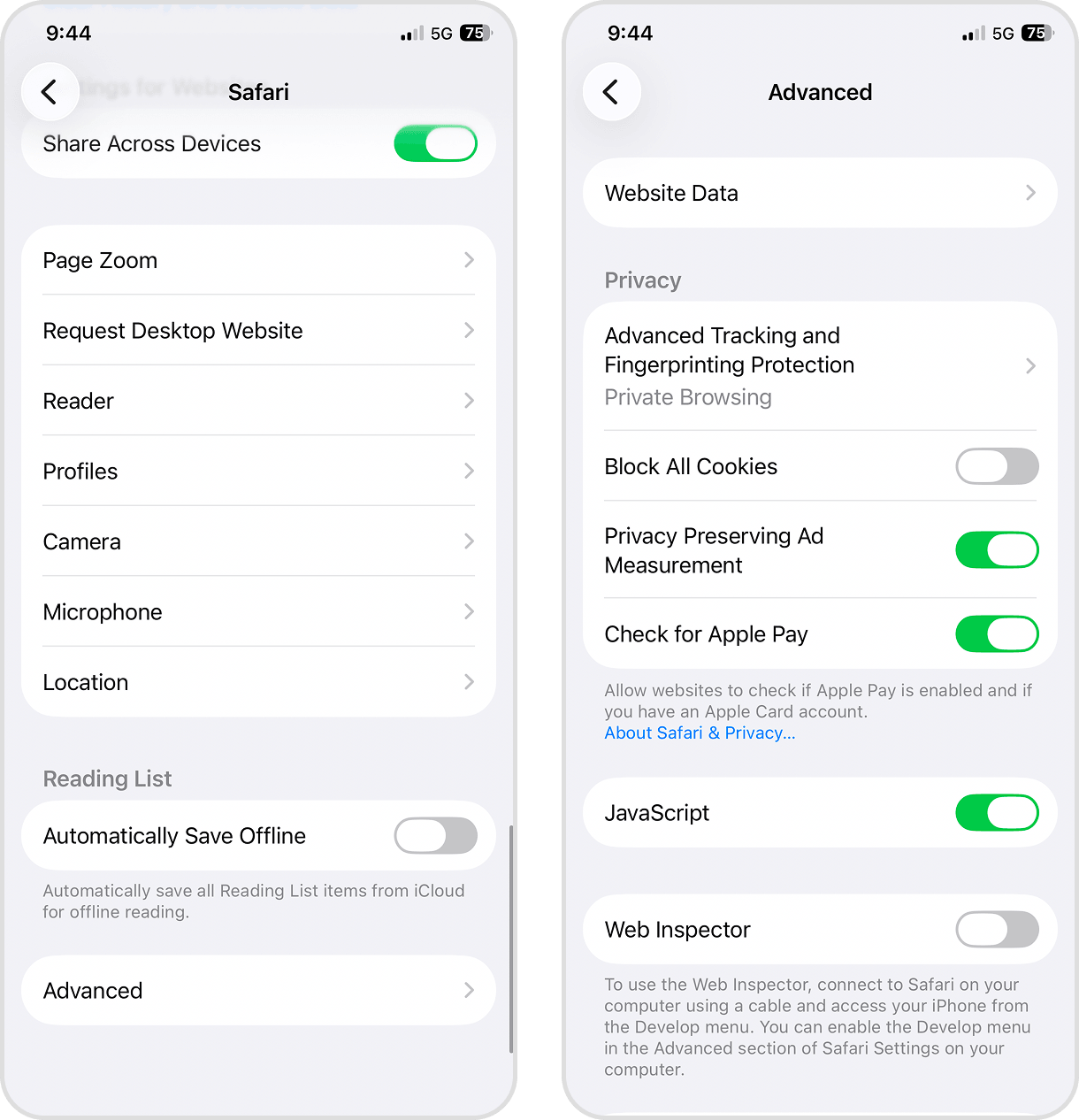
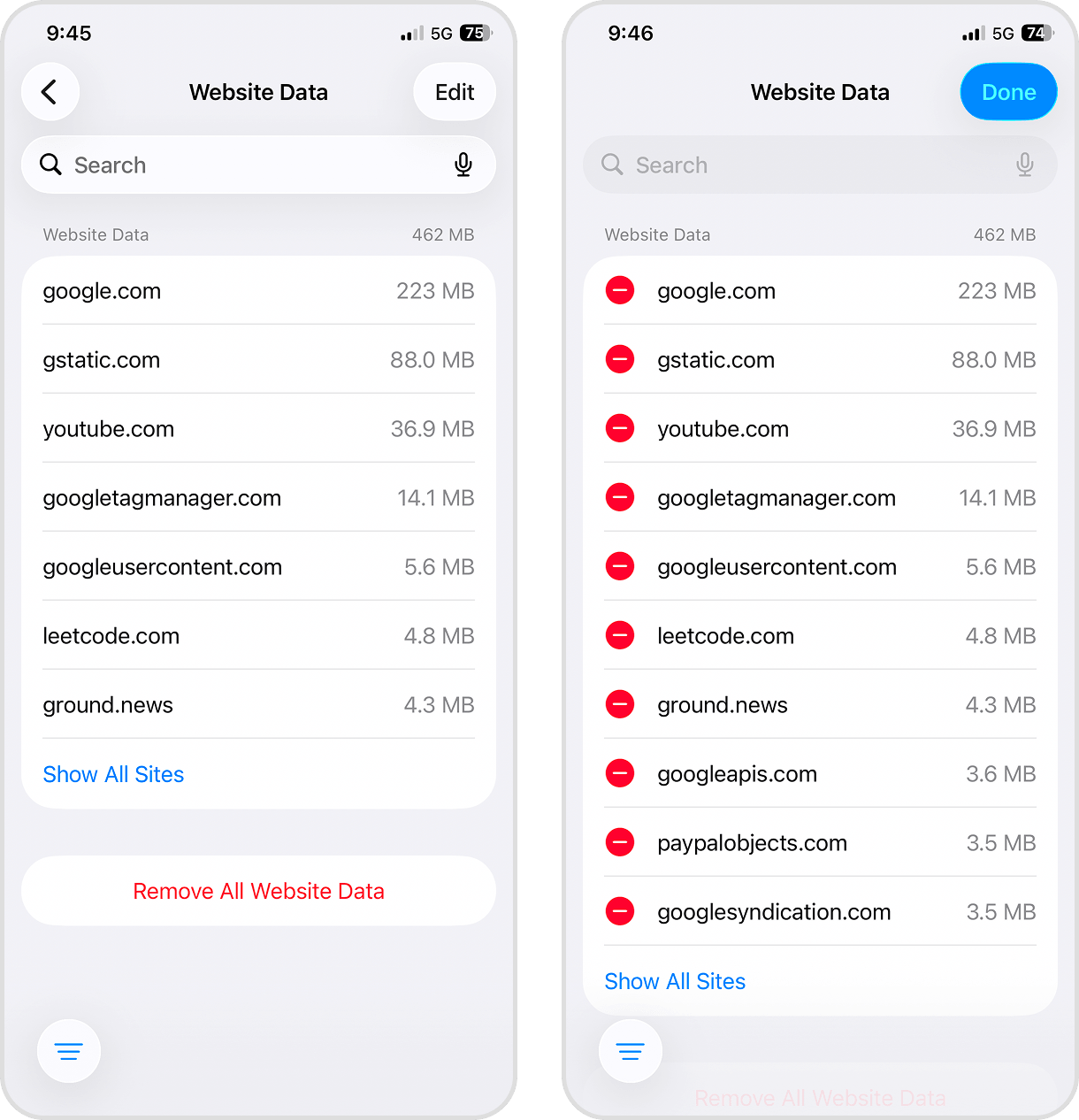
- Tap the Edit button to remove website data from specific apps, or scroll to the bottom of the page and tap Remove All Website Data.
Alternatively, you can skip the Advanced menu and select Clear History and Website Data on Safari’s settings page. Choose All History and tap Clear History. This removes website data along with your Safari browsing history.
Method 7: Delete Large Message Attachments
Large attachments your friends and family share with you via Messages take up space. You can easily remove these photos, videos, and files after you save those you want to keep.
These instructions apply to the Messages app; however, local email clients can also store multiple attachments, ranging from documents to media files. To delete email attachments, simply delete the emails they’re contained in. This would also be a great time to purge spam, promotional mail, old newsletters, and obsolete messages.
Follow these steps to remove large message attachments:
- Open the Messages app and select a message thread containing the attachments you want to delete.
- Tap your contact’s number or icon at the top of the screen.
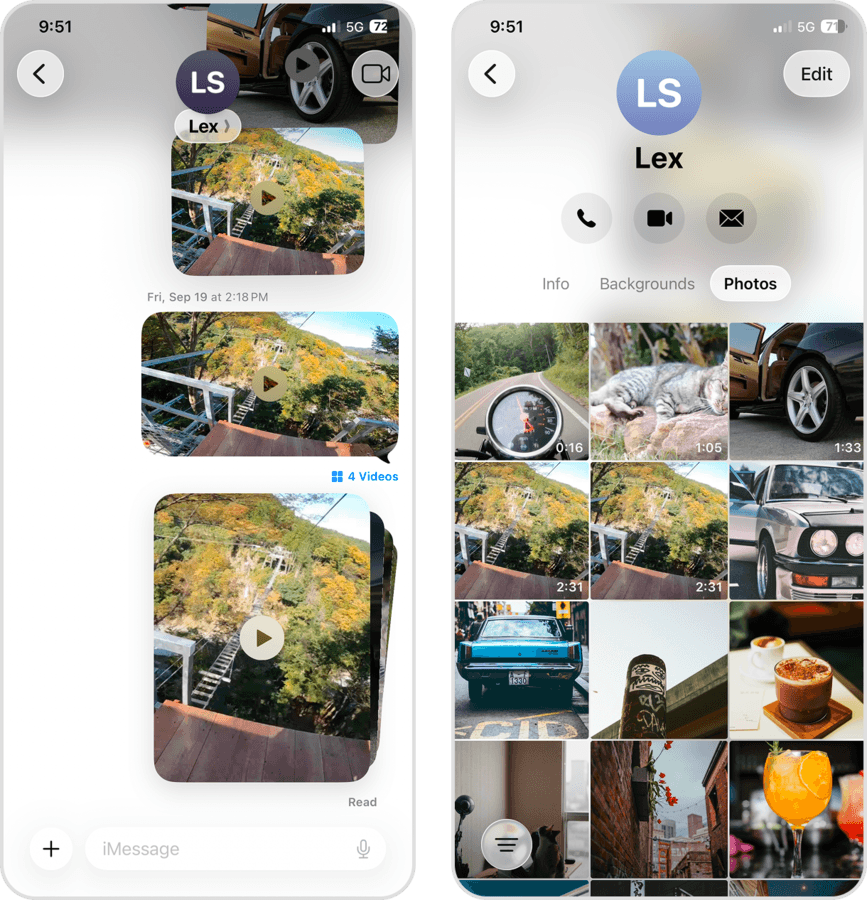
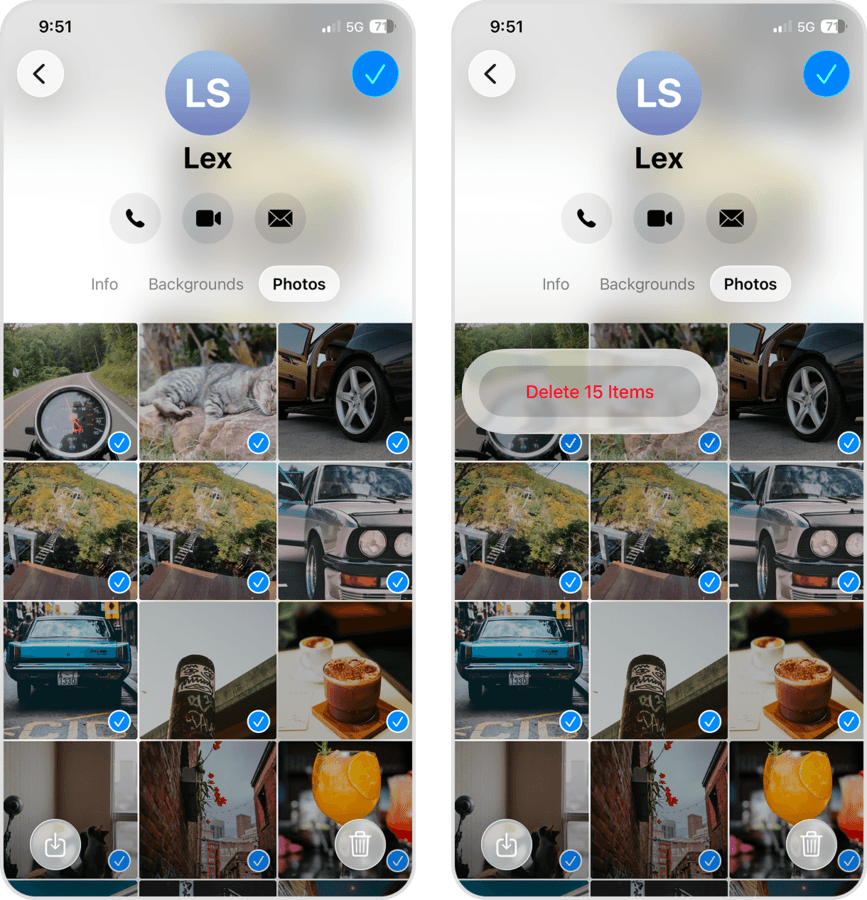
- Under the contact’s details, select the Photos category. Then, tap Edit in the top right corner of the screen and select the attachments you want to remove.
- Tap the Trash icon (🗑️). Then, tap Delete Items to confirm.
Method 8: Clear Your Downloads Folder
Once you download media or files and then work with them or save them, you may be able to get rid of the original downloads. You can review the items in your Downloads folder for those you can safely delete from your iPhone.
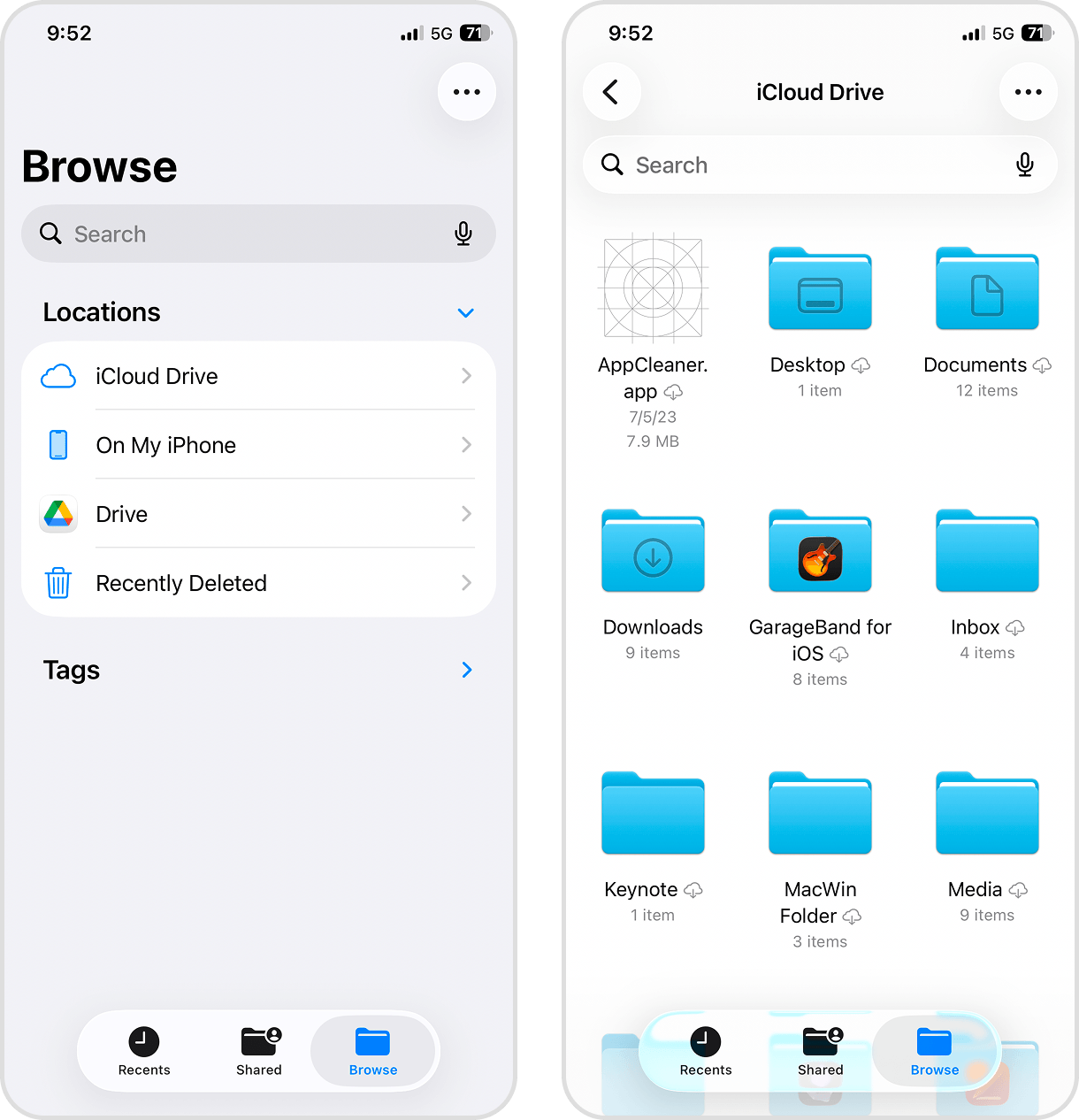
- Open the Files app and go to the Browse tab.
- Select iCloud Drive or On My iPhone depending on where you normally save your downloads. You can also delete downloads from both locations.
- Choose the Downloads folder.
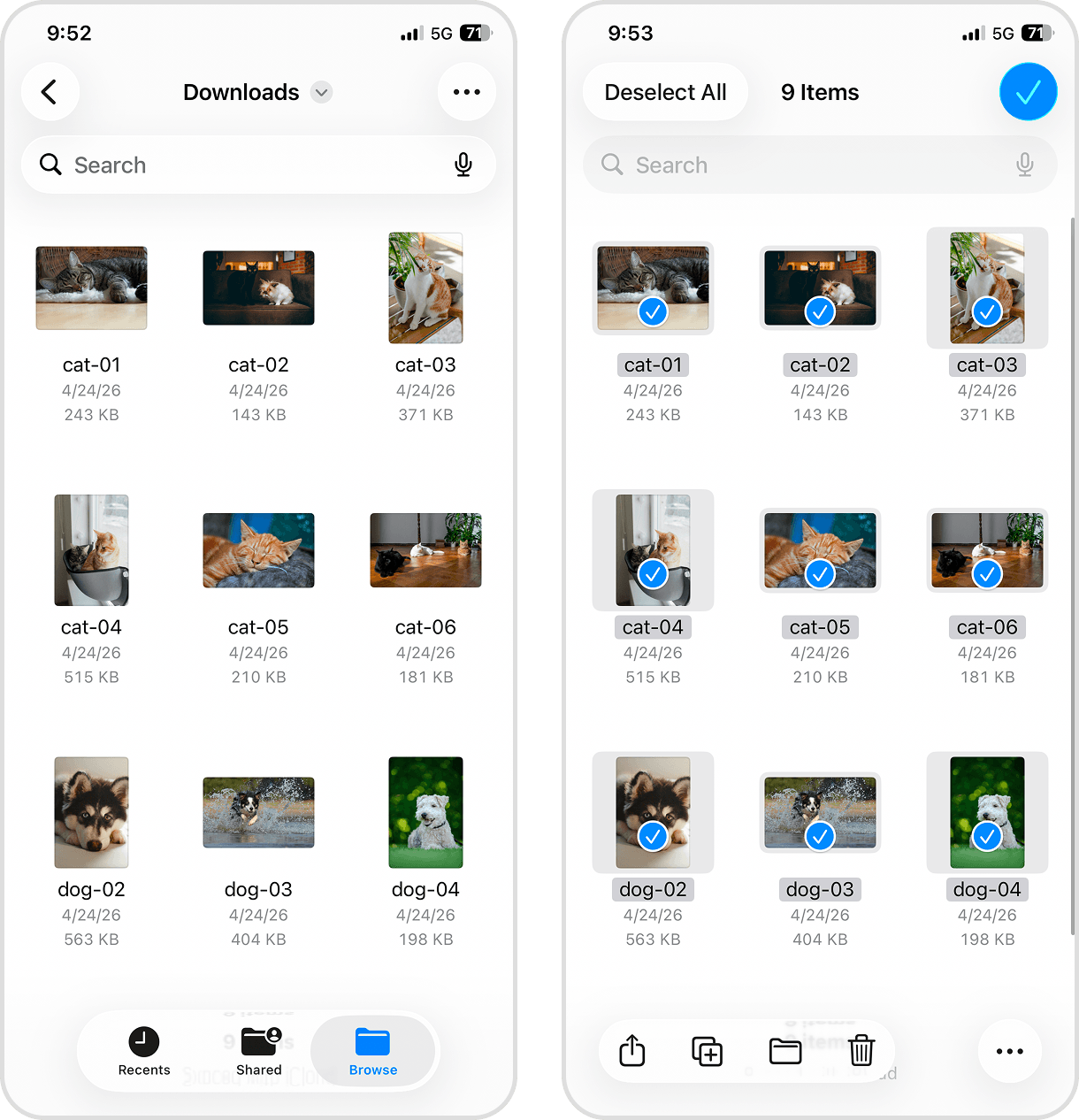
- Tap the three dots on the top right and pick Select. Remember, you can open any item for a closer look before you delete it.
- Mark each download you want to remove or use Select All on the top left for all files.
- Select the Delete icon (🗑️) at the bottom to remove the selected items.
Method 9: Delete Unnecessary and Duplicate Contacts
Your address book is notoriously easy to clutter up. Maybe you have multiple entries for the same person because you forgot that you already added them. Or maybe you’ve had the same Apple account for years, and your contacts are filled with names you don’t recognize anymore.
You can delete unwanted contacts manually by opening their page in the Contacts app and using the Edit and Delete Contact buttons. But iOS also provides clever tools that can speed up the process:
Use the Duplicates Utility in the Contacts App
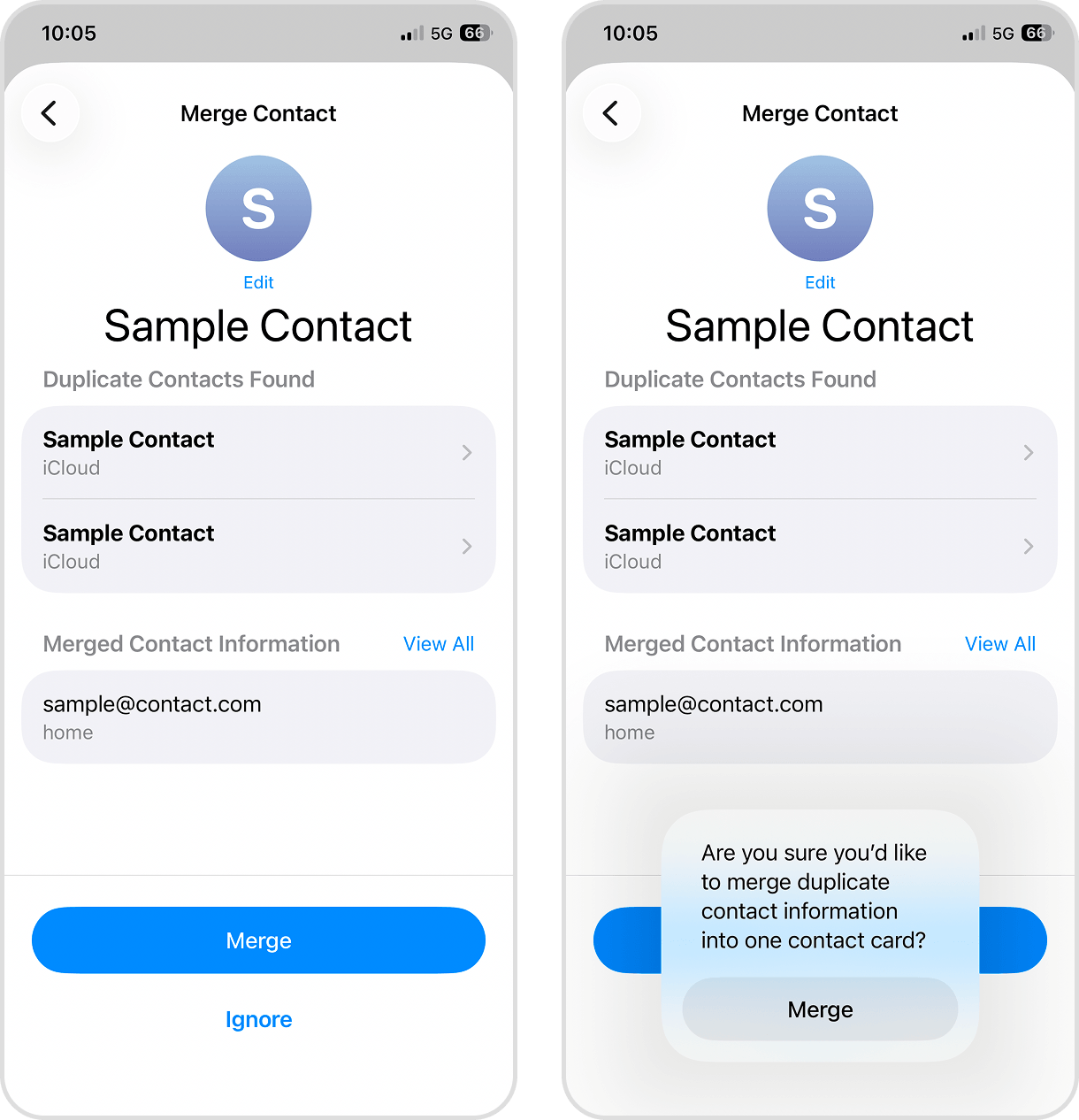
Similar to the Photos app, the Contacts app has a built-in utility to find duplicate entries. This feature not only identifies and compiles duplicates for you, but also lets you merge them into one complete entry.
- Open the Contacts app.
- After a brief moment, your iPhone will identify the number of duplicate contacts you have.
- Tap View Duplicates to see the list of duplicate entries.
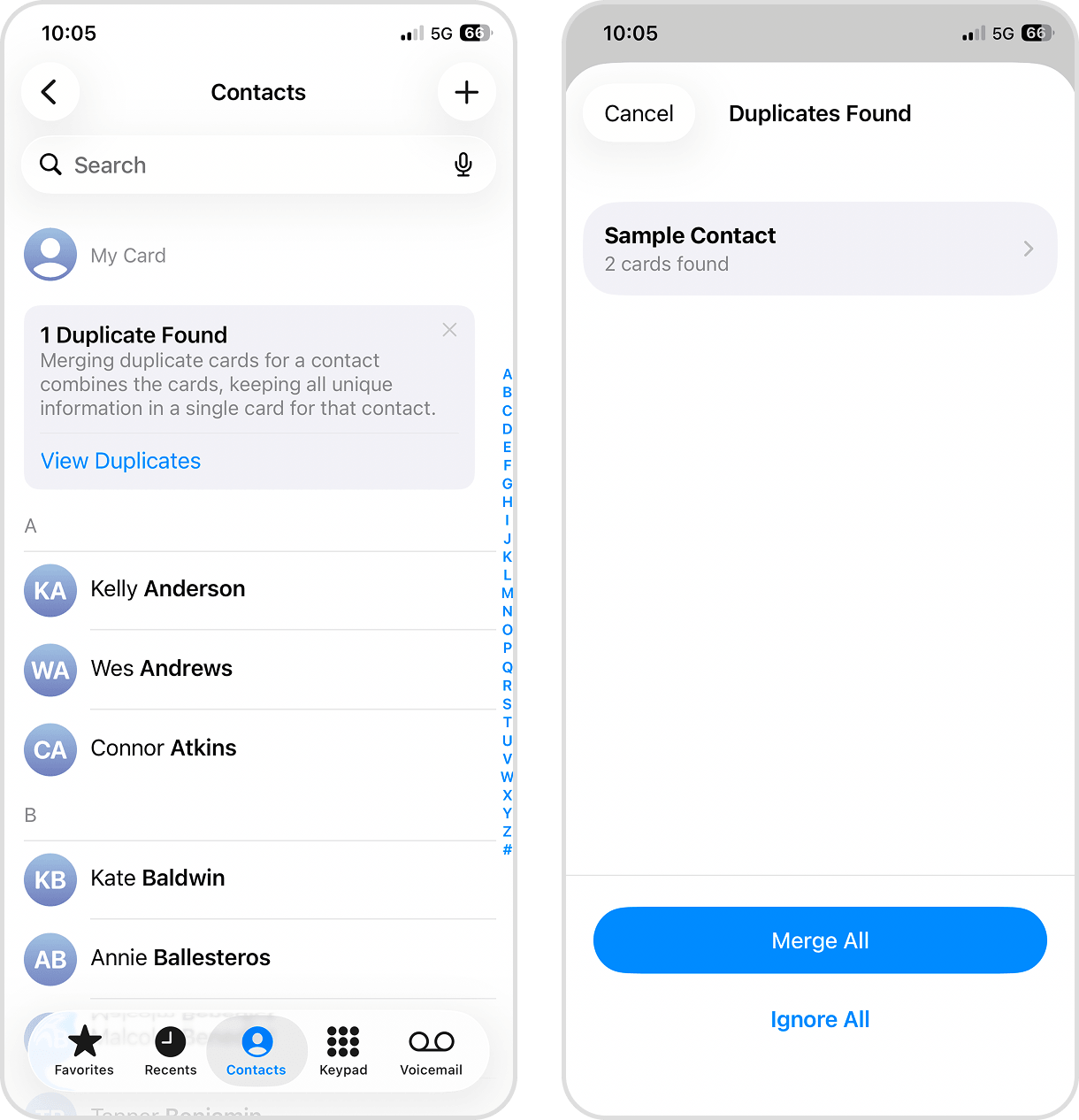
- You can then either tap Merge All to merge all duplicates at once or select specific contacts to merge individually.
- Finally, hit Merge, and you’re done. By following these steps, you can streamline your contacts and make your iPhone a bit more organized.
Create a Shortcut to Custom Sort Contacts
The Shortcut app allows you to automate chains of actions on your device and bundle them into your own custom feature. We’ll show you how to create a simple shortcut that can help you easily find contacts based on different types of parameters, like Date Created, Company, Department, etc. This way, you don’t have to find old or obsolete contacts manually.
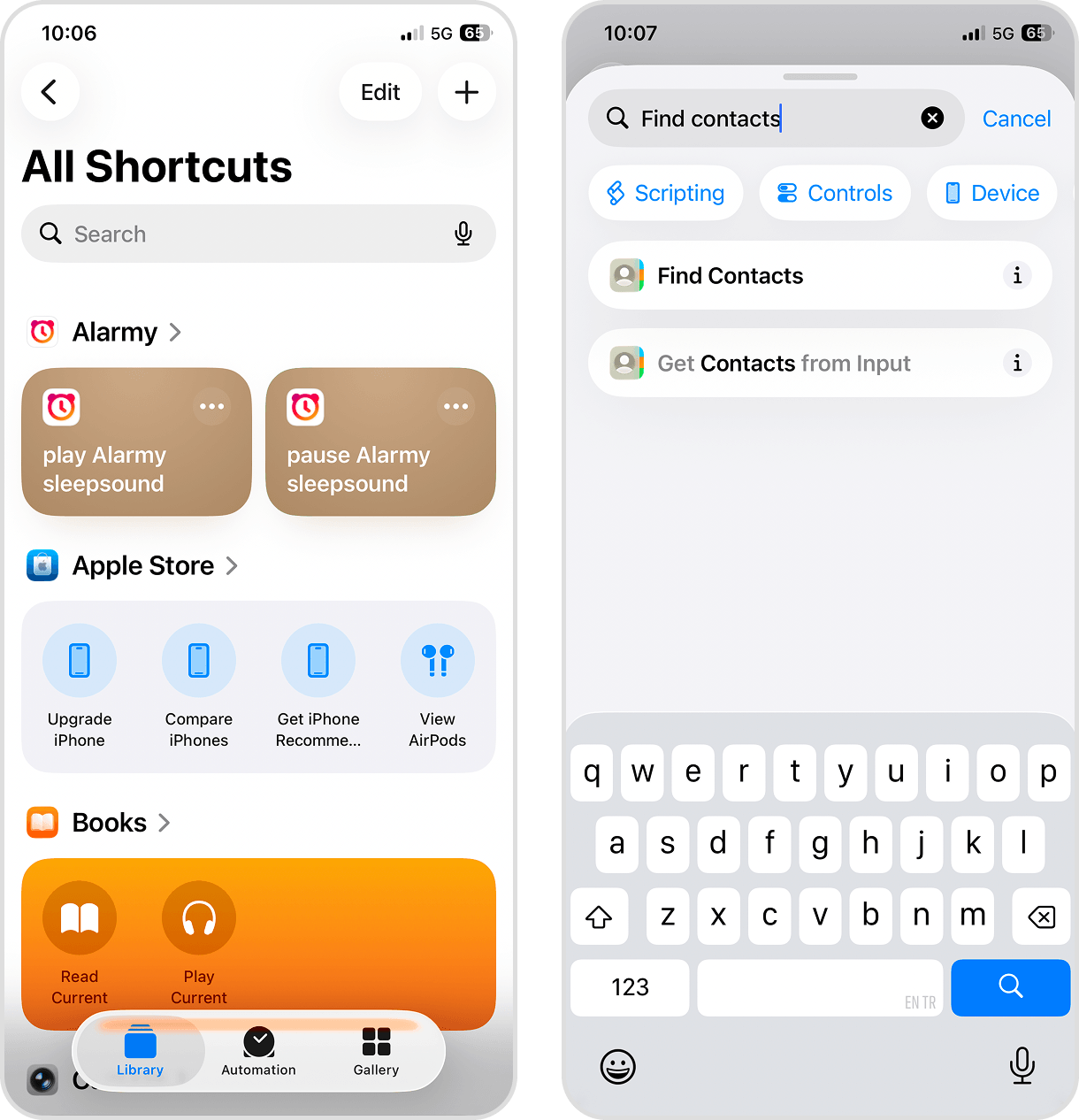
- Open the Shortcuts app.
- Select Library from the bottom menu, then tap the + button in the top right corner of the page.
- In the Search Actions field, type “find contacts” and select that exact option from the list.
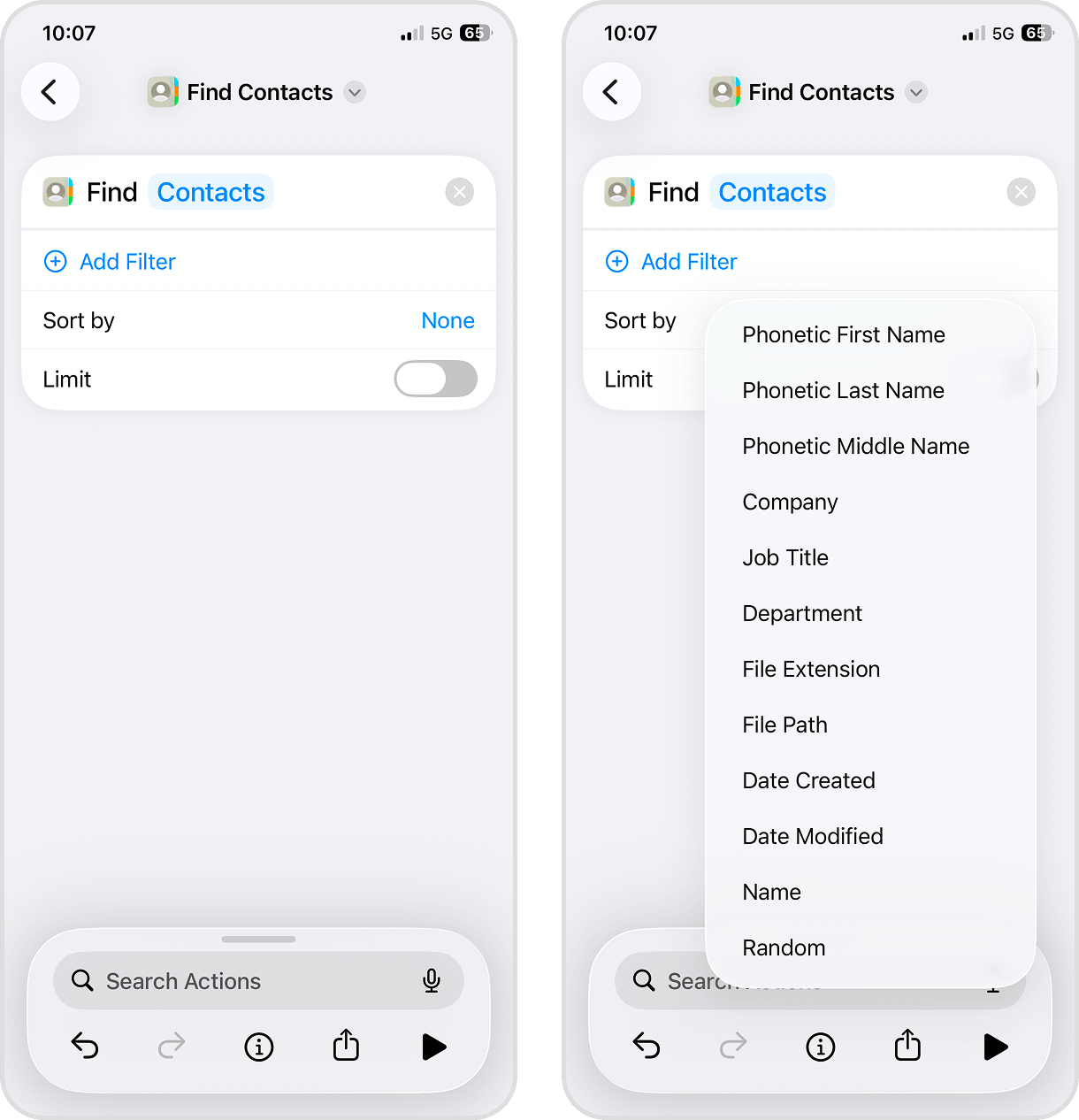
- In the single action card that appears, tap Add Filter.
- Beside the Sort by parameter, tap None. Then, select one of the options from the context menu that appears. For example, we’ll choose Date Created.
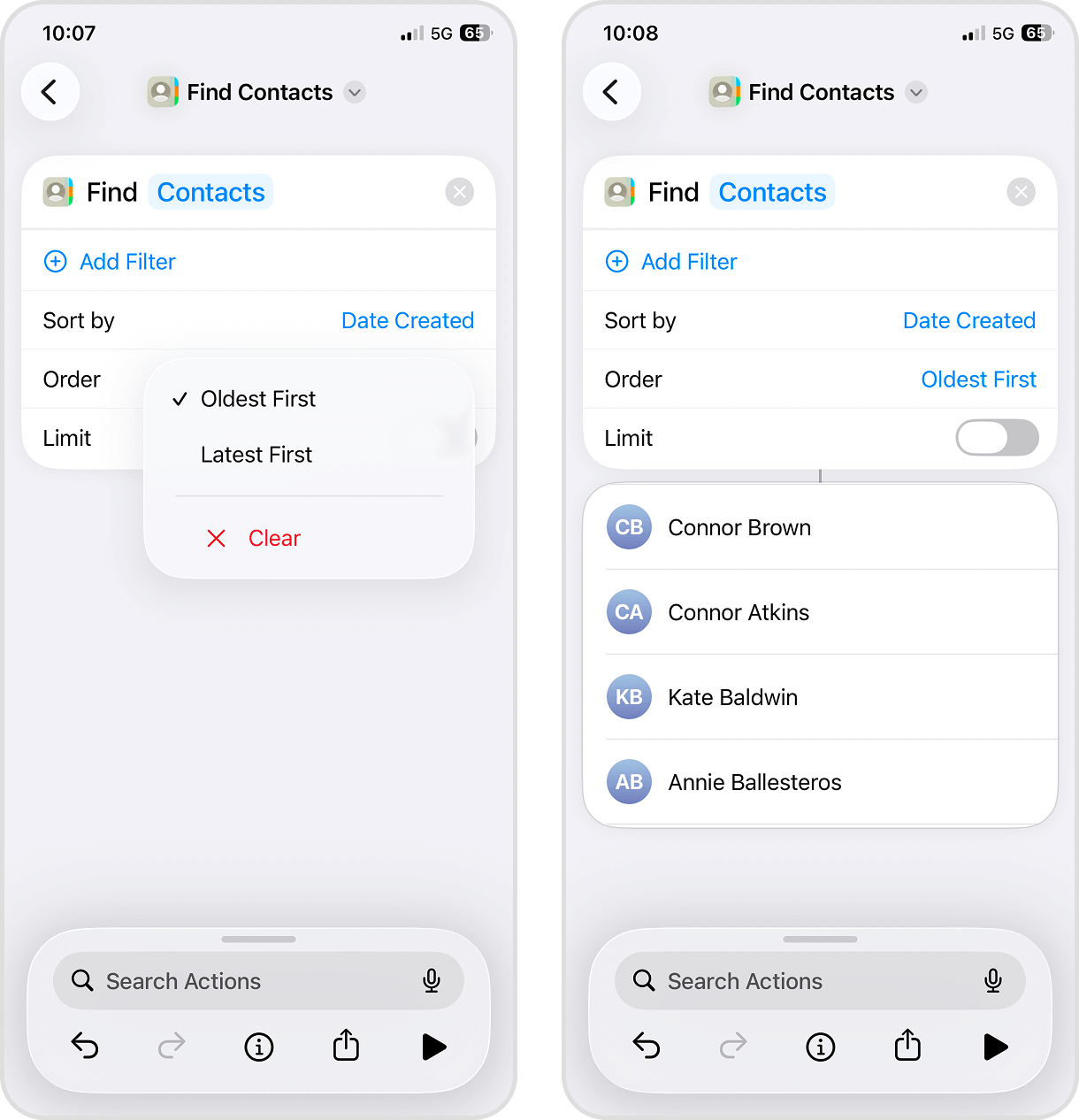
- Change the Order parameter to your preference; we’ll choose Oldest First, which shows the full list of your contacts, starting with the very first one you created.
- Click the play button (▶︎) at the bottom of the page to run the shortcut. A list will appear, which you can use as a reference to delete entries in the Contacts app.
Use Software to Delete Junk Files on Your iPhone
If, like us, you have thousands of photos and videos on your iPhone, or you simply don’t have the time to clean it up manually (using the features we already covered), consider using software. The App Store has dozens of third-party iPhone cleaning apps with unique features that prove way more effective for cleanup than built-in tools.
In this section, we’ll briefly showcase 3 cleaning apps; each tool can be used for free, and they target specific data types to ensure a comprehensive cleanup. There are apps that can purge different types of junk at once, but most require a subscription.
1. Clever Cleaner: Clean Up Junk on iPhone
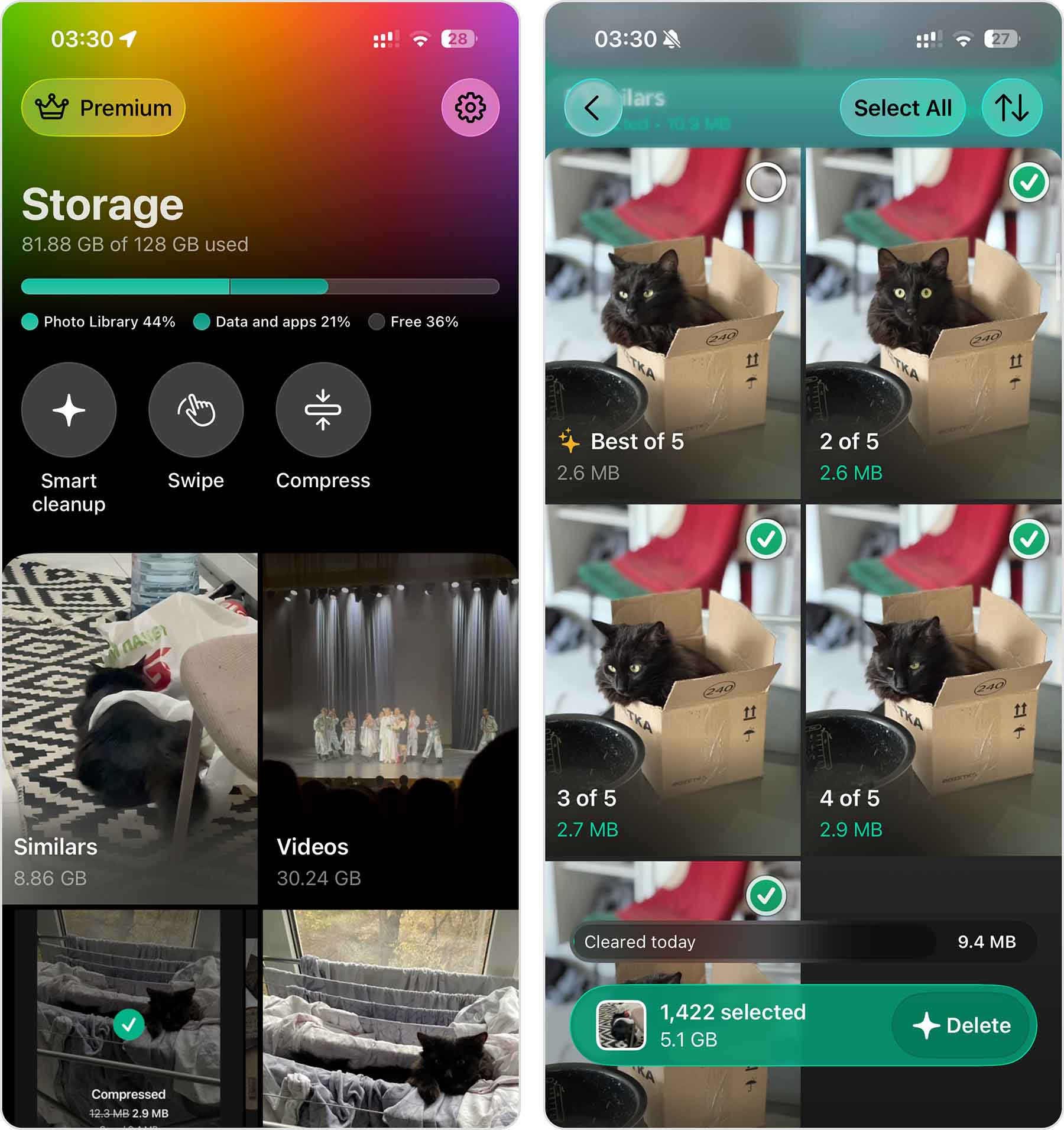
Clever Cleaner is a powerful library cleanup application with a suite of features that can help you efficiently purge unwanted photos and videos, as well as optimize the media you want to keep. The app can be used for free thanks to generous daily cleanup limits and has no ads, despite the addition of an optional Pro version. It also remains completely free for users who already had Clever Cleaner installed before version 3.0 was released.
🌟 Notable Features:
- Highly accurate duplicate identification algorithms
- One-tap smart junk removal
- Clean up old, unnecessary, or large screenshots
- Convert Live Photos to still images or delete them to save storage space
- Find and remove heavy videos
- Compress videos to shrink their file size with minimal impact on quality
- Compress other types of media, including photos, screenshots, and Live Photos
- Swipe left or right in the Swipe feature to delete or keep photos and videos with precision
- View a detailed overview of your iPhone storage
- Absolutely no ads
📲 Download on App Store: https://apps.apple.com/us/app/clever-cleaner-ai-cleanup-app/id1666645584
💵 Clever Cleaner is free to use within its daily cleanup limit. Once you reach it, you can wait for the limit to reset the next day or upgrade to Pro. The current prices are best checked directly in the app before you make a purchase.
2. Easy Cleaner
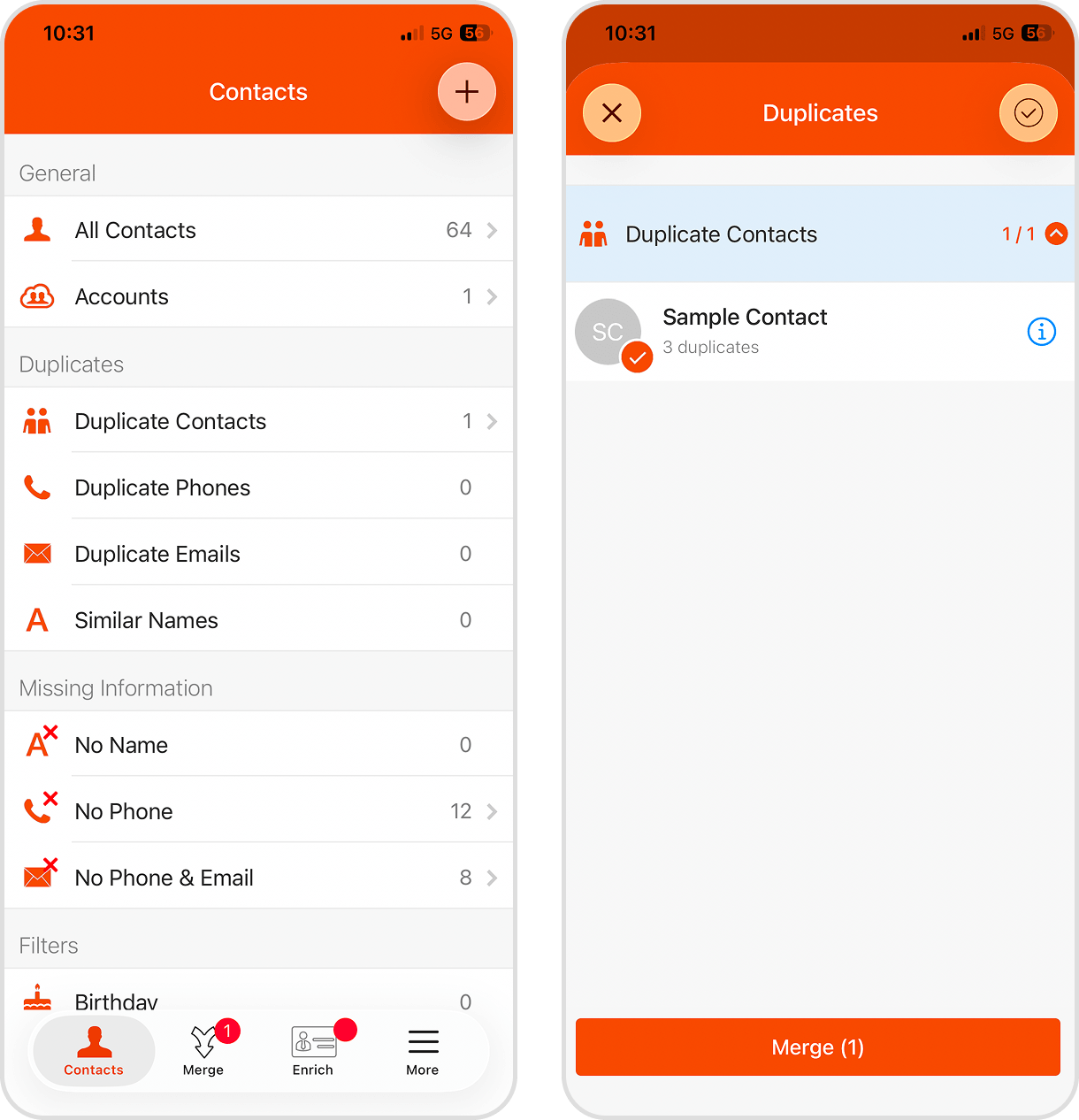
Easy Cleaner is an address book management app that can help you clean up your contacts and keep them up to date by creating your own universal database. It also has cloud saving and backup features, which include the ability to use Restore Points during the cleanup process for extra safety.
🌟 Notable Features:
- Merge duplicate and incomplete contacts, along with their metadata
- Save your contacts to a cloud server for easy retrieval, even without backups
- Create an in-app backup of your contacts
📲 Download on App Store: https://apps.apple.com/us/app/easy-cleaner/id519077149
💵 Easy Cleaner is available for free on iPhone with no hidden costs or subscriptions required.
3. Cleanfox – Email Cleaner
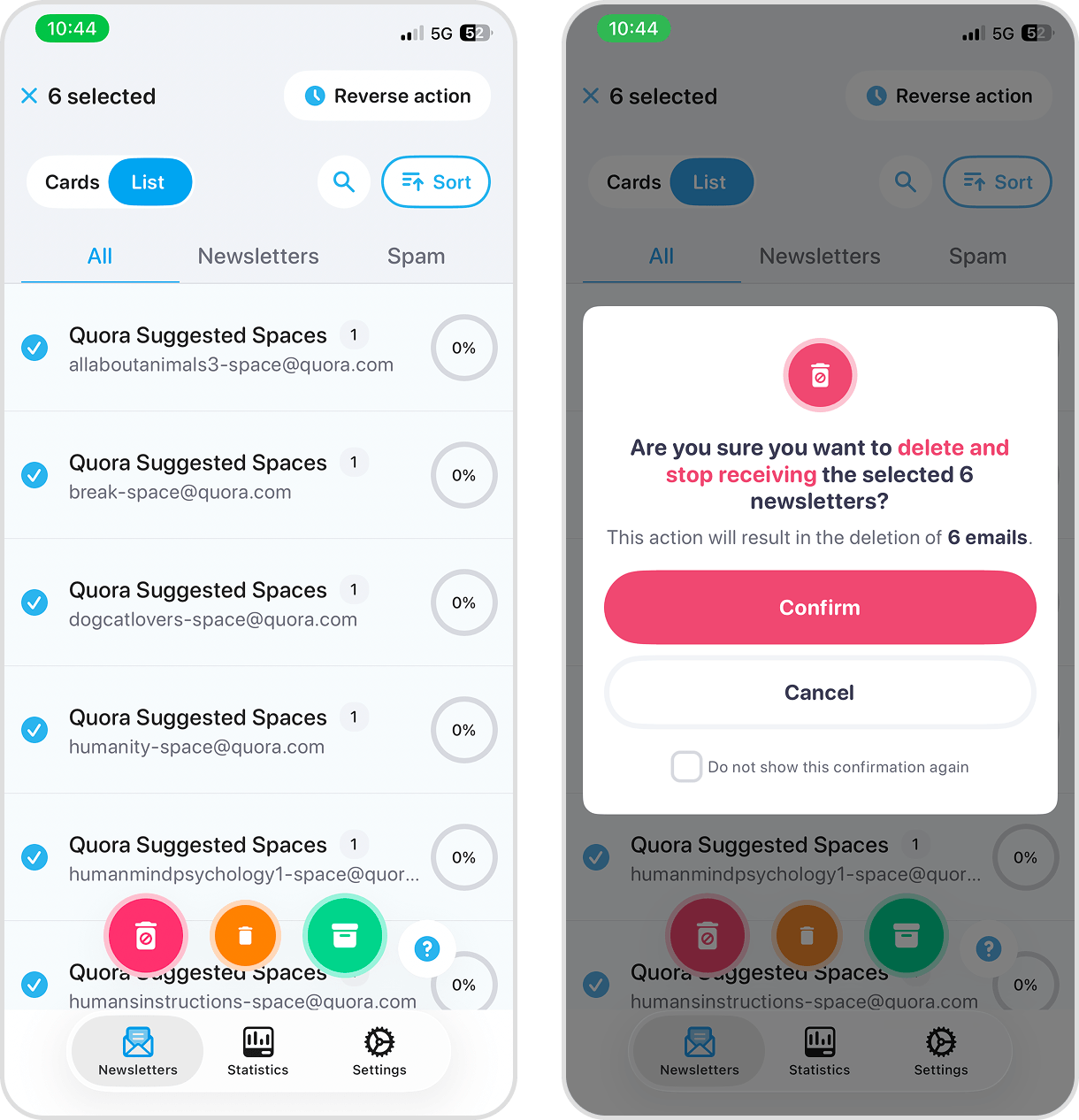
Cleanfox is a powerful and feature-rich mail cleaning app. Its toolkit can help you manage spam, newsletters, subscriptions, and correspondence with specific contacts, allowing you to deal with dozens of emails at once.
🌟 Notable Features:
- Utilize swipe gestures to quickly manage emails from specific senders
- Find, sort, and delete old or unwanted newsletters and spam in bulk
- Supports most mainstream email providers, including Gmail, iCloud, Outlook, etc.
📲 Download on App Store: https://apps.apple.com/us/app/cleanfox-email-cleaner/id1136298377
💵 Cleanfox is available for free on iPhone with no hidden costs or subscriptions required.
Conclusion
Each of these methods helps you remove junk files on iPhone. From clearing caches and downloaded files to deleting duplicate photos and large attachments, all you need is a few minutes of your time. You’ll then regain storage space for new items like games, apps, videos, and pictures and keep your device running smoothly. Don’t let junk take over your iPhone — clean it up!
For more, look at these ways to get more storage on iPhone if a thorough cleaning doesn’t free up enough space.
FAQ
If your system data is taking up more space than you like, you can remove app and browser caches to clean up the bulk of that space. You can also use additional ways to clear system storage on iPhone like removing large message attachments and unused apps that use caches.
While it is generally safe to remove junk files, you should always review the items you plan to delete before you do so. For instance, be sure to view the messages, attachments, files, and photos to be certain you won’t need them later. As a precaution, you can also back up your iPhone before removing any items.
You do have a few settings you can adjust to reduce additional junk items from appearing on your iPhone. For example, you can limit the amount of history you keep in Messages to be sure older texts are removed automatically. You can also enable the Offload Unused Apps feature on iOS and disable cache for some apps like web browsers and media streaming apps.
There are several ways to clean junk files on your iPhone for free, depending on the type of data you want to purge:
- Delete unwanted files manually or use your iPhone’s built-in cleaning tools (e.g., the Duplicates utility in the Photos app)
- Utilize in-app data management features, such as cache cleaning in social apps
- Delete offline downloads from streaming apps like Netflix and Spotify
- Use free third-party iPhone cleaning apps, like Clever Cleaner (photos and videos), Easy Cleaner (contacts), and Cleanfox (emails)
