


If you want to delete duplicate photos on your iPhone, there’s already a tool for that in the Photos app. It finds exact duplicates and lets you merge them or simply delete the copies you don’t need. But that only solves part of the problem. Take two almost identical photos with a slightly different angle or lighting, for example, and iOS may not consider them duplicates at all. For those, you’ll need another way.
How to Delete Duplicate Photos on iPhone
There are several ways to remove duplicate photos on your iPhone, as well as get rid of similar photos. The method best suited for your use case depends on whether you need to clean up duplicates or similars (or both), and if you prefer using third-party or native applications. Either way, every method we cover below is free!
Method 1: Use an App to Delete Duplicate and Near-Duplicate iPhone Photos
You may be familiar with the Duplicates utility provided in the native Photos app. It’s powerful, but it has a major weakness (which we briefly mentioned above and will talk more about later). With that limitation in mind, the truly efficient method to get rid of duplicate photos on your iPhone, as well as similar images, is to use a third-party app that is specially designed to find them.
There are several in the App Store that you can choose from, but we’ll be using an app called Clever Cleaner: AI Cleanup App for this guide. Its Similars feature automatically finds duplicate and similar photos and sorts them into groups, then it uses AI algorithms to pick the Best Shot in each group (you don’t have to compare every photo yourself). From there, you can clean up duplicates and similar photos from your Gallery in a semi-automatic or fully automatic manner. Both options are great, and your choice depends on the level of control you might want to have.
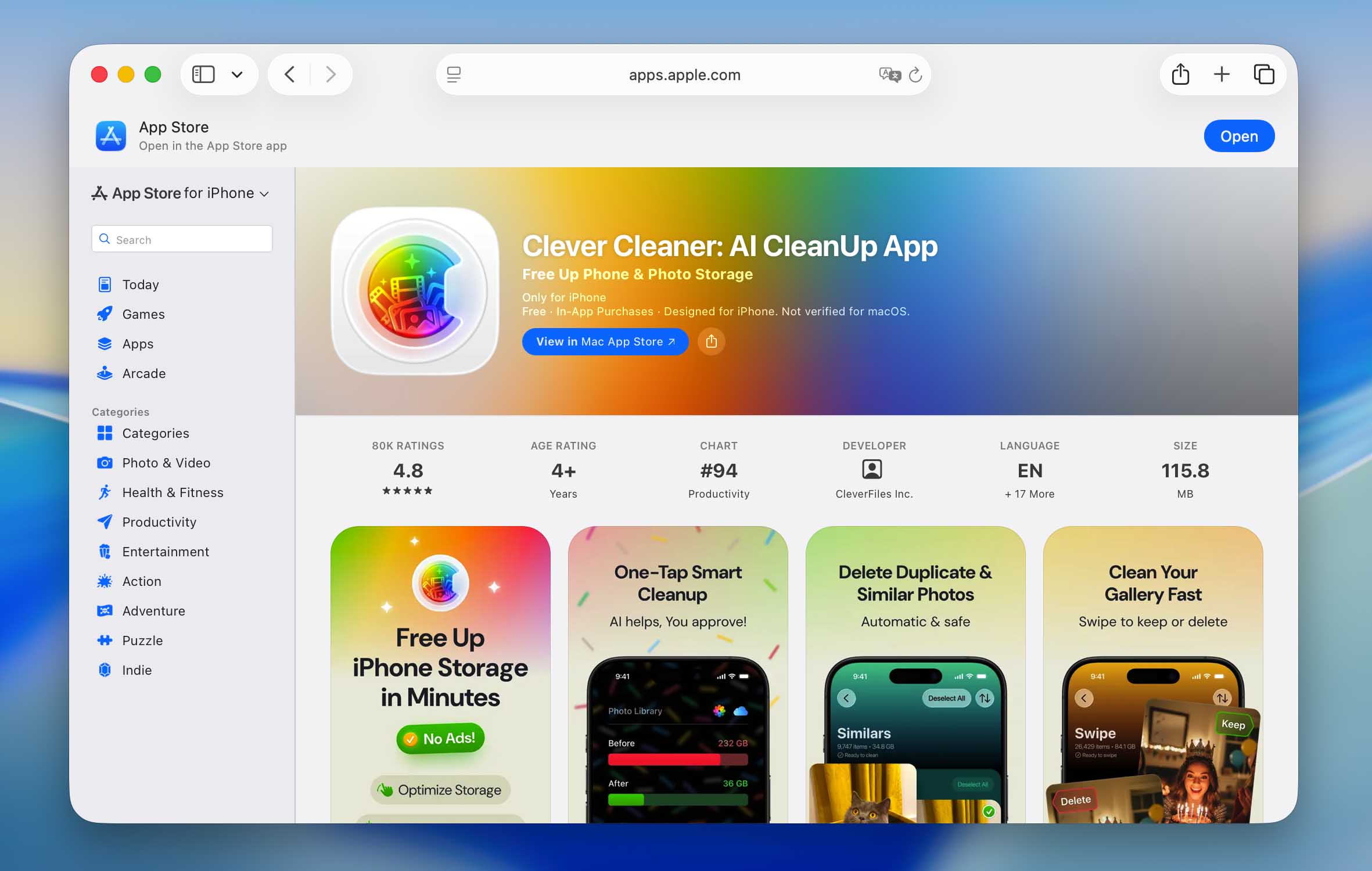
To delete duplicate photos on iPhone using Clever Cleaner:
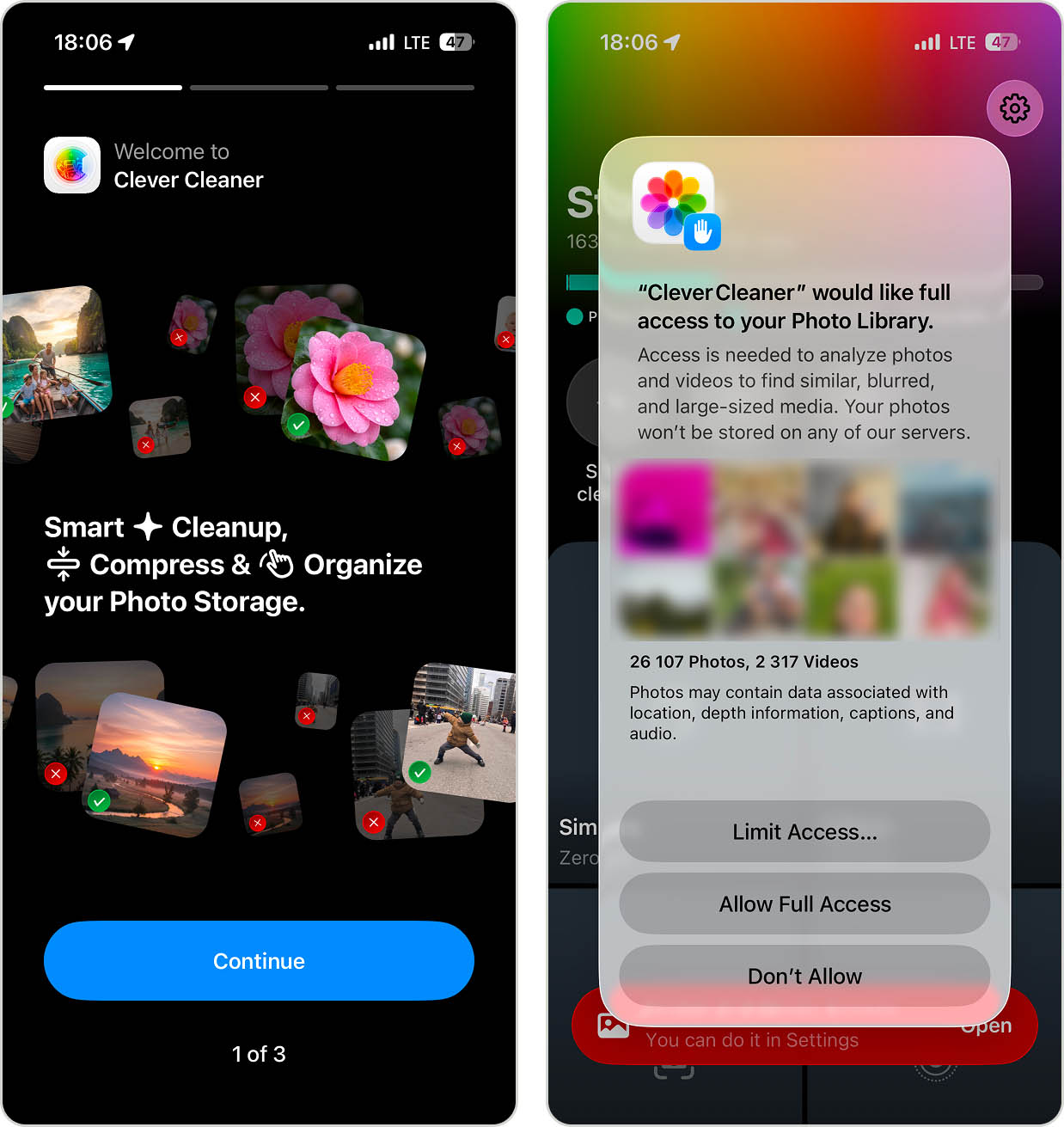
- Download Clever Cleaner: AI Cleanup App from the App Store. When you first open the app, you’ll have to grant Full Access to your photo library. Don’t worry—we verify that it’s completely safe!
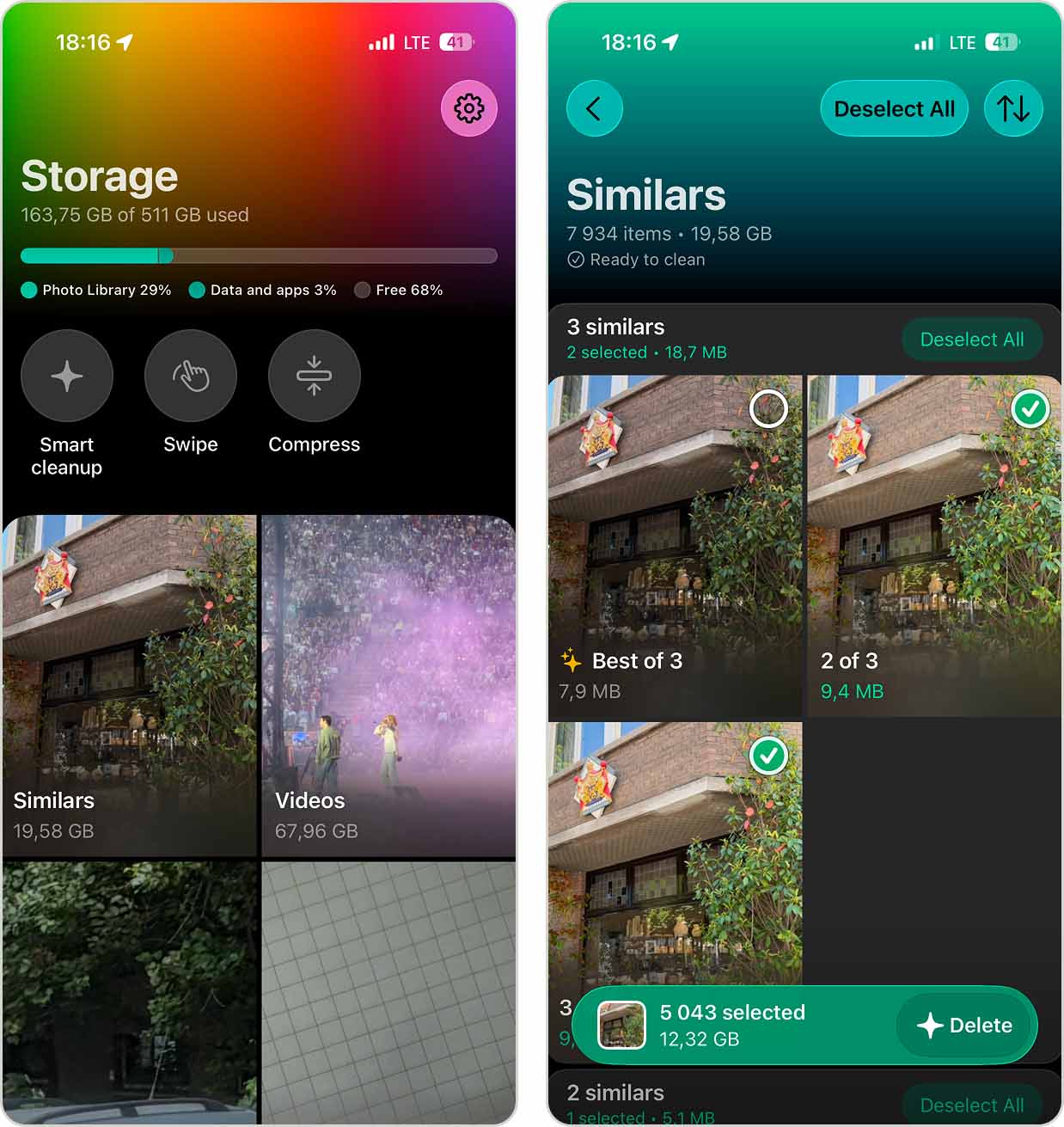
- On the main screen, tap Similars. To remove every detected duplicate and similar photo at once, tap Select All, then tap Delete at the bottom of the screen. Alternatively, you can tap a photo within a group to review it in more detail.
- For each group of similar or duplicate photos, Clever Cleaner automatically selects the Best Shot and marks the remaining images as candidates for deletion. After verifying the selection, return to the main Similars screen and tap Delete.
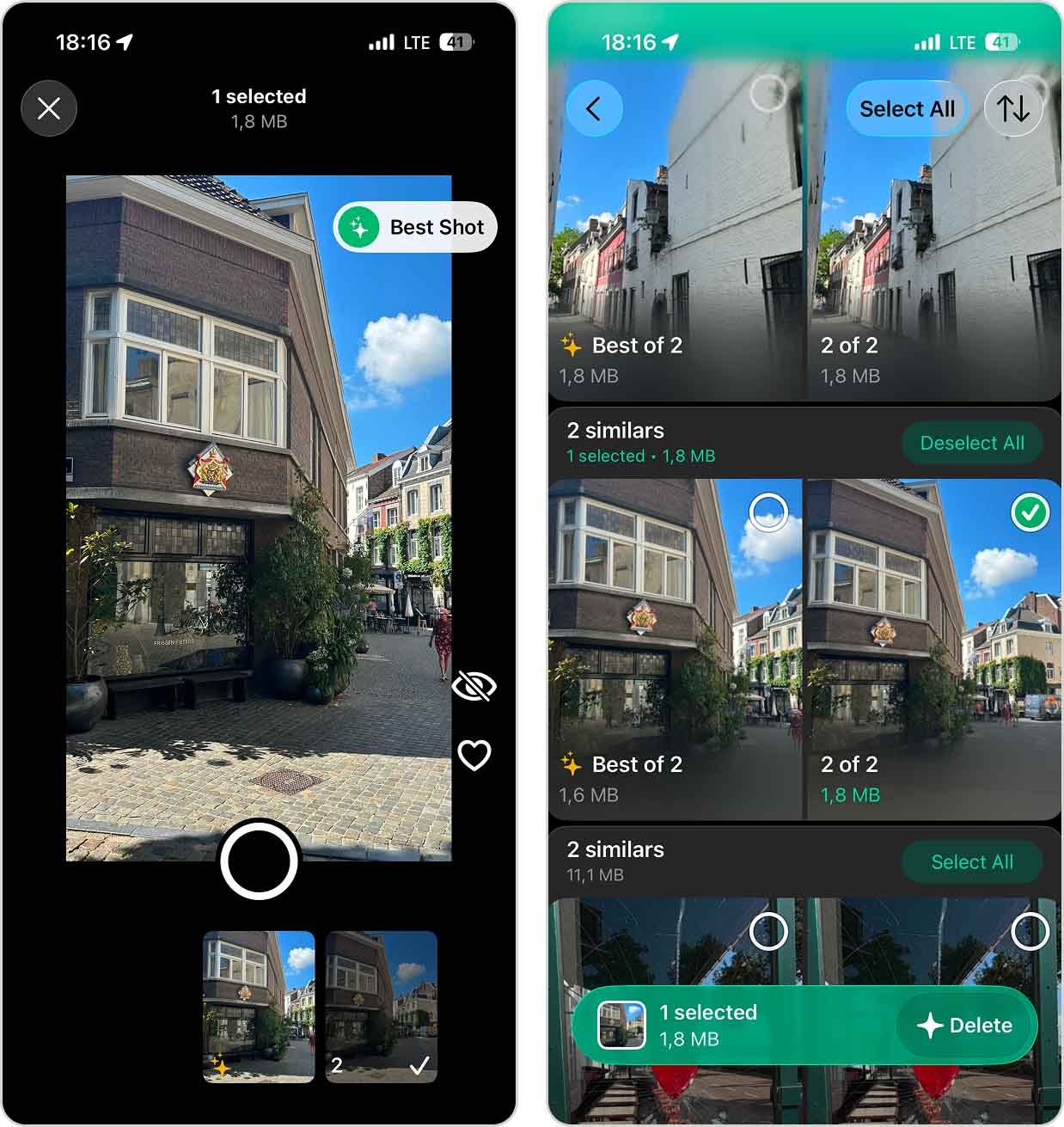
- Right after that, a confirmation window will appear. Take one last look to make sure the correct duplicate and similar photos are selected, then tap the red Delete button to confirm their removal
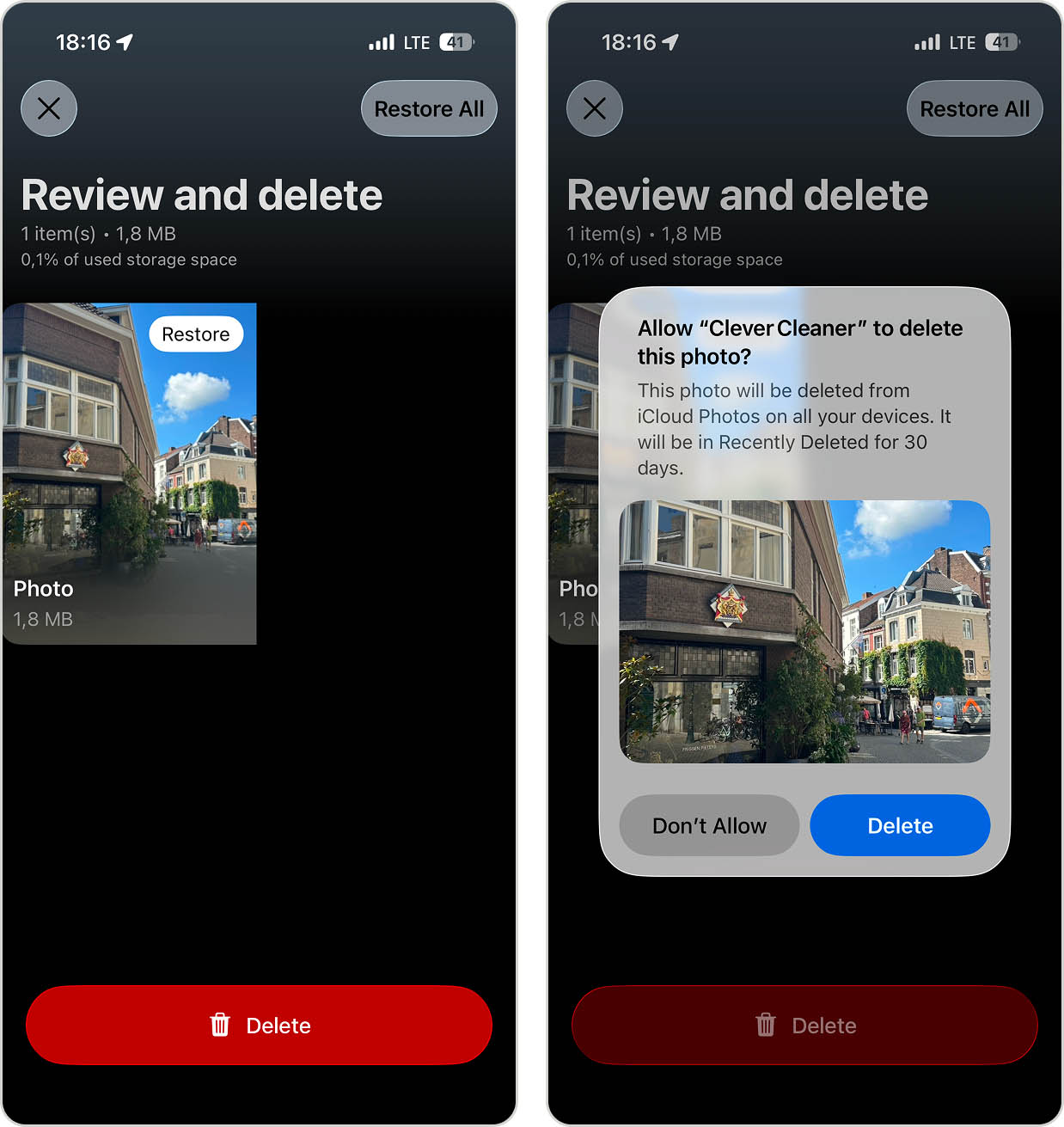
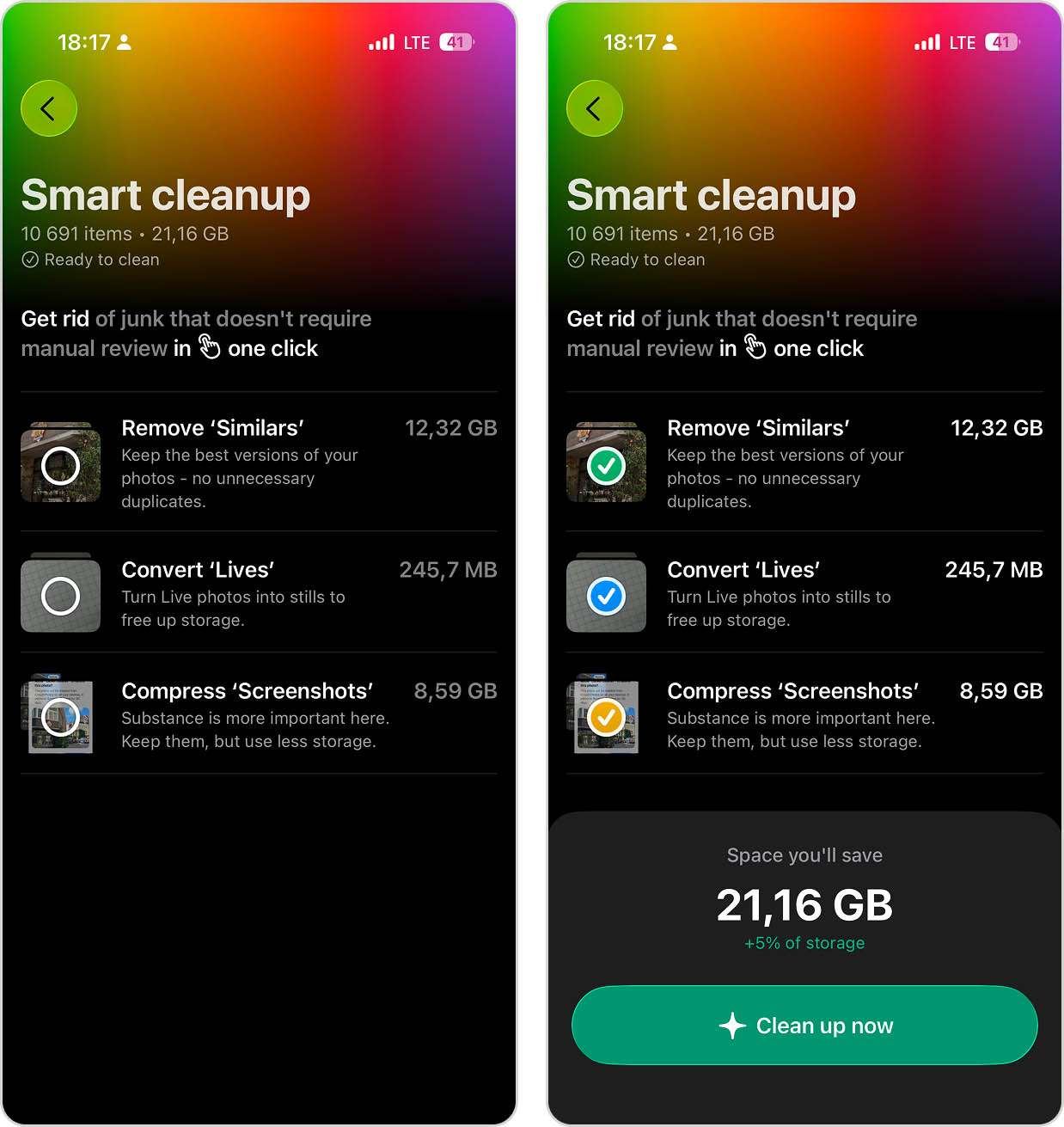
And if you want to clean up your iPhone storage even more, Clever Cleaner has other features that can help:
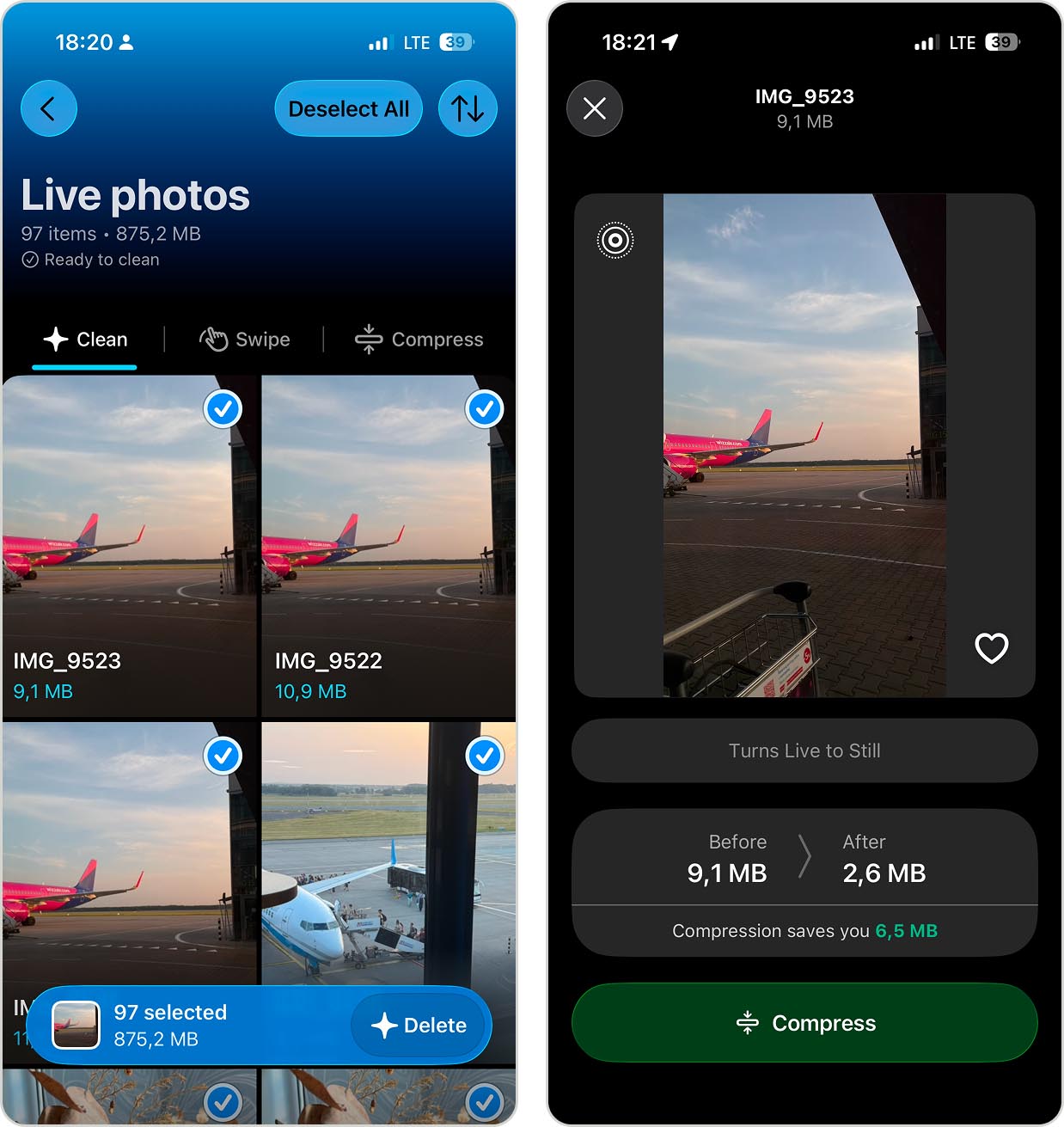
- Smart Cleanup automatically removes duplicate and similar photos, converts Live Photos into still images, and compresses screenshots to get rid of junk that usually doesn’t require manual review. You can run all cleanup tasks at once or choose only the ones you want.
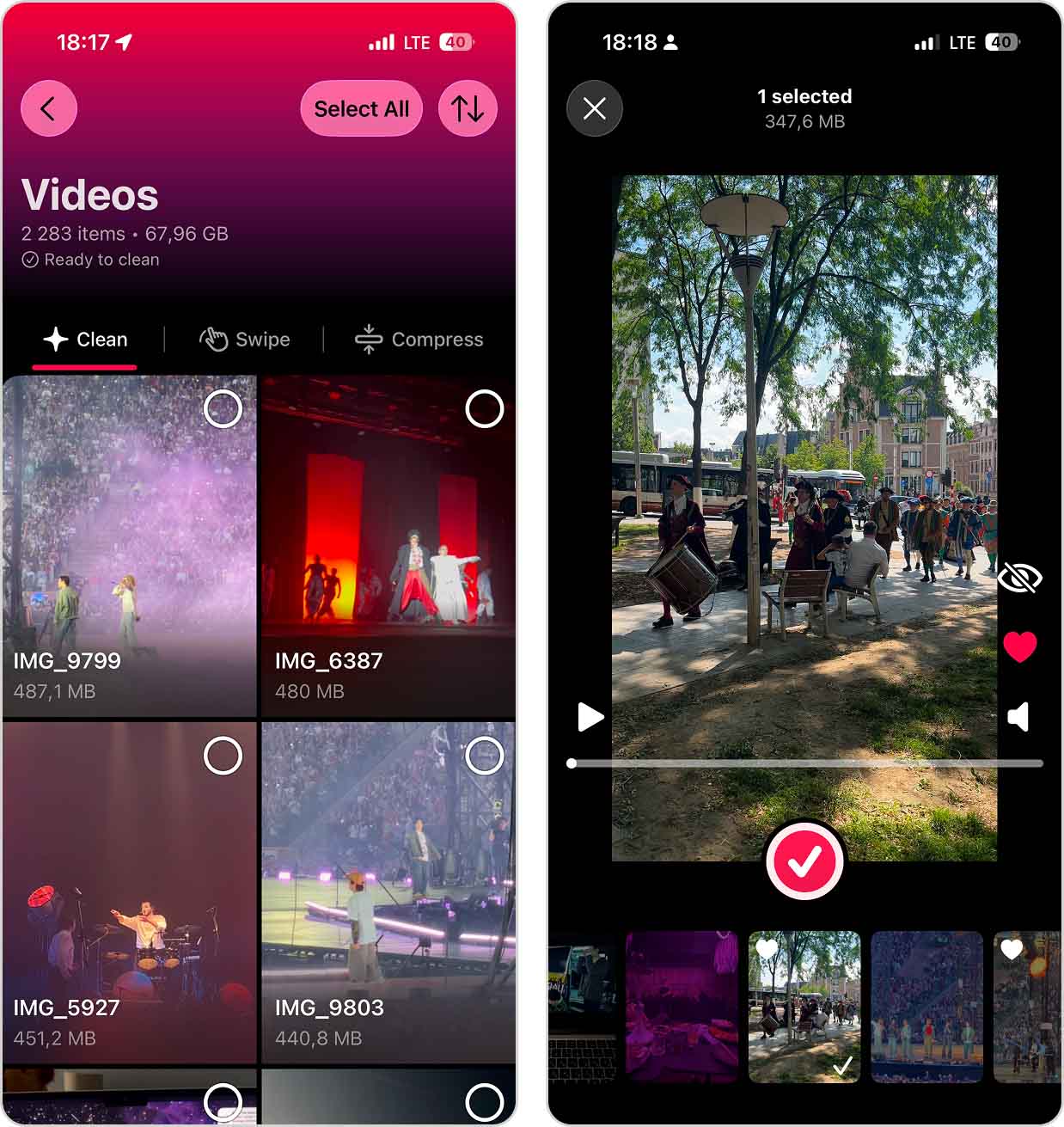
- Videos lets you easily review all of your clips and, unlike the Photos app, sort them by size or date.
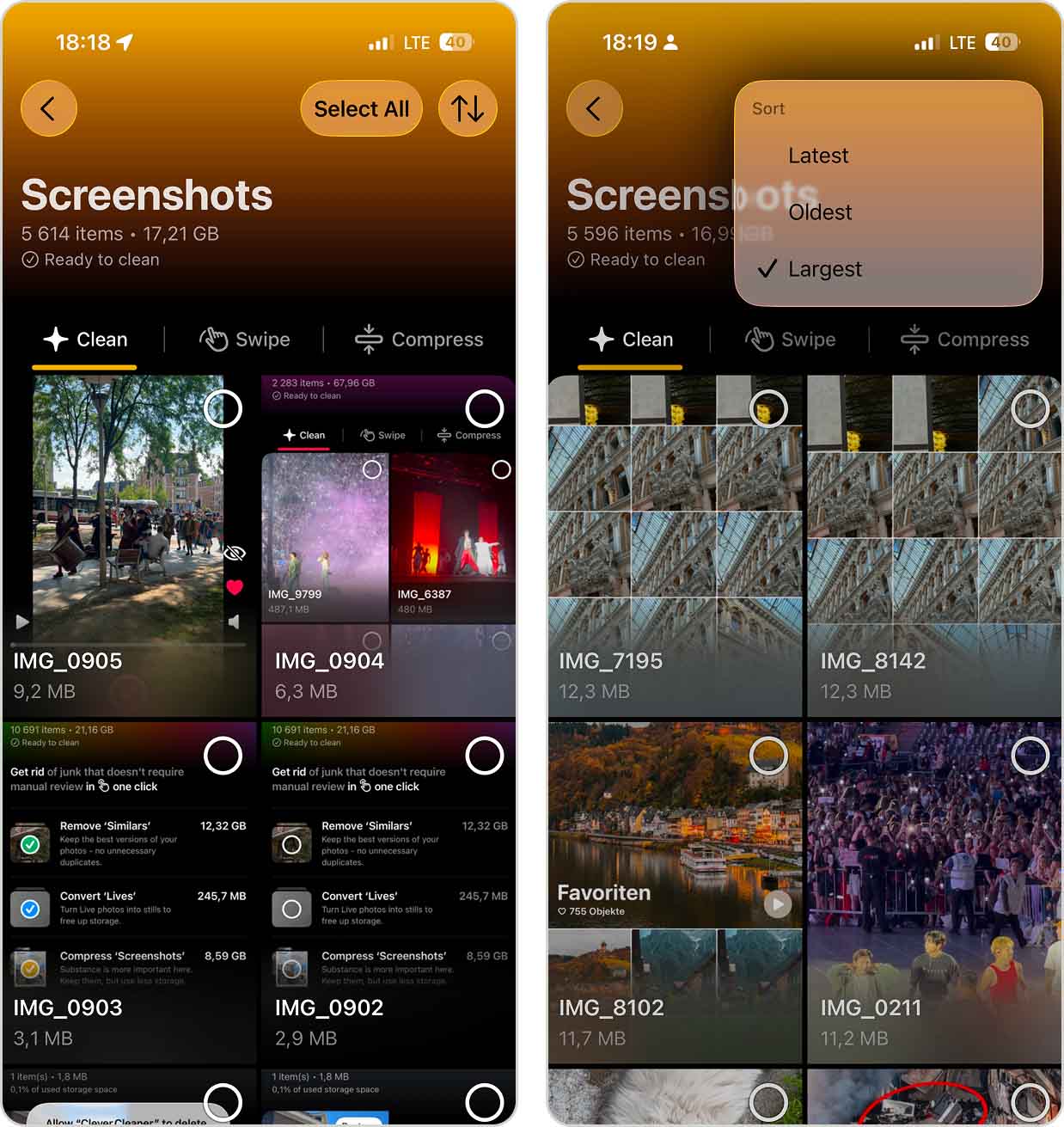
- Screenshots allows you to manage all of your screen captures, see how much space they’re taking up, and even sort them by size to find the biggest ones first. You can also nuke them all with one button.
- Live Photos gathers your animated shots conveniently together, so you can quickly decide what to keep. Delete the ones you don’t need or convert them into regular still photos to save space without losing the image itself.
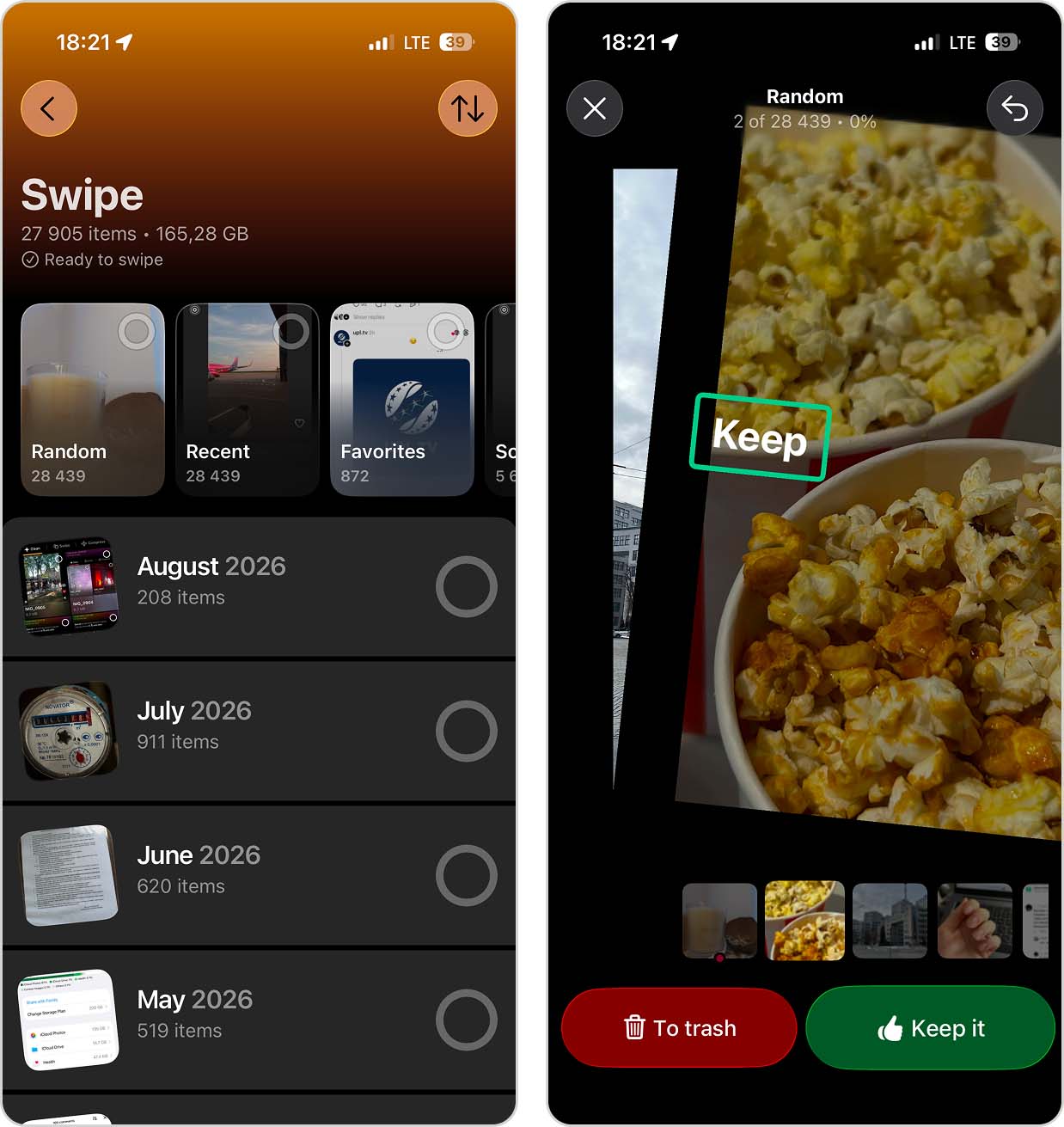
- Swipe uses simple left-to-delete and right-to-keep gestures to help you review photos, screenshots, Live Photos, and videos much faster. Handy for quick monthly cleanups.
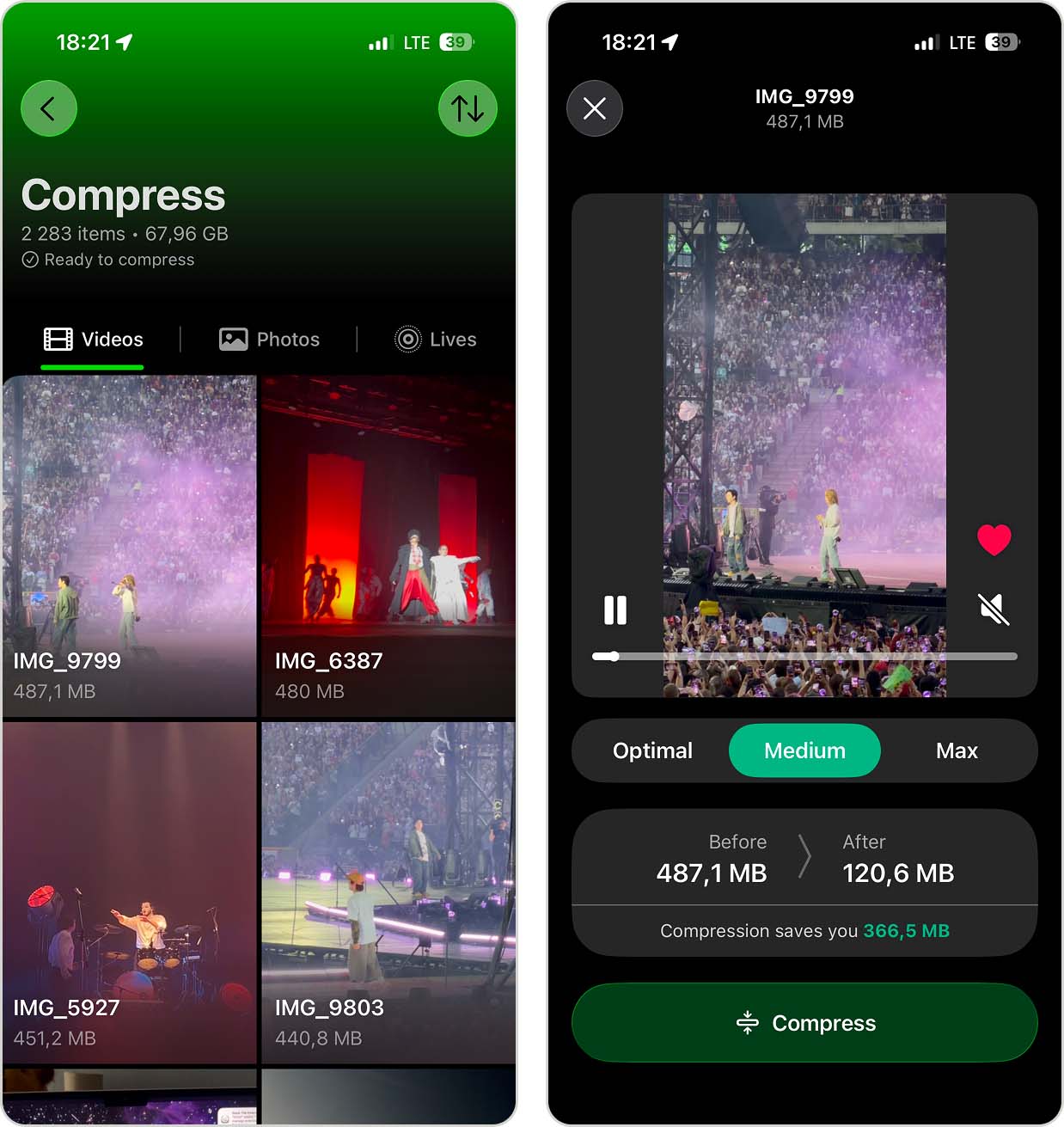
- Compress is perfect when deleting isn’t the right call. Just reduce the file size instead. Photos, videos, screenshots, and Live Photos all support it, and the quality drop is hard to notice.
- Skip List gives you a way to tell the app to leave specific items alone. Add them here and they won’t keep showing up during future cleanups.
We should also mention that you can use Clever Cleaner to find and deal with duplicates and near-duplicates for free (the app gives you daily free cleanup limits, while the Swipe feature is unlimited). If you eventually want unlimited cleanup for your entire photo and video library, you can upgrade to one of the available Pro plans. For a more complete picture, we also recommend checking out our ranking of the best apps for cleaning iPhone storage (spoiler alert: Clever Cleaner made the list). You can also read independent reviews of Clever Cleaner, like this one.
Method 2: Use Built-in Features of the Photos App
If you don’t want to use third-party apps, you can still clean up duplicate photos with the built-in Photos app. The main limitation is that iOS can only auto-detect exact duplicates, and even then, it may need time to finish indexing your library.
Similar photos are different. Even if two shots look almost identical to you, small changes in angle, lighting, filters, file details can stop iOS from treating them as duplicates. That means you’ll need to find similar photos manually. Below, we’ll show you the easiest way to do that in the Photos app.
Option A: Manage Duplicate Photos with the “Duplicates” Utility
Duplicates is a Photos app utility that automatically compiles all the duplicate photos it can find in your library. In this utility, duplicates are grouped together so you can easily review them and—most importantly—Merge them.
When you merge duplicates, iOS keeps the version with the highest quality and combines useful metadata, such as dates, captions, keywords, into one photo. The feature is available on iPhones running iOS 16 or later, including early models like the iPhone X series, as well as all the latest models like the iPhone 16 and iPhone 17 series running iOS 26.
Here’s how to use this feature:
- Open the Photos app.
- On the bottom menu, tap Collections. Then, scroll all the way down to the Utilities section and swipe left on it once. Tap Duplicates.
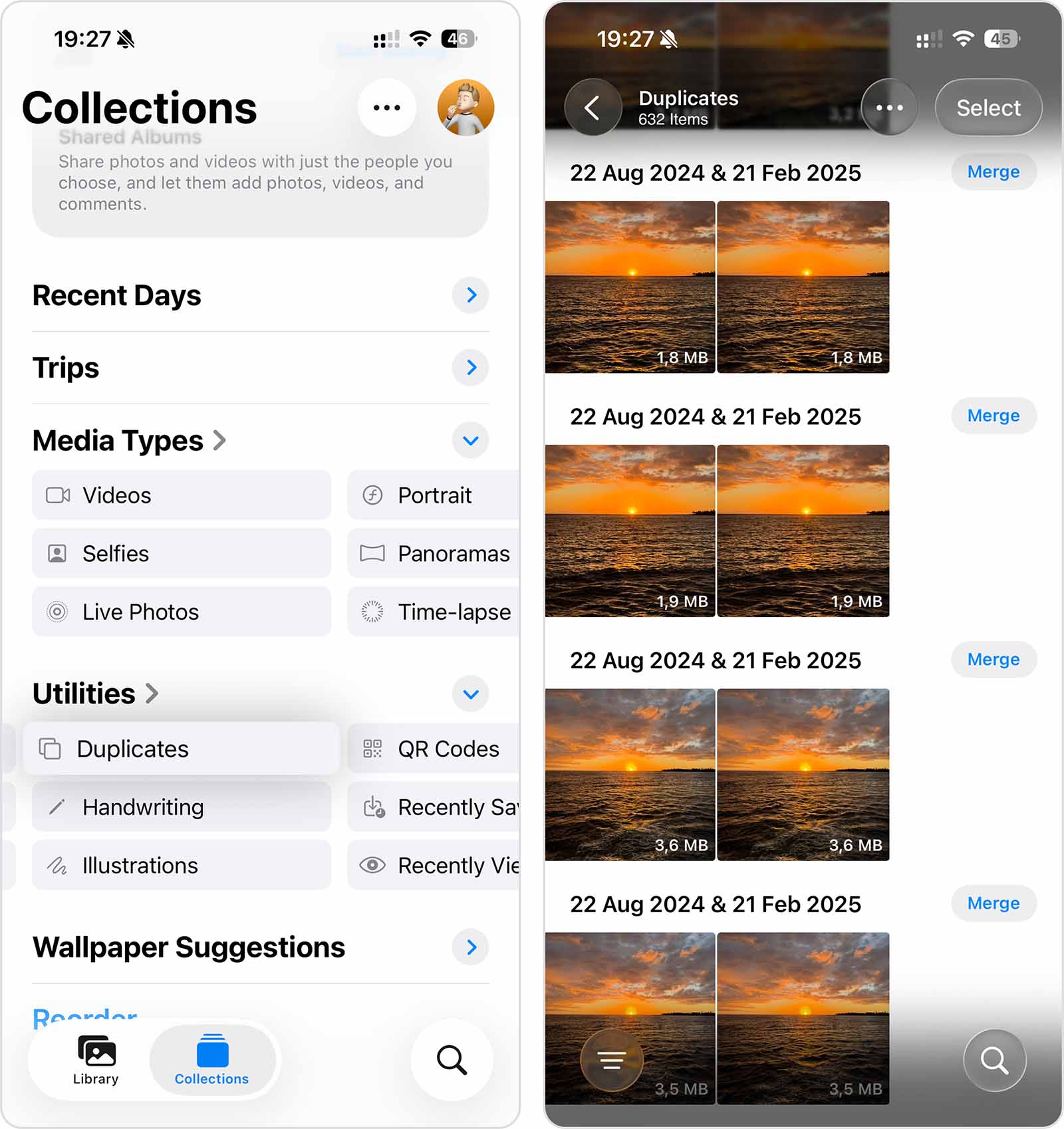
- Beside each group of photos, you’ll see a Merge button. Tap it to merge all the photos in that group into a single image.
- Finally, tap Merge Photos again in the pop-up to confirm that you want to merge the images.
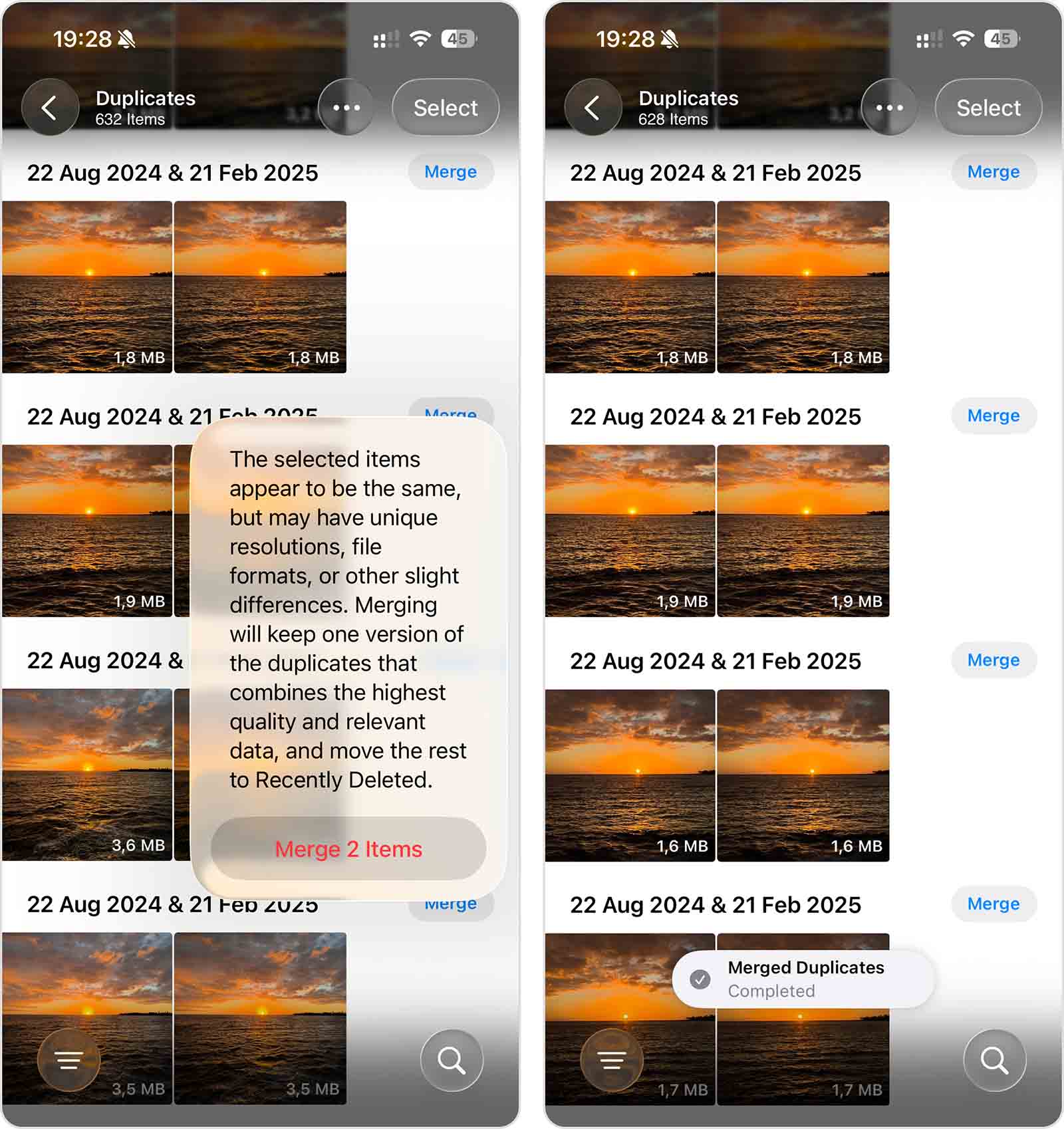
Unlike recently deleted photos, the only way to “reverse” merged photos is to duplicate the resulting image. This will only be an issue if you want to restore the original metadata.
Option B: Find Duplicate Photos on iPhone Manually
For similar photos, the next best native solution is to manually search for them in your library—which is made easier with Photos’s intuitive Collections feature.
Collections are iOS-generated categories that group your photos together, and there are several that are useful for this task (e.g., People & Pets). For our guide, we’ll show you how to find duplicate photos on your iPhone using the Maps collection—it’s reasonable to assume that similar photos would have the same location stamp.
For example, searches like “dog”, “beach”, “Paris” can quickly pull up related photos. From there you can scan the results and delete the repeated shots manually.
Here’s how you can use Collections to find similar photos on your iPhone:
- Open the Photos app.
- Tap Collections at the bottom of your screen. Then, under the Pinned section, tap Map.

- At each location you visited, a photo you took during the trip will be displayed. Tap a photo to open that location and see all the photos you took.
- Once you’ve found your similar photos, tap and hold an image and select Delete from the context menu. Alternatively, tap Select in the top right corner of the screen to choose and delete multiple photos. Make sure to tap Delete Photos again in the confirmation pop-up.
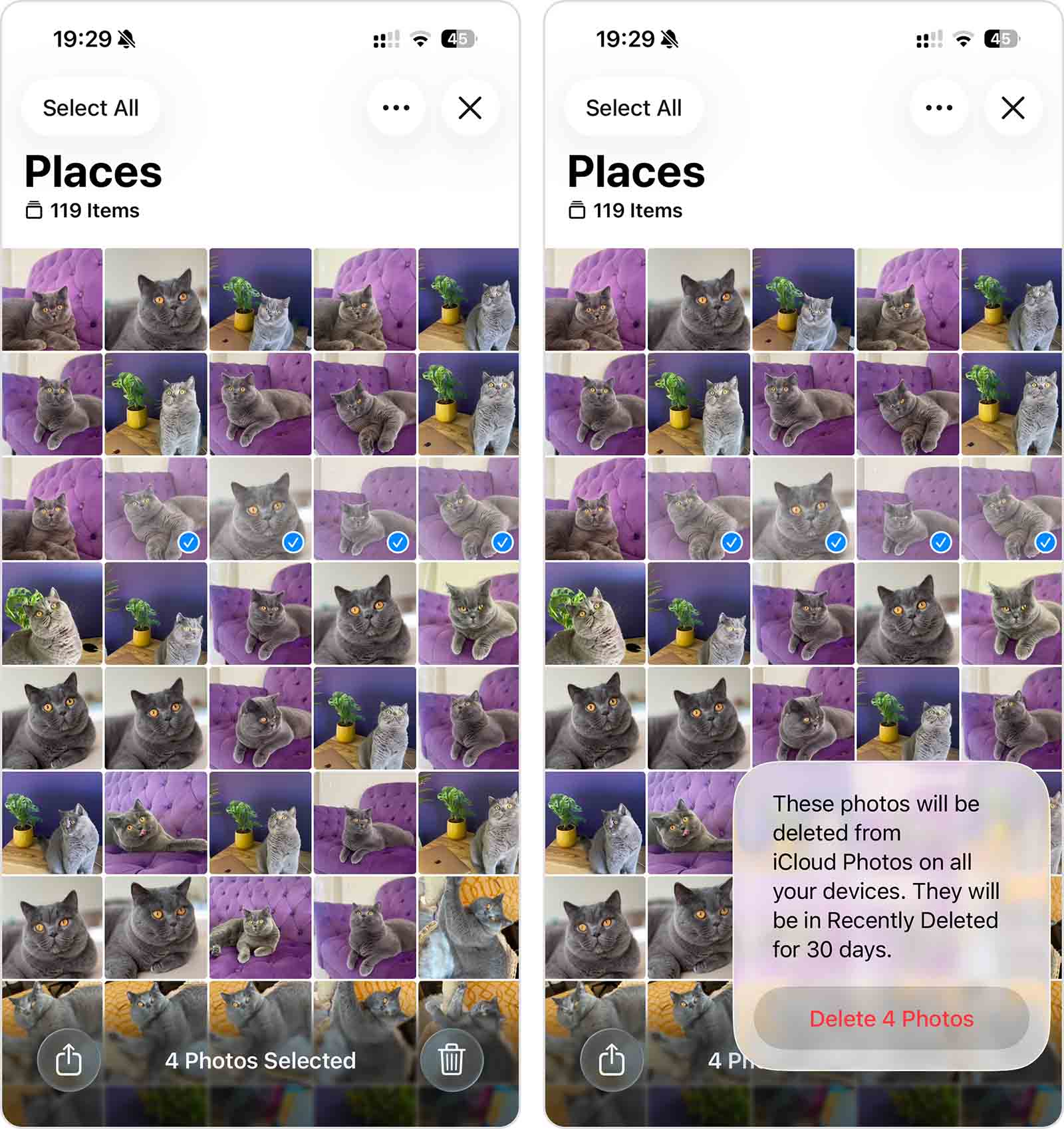
After you find and delete duplicate photos on your iPhone, don’t forget to clear the Recently Deleted folder in the Photos app to free up storage space.
Why Do Photos Keep Duplicating on iPhone?
There are several reasons why you find duplicate photos on your iPhone. Aside from knowing how to delete duplicates on your iPhone, you should also know why they appear in the first place, so below we’ll go through the most common causes and, more importantly, what you can do to keep duplicates from piling up again.
Reason 1: Accidental Manual Duplication
We all make mistakes, and some of our mistakes result in the creation of duplicate photos on iPhone (could be worse, right?). For example, one Reddit user confessed to accidentally duplicating their favorite photos multiple times. Their mistake turned 1,300 photos into around 5,000, so you can imagine how much storage space was instantly wasted.
I accidentally duplicated the 1300 favourited photos I had a few times and now I’m sitting at 5k favs I want to delete the duplicates but they don’t show up in the duplicates tab what do I do (I keep these photos hidden since they are nsfw) I use an IphoneX btw 256 gigs.
Accidental duplicates usually happen during routine photo management or when you create an extra copy while sharing photos through another app. It’s an easy mistake, but over time, those copies can clutter your library and take up storage you could use for photos you actually want to keep.
Reason 2: Editing Photos Without Deleting the Original Shots
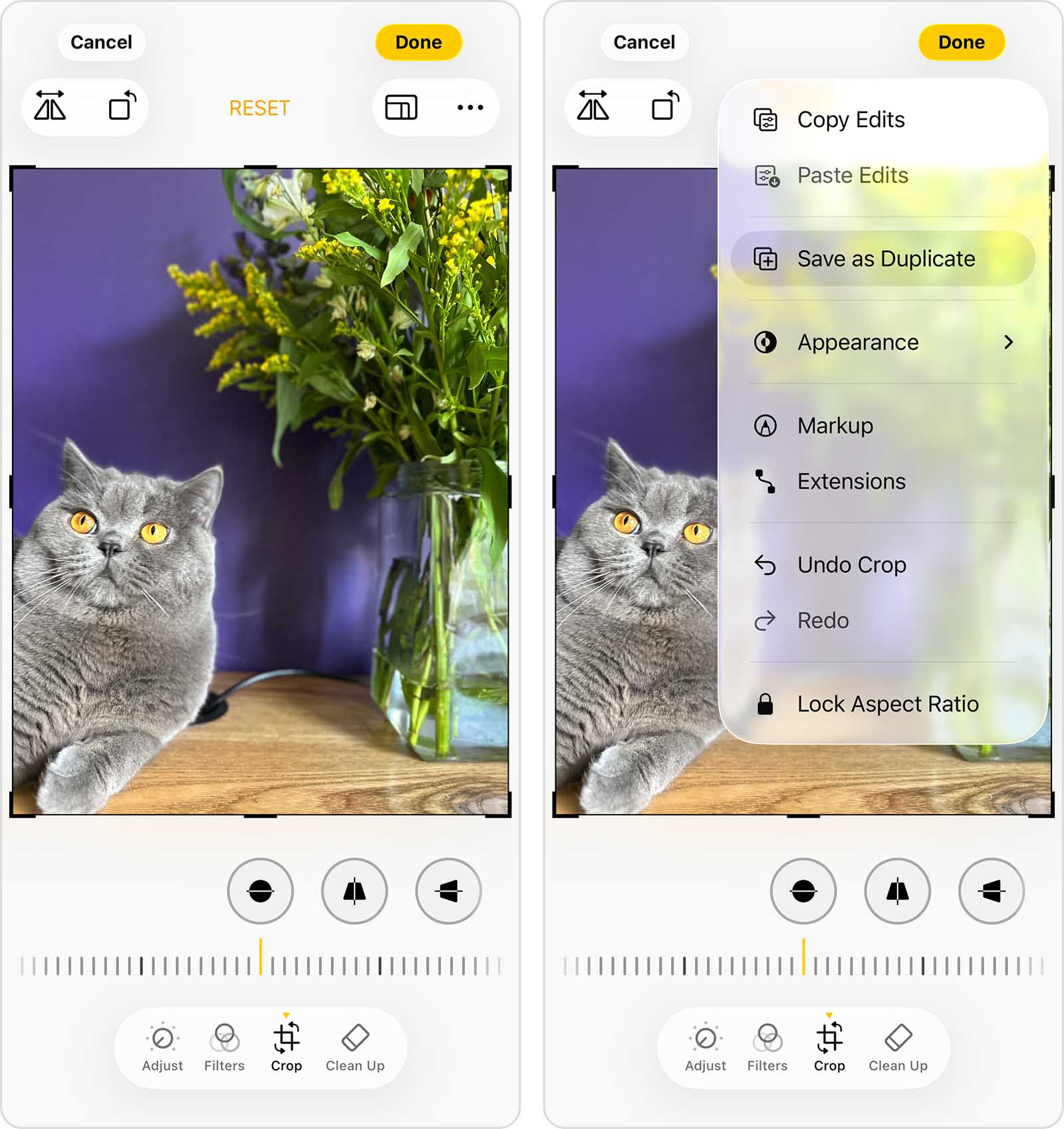
Another common reason is photo editing. Whenever you edit a photo using a photo editing app, you often have the option to save it as a “separate image.” This creates a copy of the original image with your new edits applied. And due to the edits, iOS will not recognize the new edited photo as a duplicate of the original.
Reason 3: Tapping the Shutter Button Multiple Times
Many iPhone users instinctively tap the shutter button multiple times to capture the perfect moment—and why not? It’s not like digital photos cost money to take. However, they do cost storage space, and that’s definitely something iPhone users have to pay premium prices for.
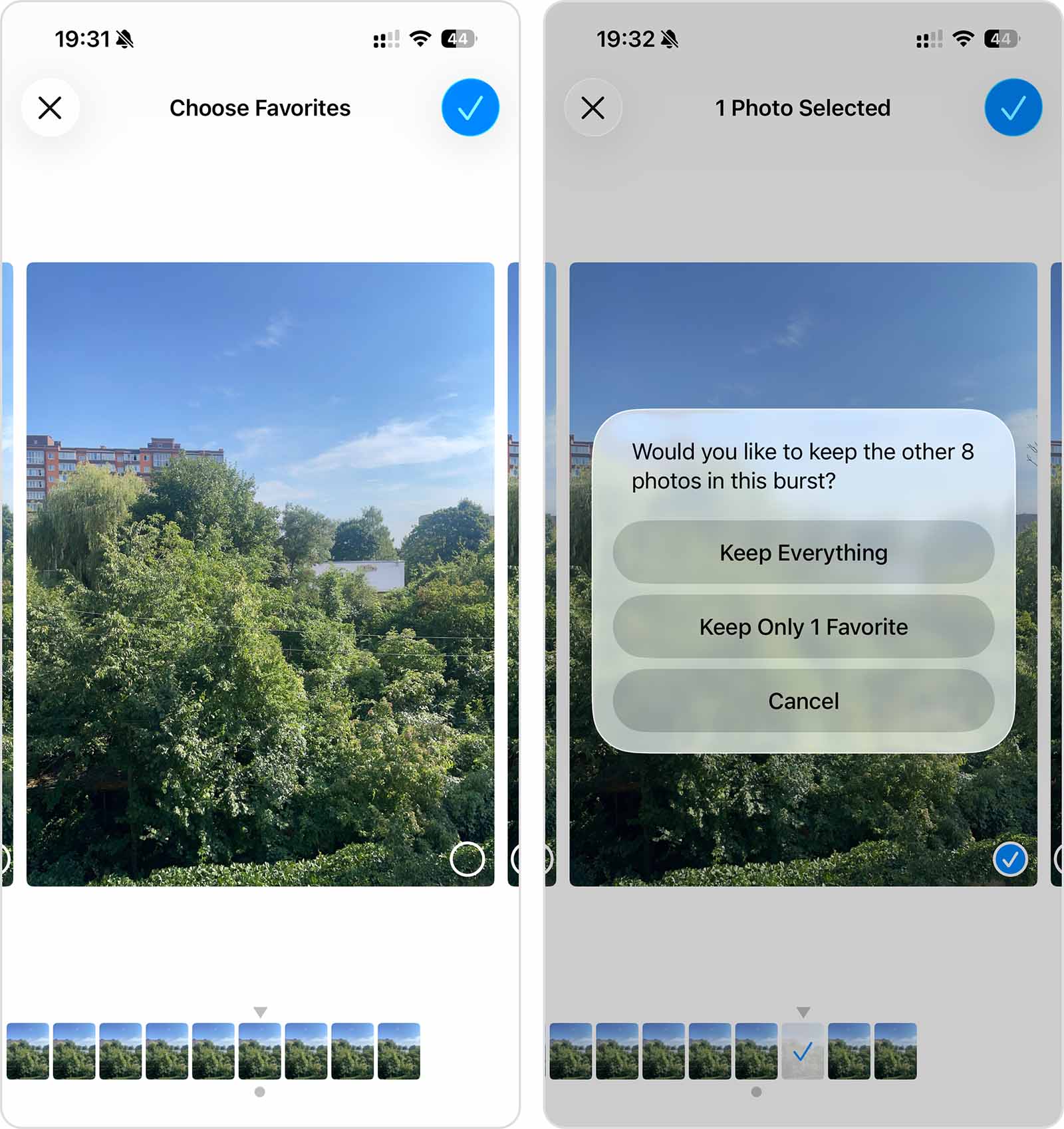
As if tapping the shutter button like it’s a winning slot machine wasn’t enough to fill up your storage, there’s also Burst Mode. When you capture a burst of photos, the Camera app automatically snaps a sequence of pictures within seconds. While these photos are actually stored as a single item in your Gallery, they can take up a significant amount of space.
- Launch the Photos app and navigate to the Collections menu. Then, scroll down to the Media Types section and select Bursts.
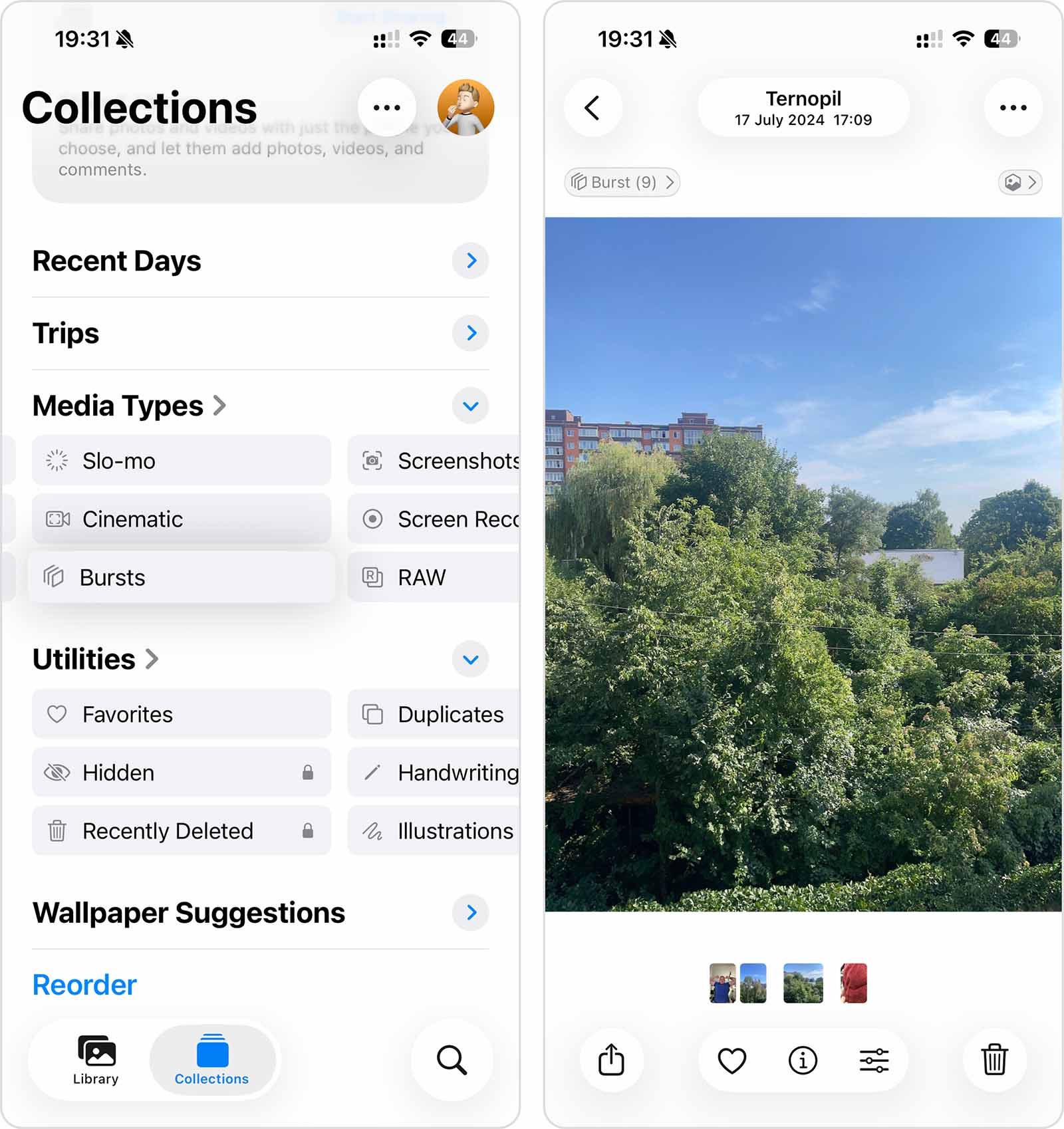
- Choose a Burst you want to review.
- In the top left corner of the screen, tap Burst.
- Mark the images you want to keep.
- Finally, tap the check mark in the top right corner of the screen. Then, tap the Keep Only X Favorite option in the dialog menu that appears.
Reason 4: Repeated Photo Downloads
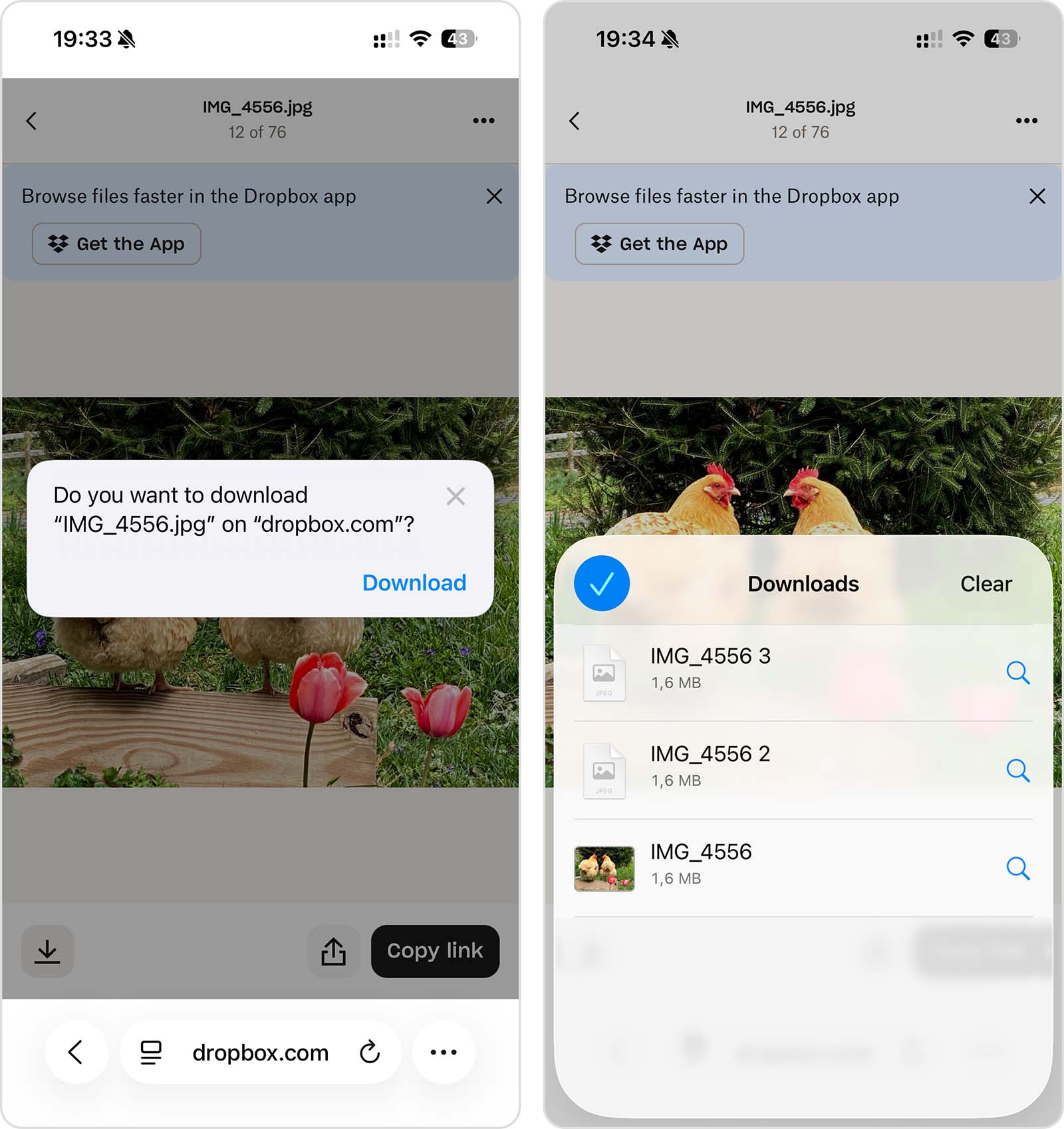
If you download a photo once (as an attachment), then download it a second time, you’ll end up with duplicates. And since you don’t usually get the option to overwrite the old photo, you could download the same photo multiple times without even noticing.
The same can happen when the same photo reaches your library again in other ways. You might AirDrop it to your iPhone more than once, download it from cloud storage when a local copy is already there, or save the same image again from another app or service.
Reason 5: Social Media Apps Saving Published Content
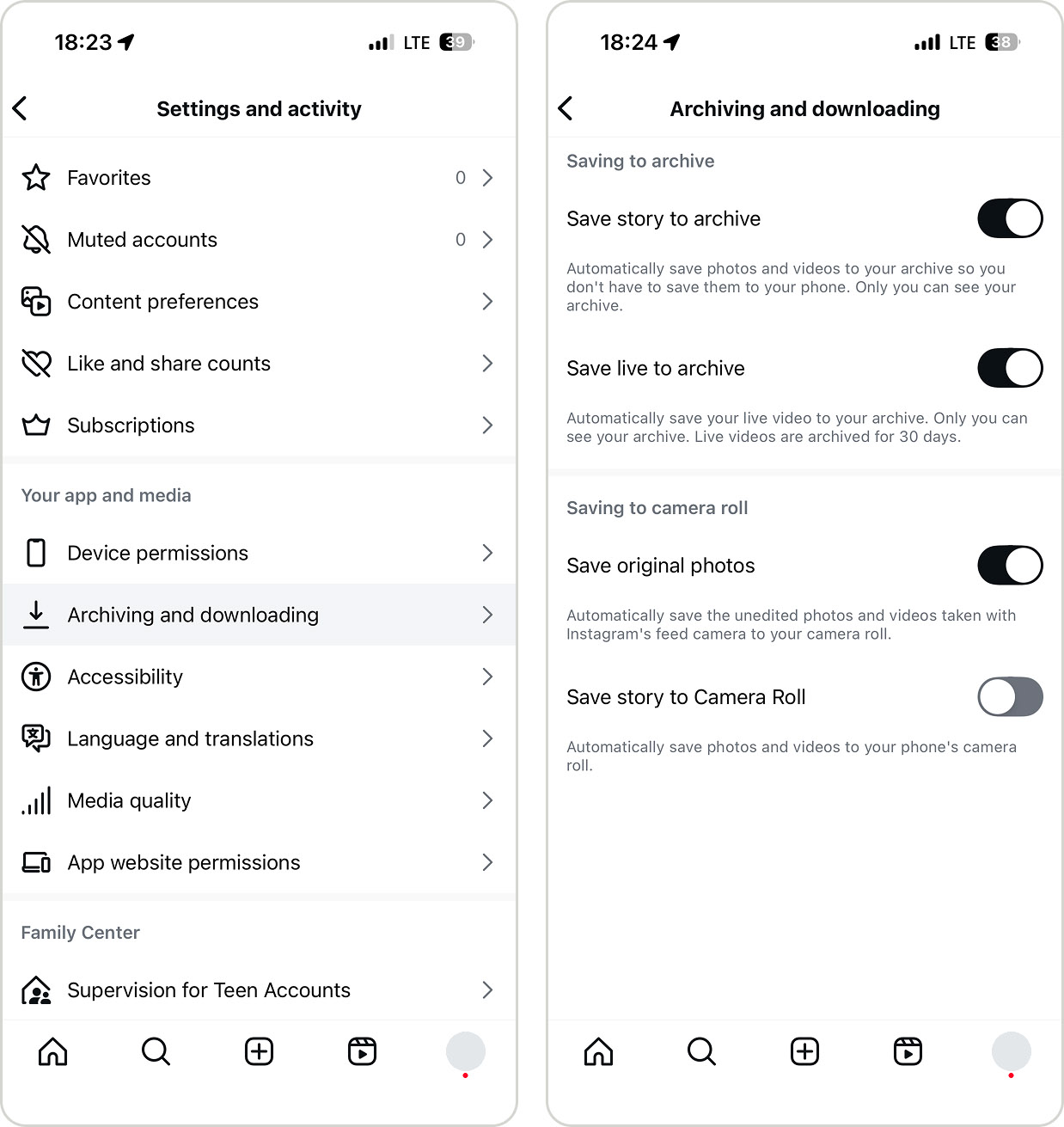
If you post Stories, photos, or videos on Instagram, TikTok, or other social media apps often, they can be another source of duplicates on your iPhone. You may already create an extra copy while editing a photo or video before posting it. Then, if the app is set to save published content to your Camera Roll, another copy can appear there automatically after you post.
Reason 6: Using the HDR Feature on Older Devices
iPhone X and earlier models offered a controllable HDR (High Dynamic Range) setting in the Camera app. When the “Keep Normal Photo” option was enabled, the camera would save two versions of each photo – one with HDR and one without, effectively creating duplicates of every shot. If you’re still using an older device, then this could be another source of duplicate photos on your iPhone.
The good news is that modern iPhones (starting with iOS 17) save only the HDR-enhanced version of your photos. For more detailed information about HDR settings on your specific iPhone model, you can check out Apple’s comprehensive HDR camera settings guide.
- Open the Settings app.
- Navigate to the Camera section.
- Find the Keep Normal Photo option and turn off the toggle switch next to it.
Is Interest in Deleting iPhone Photo Duplicates Growing?
According to our data, interest in cleaning up duplicate photos on iPhone keeps climbing. And that makes sense when you look at how we use our phones today. For many people, an iPhone has already replaced a separate camera for everyday photos and videos, social media content, travel shots, and pretty much anything else worth capturing. More photos also mean more repeated shots, edited copies, downloads, and other images that eventually need sorting out.
We wanted to see whether this shows up in search behavior as well. For that, we took the most common search query, “delete duplicate photos on iPhone”, and tracked its behavior in Google Trends for the last five years in worldwide web search. The screenshot shows an interest-over-time chart with a normalized popularity index for this query, updated week by week, so every spike or dip reflects real search behavior.
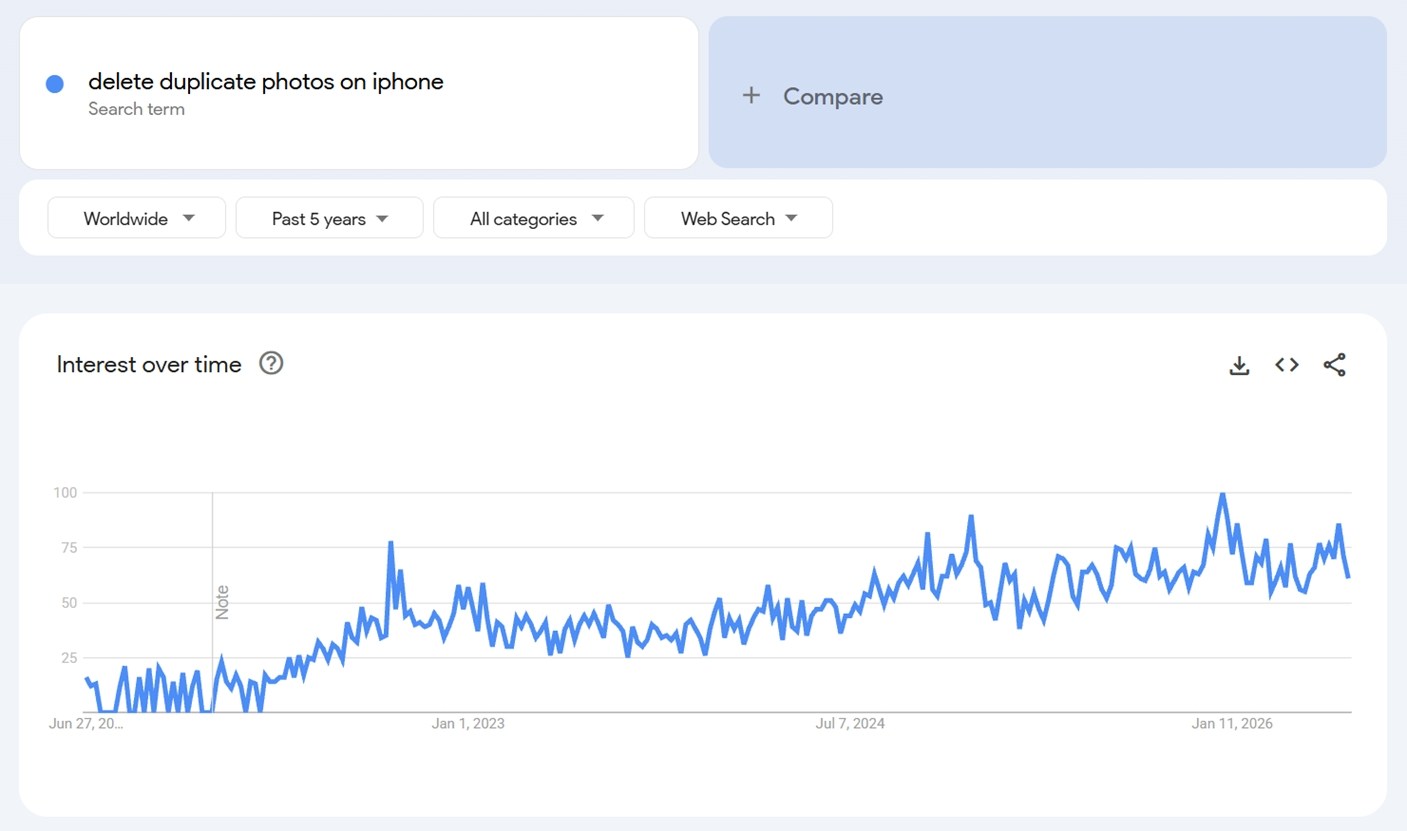
The shape of the curve looks pretty clear. In 2020 and 2021, users entered this query far less often, and the line sits closer to the bottom of the scale. Starting in 2022, the baseline level steps up, then keeps edging higher while sharper seasonal peaks appear around the same parts of the year. By 2024 and 2025, the chart stays at a higher tier than at the start of the period, which matches growing photo libraries, tight iPhone storage, and the routine habit of cleaning out junk shots.
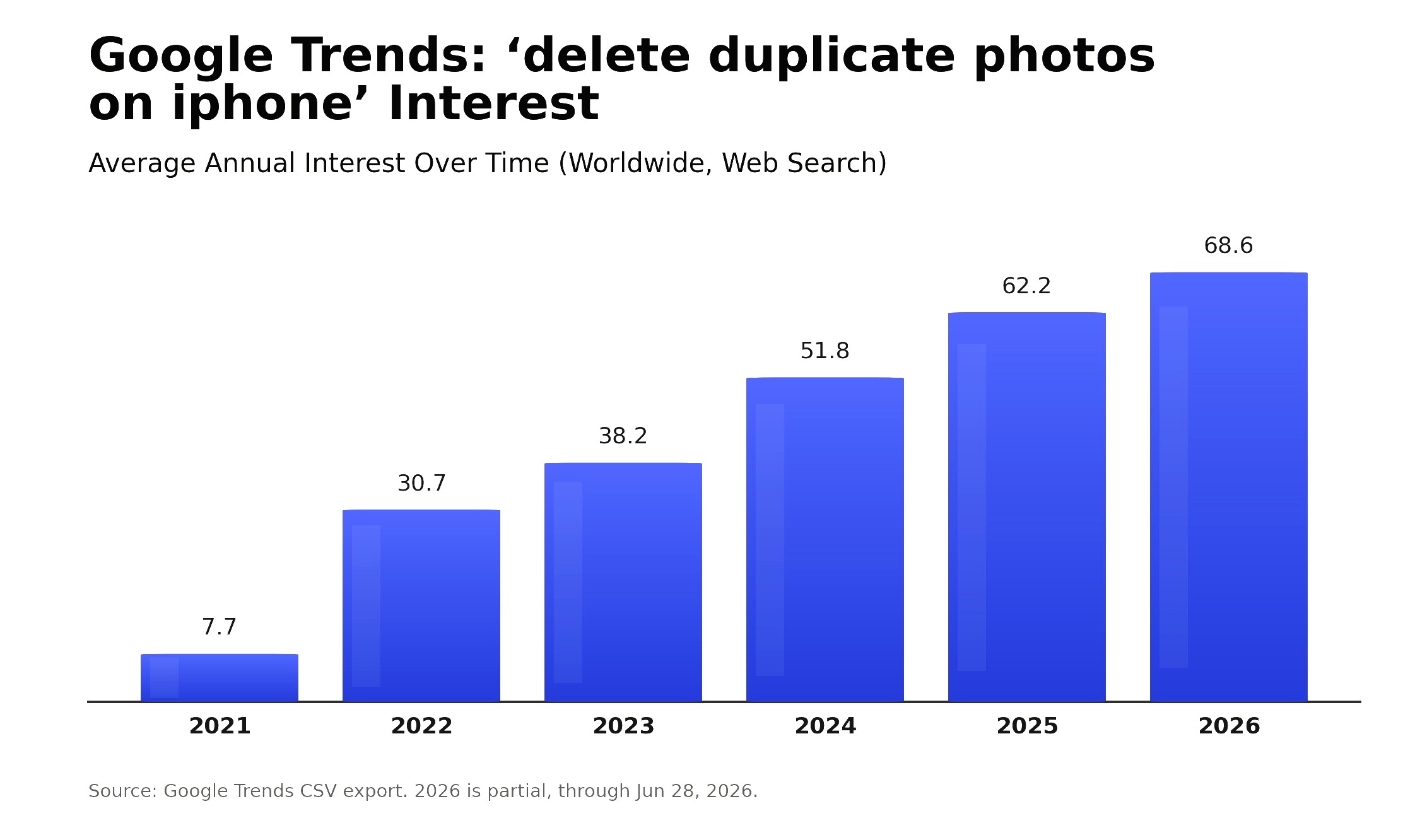
When we look at the year-over-year averages in Google Trends, the interest keeps moving up. In the updated data, 2025 shows roughly 20% higher average interest compared with 2024, and 2026 is already about 10% higher than 2025 based on the available weeks so far. Right after the release of iOS 26 on 15 September 2025, the graph jumps for a short stretch: the index rises from the low 60s in early September to 75 in the week after launch, before settling back closer to its previous range. After the earlier iOS release in September 2024, the lift was more gradual but still visible, with search interest climbing from the 50s and low 60s into the high 60s and eventually reaching 82 by late October. From a practical risk and technology angle, we think this pattern signals steady, routine growth rather than a one-off spike. The partial 2026 data points in the same direction.
We don’t think new iOS releases alone explain that growth. People simply take and keep far more content on their phones now, and managing all of it becomes a bigger job along with it. The fact that searches for duplicate cleanup continue to rise may also point to a gap between what users want to do with increasingly large photo libraries and what the built-in iOS tools currently offer. Apple has added its own Duplicates utility, but as we covered above, it still doesn’t deal with every similar-looking photo. With smartphones taking on more of the work once left to dedicated cameras, we expect photo cleanup (and better tools for doing it) to remain relevant.
Conclusion
Duplicate (and similar) photos are an inevitable part of your iPhone library. If you really want to keep it tidy and clutter-free, the long-term solution is to develop good storage hygiene habits. Make it a point to review your photos after each shoot or download, or check your library on a regular schedule (e.g., every Saturday).
If you struggle to maintain these habits, then you can at least rely on the methods in this article to make the cleanup process more convenient. That said, try to avoid hitting the limits of your device storage—iOS tends to operate less efficiently when it doesn’t have enough elbow room (even the indexing process may suffer, and you’ll be unable to download applications like Clever Cleaner).
