300+ Million
TOTAL DOWNLOADS
Search the website

If you need to recover iPod data because you've lost music or videos, you've come to the right place. With Disk Drill, iPod data recovery for the Mac is a breeze. Whether your iPod won't mount or you've overwritten files by mistake, Disk Drill works for iOS-based iPod Touch and classic iPods as well. It provides a simple and effective way to recover music from an iPod. macOS Tahoe Ready!
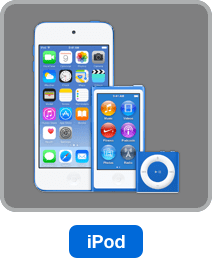
It's easy to forget that every man-made device – even one as nifty as the Apple iPod – has its faults. One day it's working fine. The next, it won't boot up without a full system restore. Or perhaps a friend mistakenly synchronizes your iPod with his computer. A mere two clicks of the mouse is all it takes to lose your precious music and settings.
Making regular back-ups is essential (so you are told) but you didn't make them, and now you're here. Luckily it's not as hopeless as it might seem. Using Disk Drill, iPod data recovery software for Mac OS X, it's remarkably easy to recover songs and videos that have been recently deleted. Read on for a quick overview. For detailed tutorials, see How to Install Disk Drill and How to Recover Lost Files with Disk Drill Basic in the CleverFiles Knowledgebase.
No matter what kind of iPod you have, Disk Drill can recover its lost music. Whether its the newest iPod touch or a well-used iPod classic, this reliable recovery software can scan its storage and recover lost and deleted files quickly and easily.

1st, 2nd, 3rd, 4th, 5th, 6th

1st, 2nd

1st, 2nd, 3rd, 4th, 5th, 6th, 7th

1st, 2nd, 3rd, 4th

1st, 2nd, 3rd, 4th, 5th, 6th, 7th

iPhone, iPad, etc...
Note: Disk Drill supports any device with iOS 5-16


If you have an iPod or Nano and lose your music, here is the procedure to get your tunes back with Disk Drill. Your chances of a successful recovery diminish over time, so you should attempt the recovery as soon as you discover you have lost data. Stop downloading anything else to the iPod until recovery is complete to avoid overwriting the files you want to restore.
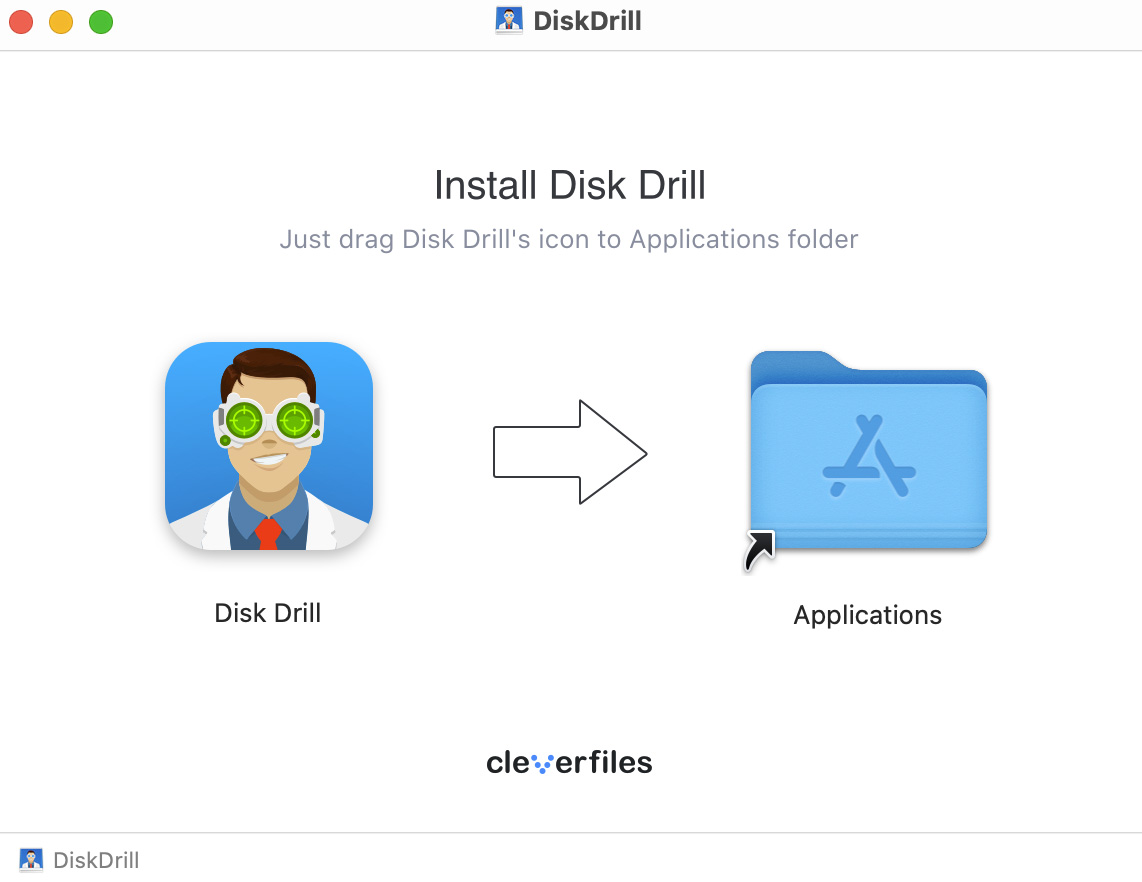
Download and install Disk Drill free iPod recovery software for Mac. The free trial version allows you to preview the files that can be recovered before investing in the tool.
Connect your iPod to your Macintosh and launch Disk Drill. You will be presented with a list of disks available for recovery. Select your iPod from the list so you can begin to retrieve your songs.
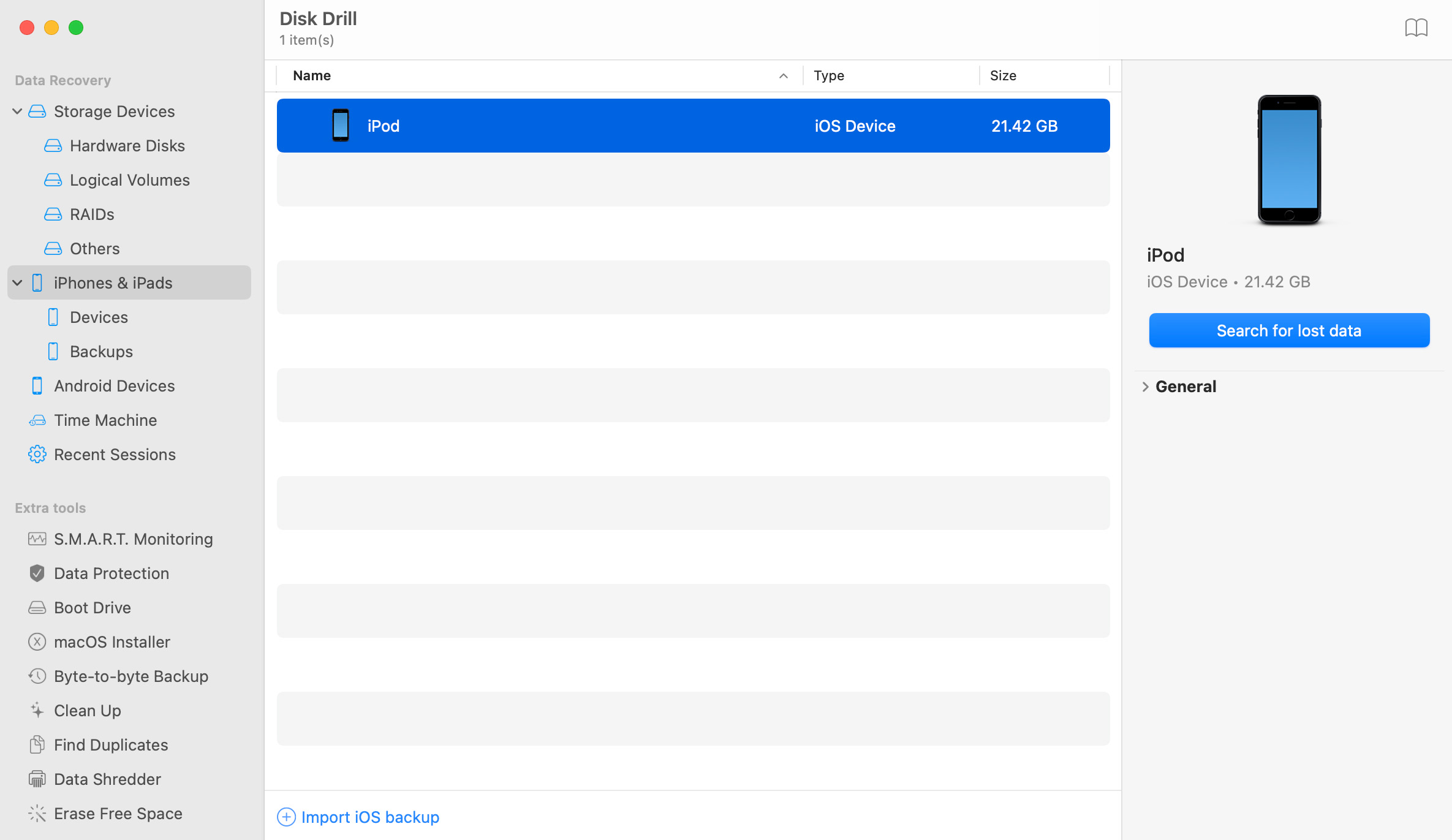
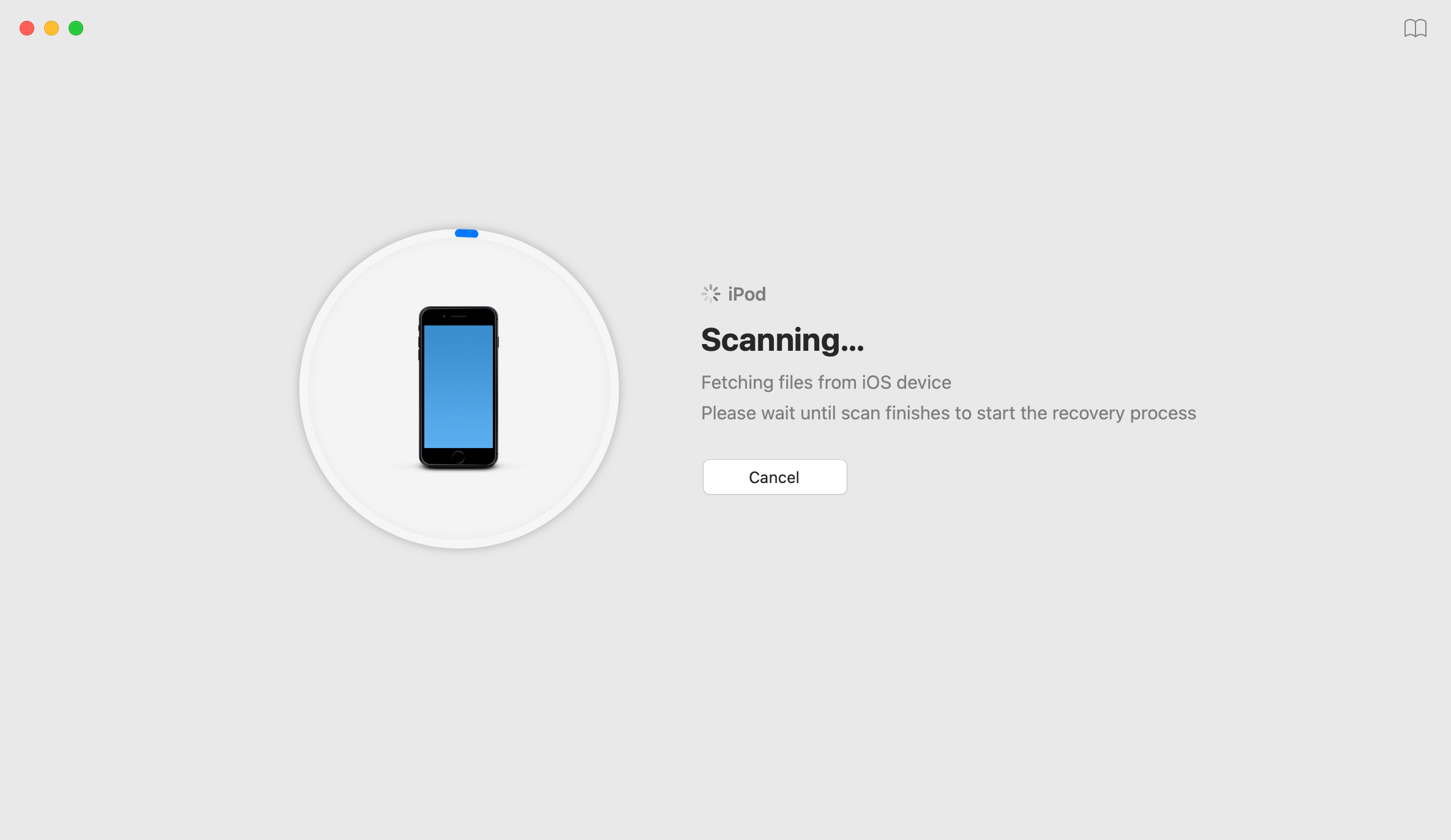
Click the Search for lost data button. This starts the scanning process through which Disk Drill searches the iPod’s storage to identify deleted files that it can restore.
You can also direct Disk Drill to recover lost files from an iOS iPod from an iTunes backup. The software can extract specific files from the backup without requiring a full iTunes restore. This saves a lot of time when you need to recover just a few files.
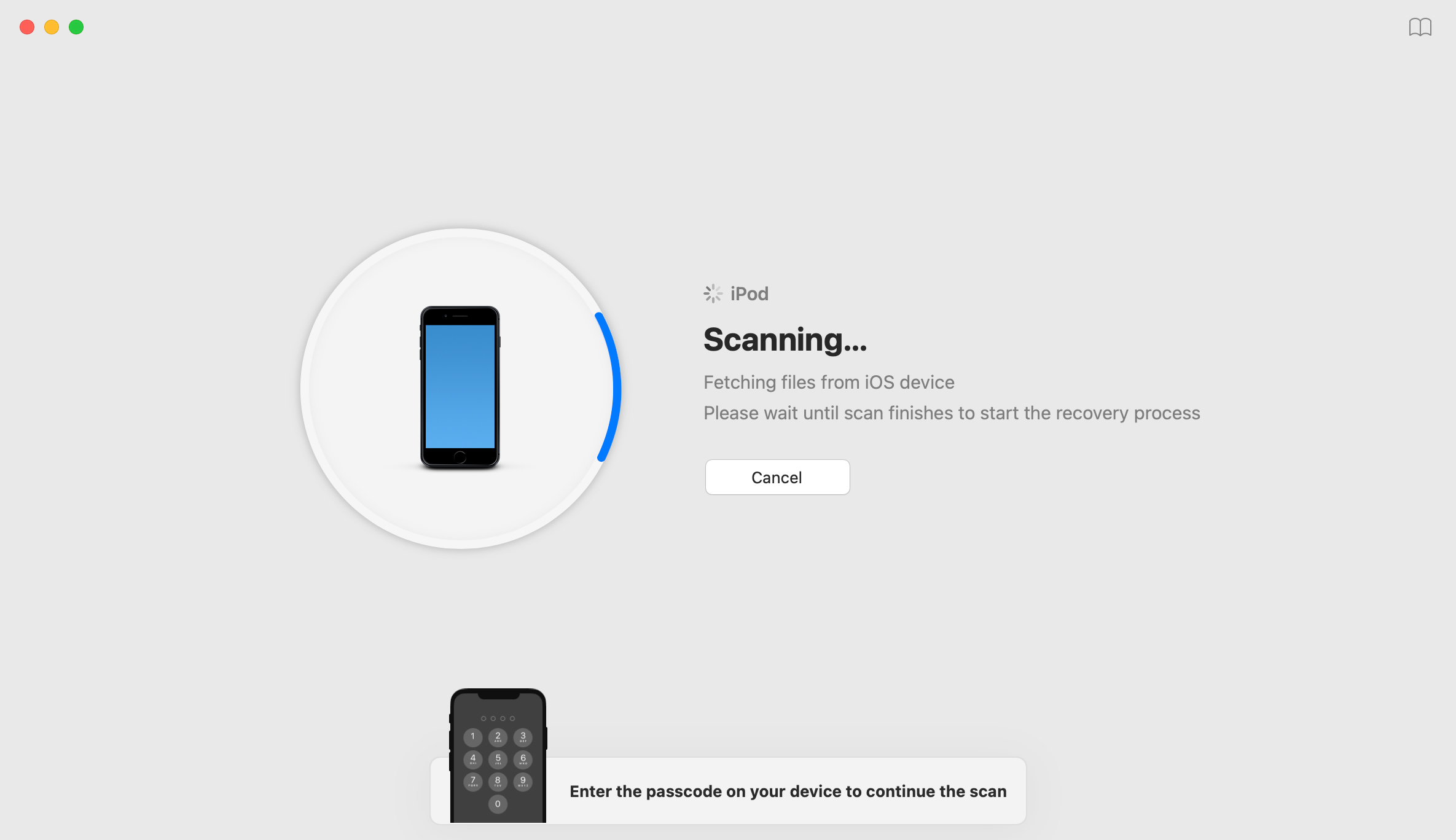
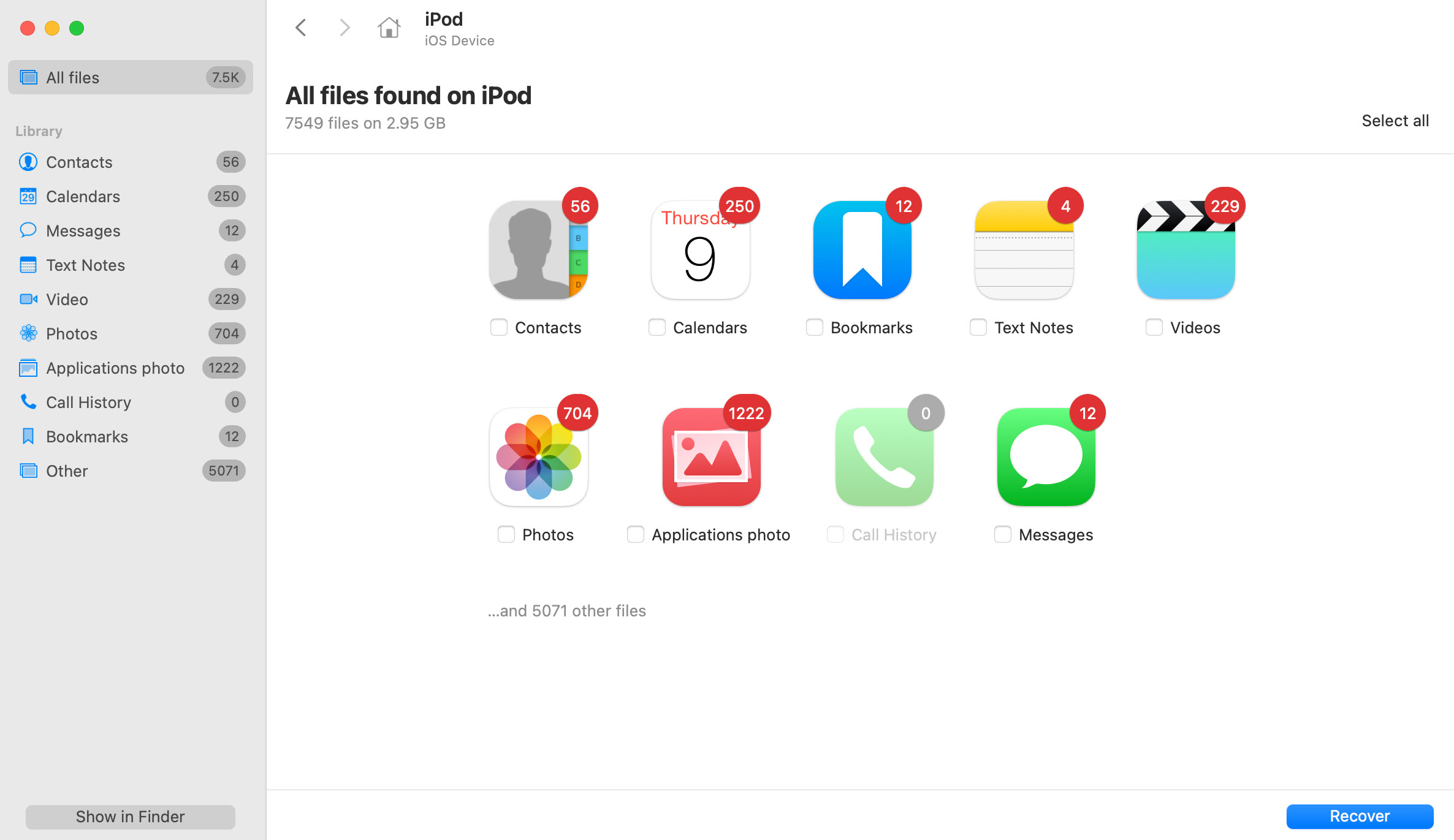
Preview the files that have been found in the scanning process. Depending on the type of data you are attempting to recover, the items may be found in different folders identified by Disk Drill. For example, older devices are treated like any other disk while newer models like an iPod touch use iOS data recovery techniques.
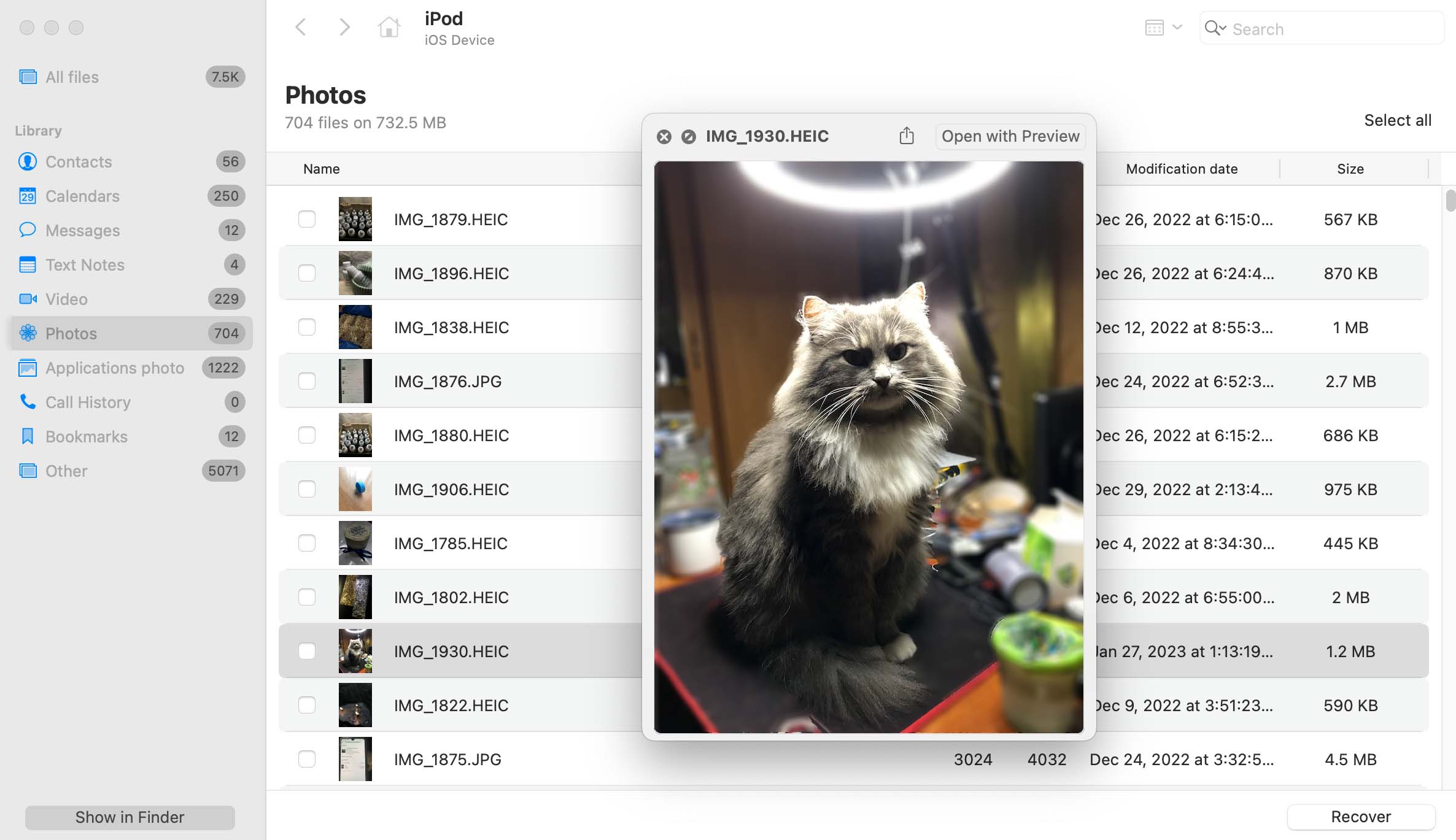
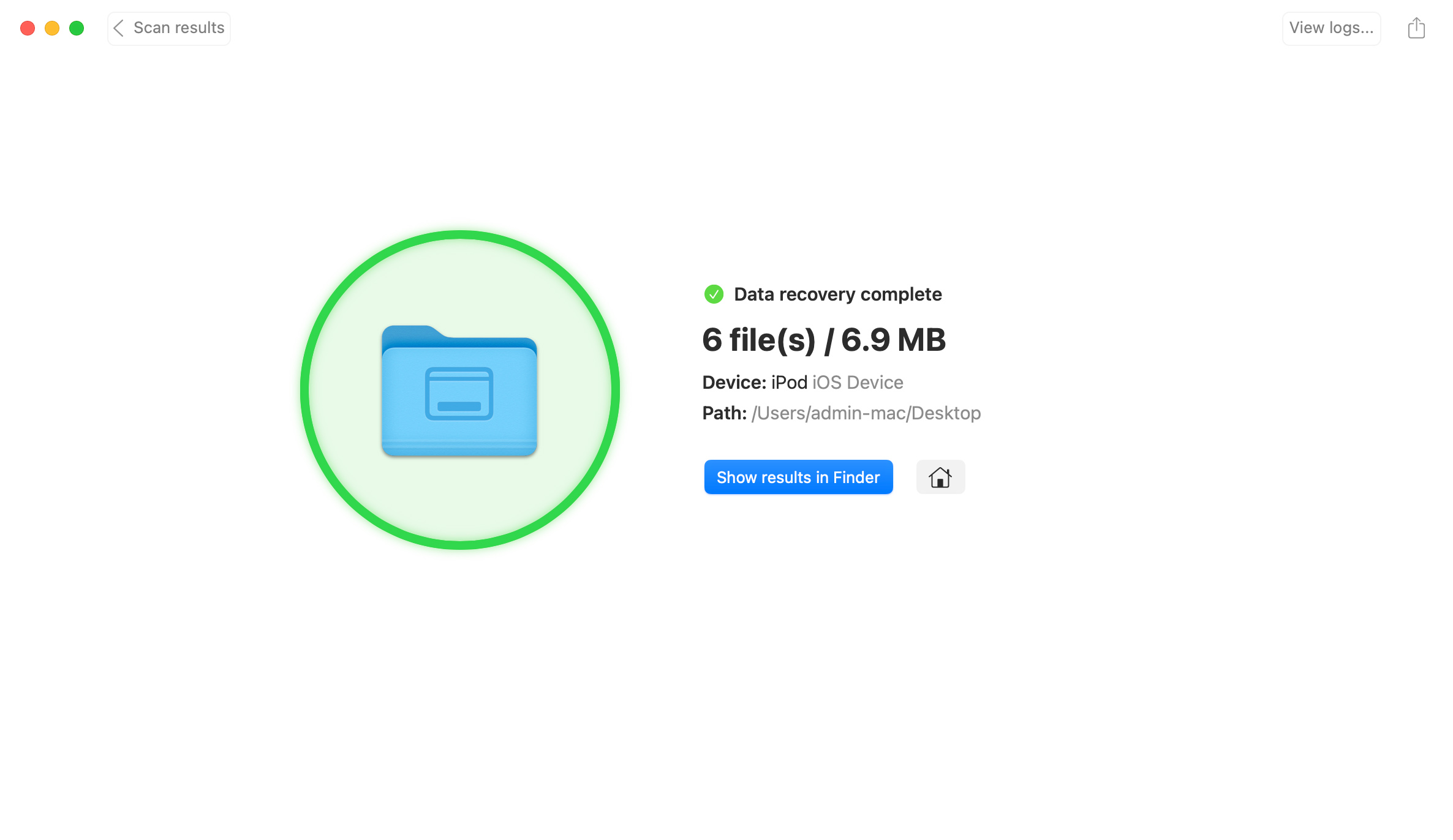
Click the Recover button to complete the recovery. We suggest saving the data to your computer and reloading it to your iPod when the recovery is finished. This recommendation is designed to minimize the probability of file corruption while recovering your lost data. When recovery is complete, you can move the data back to your iPod and be on your way.
So what are you waiting for? Download Disk Drill, the best iPod data recovery software, for free today!
IMPORTANT: Starting with Disk Drill 4, iOS-enabled iPod Touch devices are also supported for data recovery. Though the recovery process is different for touch and classic non-iOS iPods, Disk Drill attempts to ensure the highest recovery rate possible. So, at this time you can recover iPod data from the iPod Touch, Classic, Nano, Shuffle and Mini.

It’s very easy for you or a friend to accidentally delete some of your favorite tunes from your iPod.

Attempting to jailbreak your iPod so you can install alternate software can result in data loss.

Downloading apps to your device poses the risk of a virus infection that can lead to lost or corrupted files.

A problem with an iOS upgrade can cause multiple problems with your device including lost data.

A sudden operating system crash can result in all kinds of issues with your iPod including data loss.

Mistakenly restoring your device to its factory setting will result in the loss of all its user data.
If your iPod is not recognized by your Mac or you get a “Drive Not Formatted” message, your iPod may have been corrupted. This may limit the ability to perform an iOS recovery, but Disk Drill can still recover deleted photos from your iPod. Disk Drill will treat the device as a raw disk. Your data is still physically present on the device and can be restored with the following steps.
 PROTECT
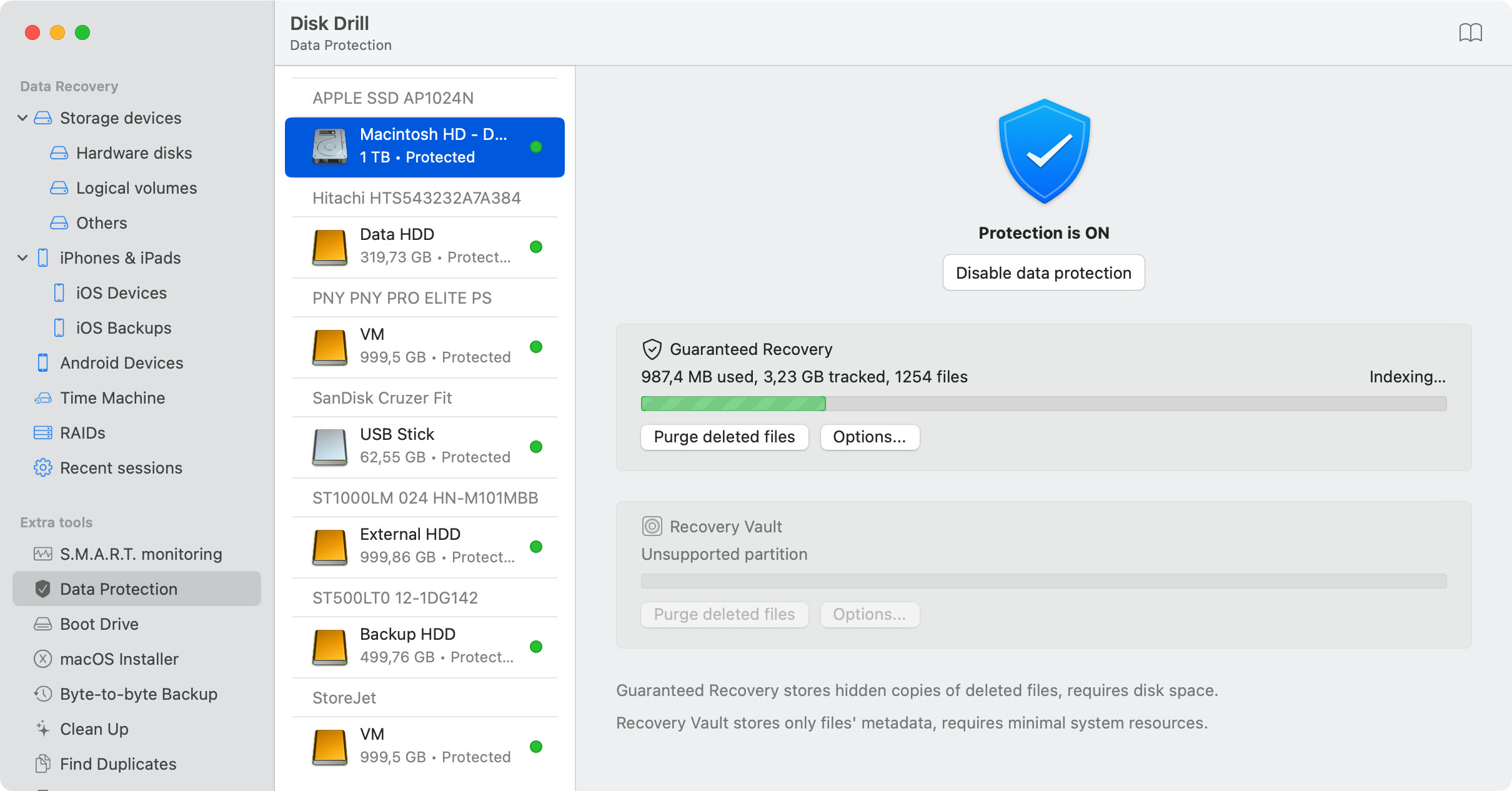
While you are recovering data from your iPod, it's a good time to give the data safety on your desktop Mac a second thought. We all know it's just a question of when you will have to deal with data recovery, why not protect your most important files and folders today? Disk Drill provides all the required data protection tools you will need: Recovery Vault and Guaranteed Recovery.

Versions of Disk Drill are available for all versions of macOS from 10.5 through the newest version 14 named Sonoma.

FAT16/FAT32/exFAT, NTFS, NTFS5, ReFS, HFS, HFS+, APFS, EXT2/EXT3/EXT4, BTRFS and any RAW disk

Disk Space: 1GB minimum free space
CPU: 64-bit (x86-64) or ARM compatible CPU 1.0 GHz or faster
RAM: at least 4GB
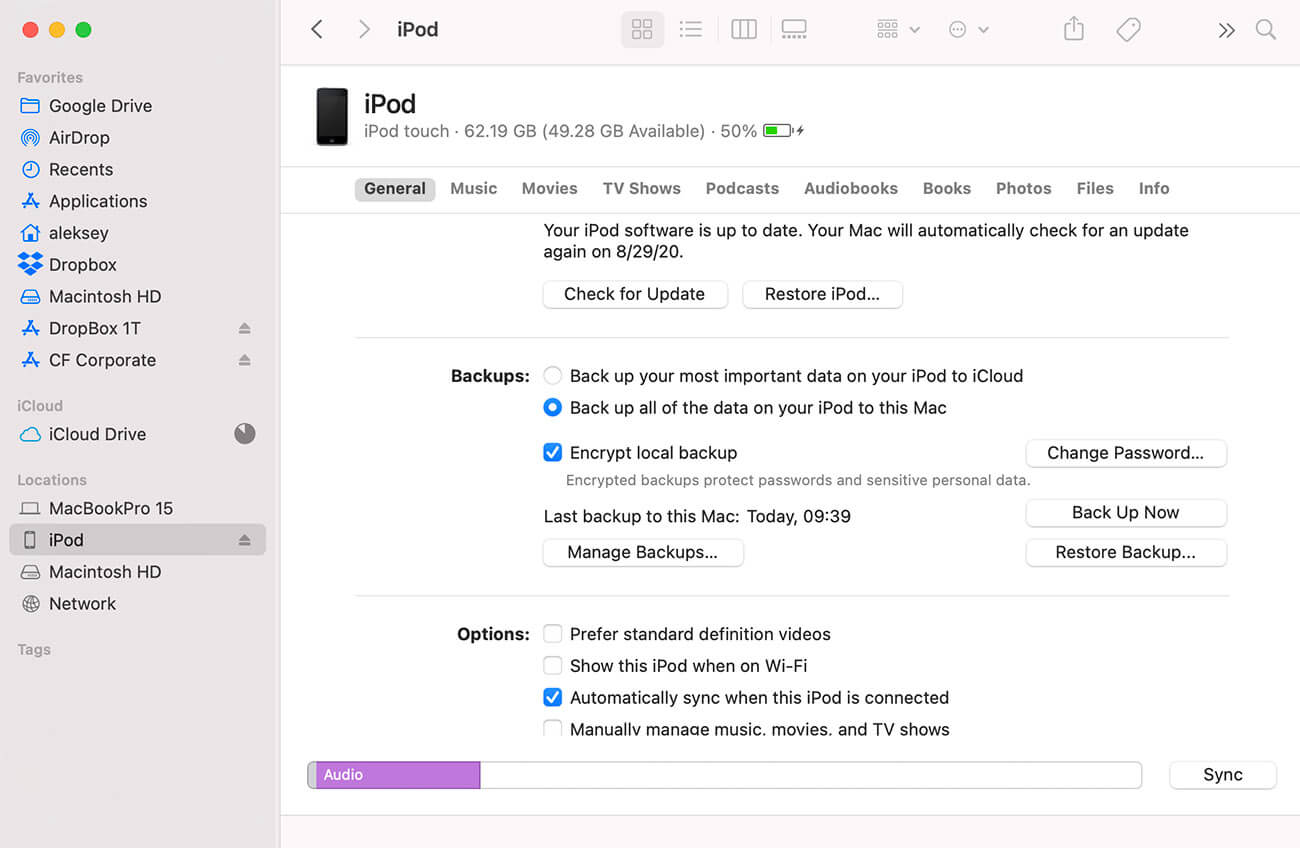
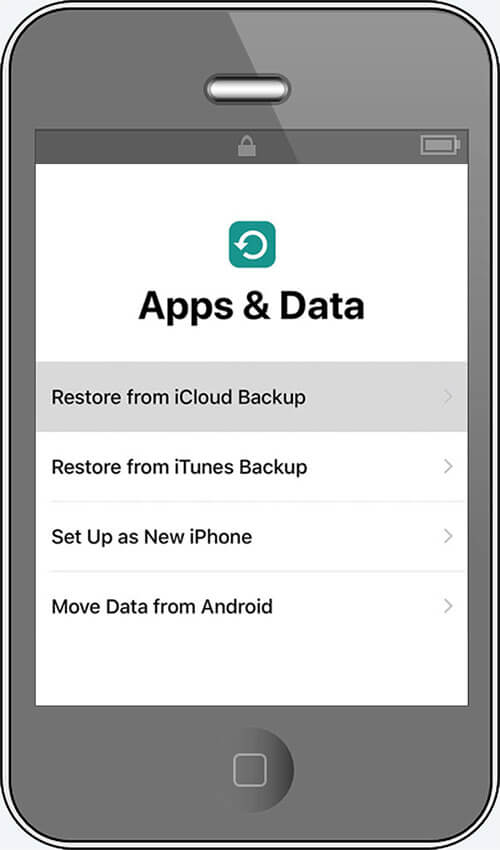
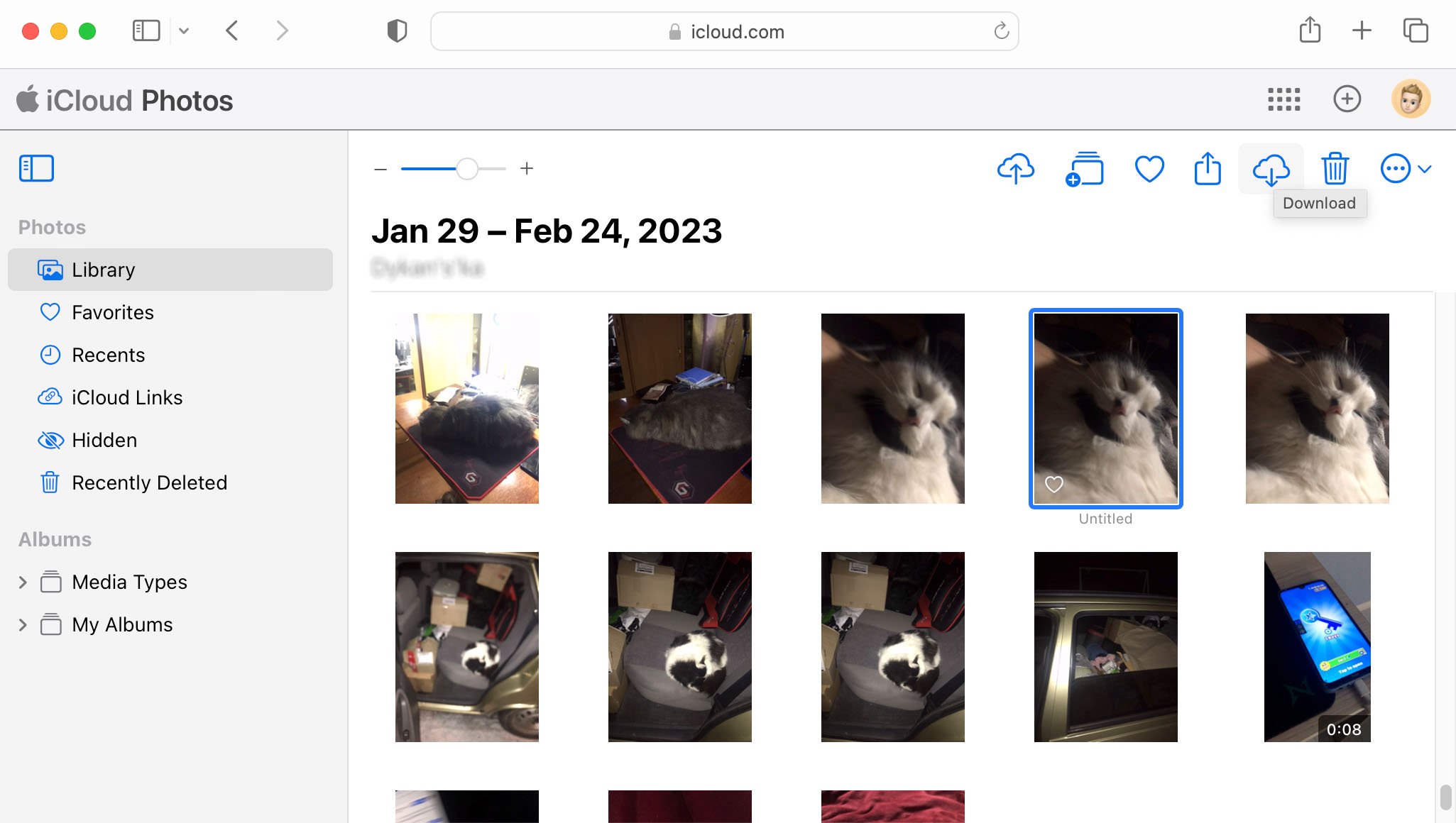
Here are some other ways you can restore deleted music on your iPod. For them to be successful, you need to have backed up your iPod after obtaining the lost songs.
Updated on by Disk Drill Team
To recover deleted data from an iPad:
To get back music deleted from your iPod:
Use the following steps to get your music off an iPod without using iTunes.
Yes, it will. All current data will be lost when you restore your iPod from a backup.
Recover data from an iPod Touch with data recovery software.
To recover music from your iPod Touch:
Data recovery software will treat your iPod classic as a standard disk device. This allows you to recover your lost songs with an app like Disk Drill. Follow these steps.
If you have lost your music after an unsuccessful sync, you can recover from a backup or try to restore the data with recovery software.
The following procedure can be used to transfer music from your iPod library to your computer.
You can use three different methods to recover playlists from an iPod. They are:
The best iPod recovery software that you can currently use to retrieve data from your iPod is:

REQUIREMENTS
macOS 10.15.8–26.x, 69.7 MB
Use Disk Drill 1.x-5.x for OS X 10.5+
AVERAGE USER RANK
NEWEST RELEASE



TOTAL DOWNLOADS
PRO CLIENTS
in 160+ countries
 Emiel
Emiel Disk Drill, free Mac app for recovering your lost data, is a great tool for all Mac lovers.
It’s not a miracle worker, but if the file(s) or folders you need to recover are not backed up, or were deleted from a back up drive, then DiskDrill offers an excellent choice for potential recovery. The initial version of DiskDrill is a free version that will scan both internal drives and external drives of any type to see if it can recover files that have been removed. Paul Horowitz