


In our iBoysoft Data Recovery review, we’ll walk you through all the important stops: recovery performance, ease of use, extra features, trial limits, pricing tiers, and how it stacks up against familiar names.
We’ll also keep score across the key categories, using a simple 1 to 5 rating system, then roll those into a final verdict. By the end, you should know whether iBoysoft Data Recovery for Windows (or for Mac) deserves your money, or whether another option makes more sense.
📌 Here’s our brief summary:
We found iBoysoft Data Recovery to be a middle-of-the-road app. It handles common recovery tasks like deleted files, formatted drives, and inaccessible partitions (reasonably) well, and the UI is simple enough for beginners. Nothing felt especially bad, but nothing truly stood out either. It’s a workable option for straightforward jobs, though there are stronger choices if you need deeper scan performance or better overall value.
| 👍 Strengths | 👎 Weaknesses |
|---|---|
|
|
Every app review is the result of a hands-on, multi-step process run by team experts. Our QA specialists run recovery tests on real drives. Then, lab engineers verify the results to make sure every text is accurate. Experienced technical editors present the results in a clear, reader‑friendly format.
See how we test →iBoysoft Data Recovery Overview
iBoysoft is a software company best known for storage utilities, data recovery tools, and disk management apps for Windows and Mac. Its software focuses on everyday data loss problems like deleted files, formatted drives, RAW drives, lost partitions, and external devices that suddenly stop opening.
The company markets iBoysoft Data Recovery as a straightforward tool for home users who want a clean interface without digging through technical menus. On Windows, it supports common internal drives, SSDs, USB flash drives, memory cards, and many external disks. Here’s a practical look at what it offers:
| Key Feature | Details |
| 💻 Available Platforms | Windows 11/10/8/7 and Windows Server editions (varies), plus separate Mac edition |
| 🆓 Free Version | Yes. Free scan & free preview |
| 📄 Supported File Types | 1,000+ (claimed) file types including photos, videos, documents, archives, audio, and email data |
| 💽 File System Support | NTFS, FAT32, exFAT, FAT16, ReFS, BitLocker-encrypted drives, some EXT/HFS read scenarios |
| 🧩 Lost Partition Recovery | Yes. Can detect deleted or missing partitions |
| 🖼️ Disk Image Creation/Scanning | No (Disk image scanning limited to iBoysoft Data Recovery for Mac) |
| 🔍 Recovery Methods | Quick scan + deep scan |
| 🛠️ Extra Tools | BitLocker recovery support, partition help tools, can save the scan session |
| 📞 Customer Support | Email support, knowledge base |
The app is available for both Windows and macOS desktop computers, including the latest Apple Silicon machines — though sadly not for iOS or Android devices as yet.
These are not identical versions with the same layout or feature set. The interfaces, tools, and workflows differ quite a bit between platforms. For this review, we’ll cover specifically iBoysoft Data Recovery for Windows.
Here are some of the standout features:
Recover Data From Unreadable Disks
iBoysoft Data Recovery can “Deep Scan” disks that appear broken or unusable, allowing you to run a diagnosis on a corrupt or improperly formatted disk to find out if it’s possible to recover files from it.
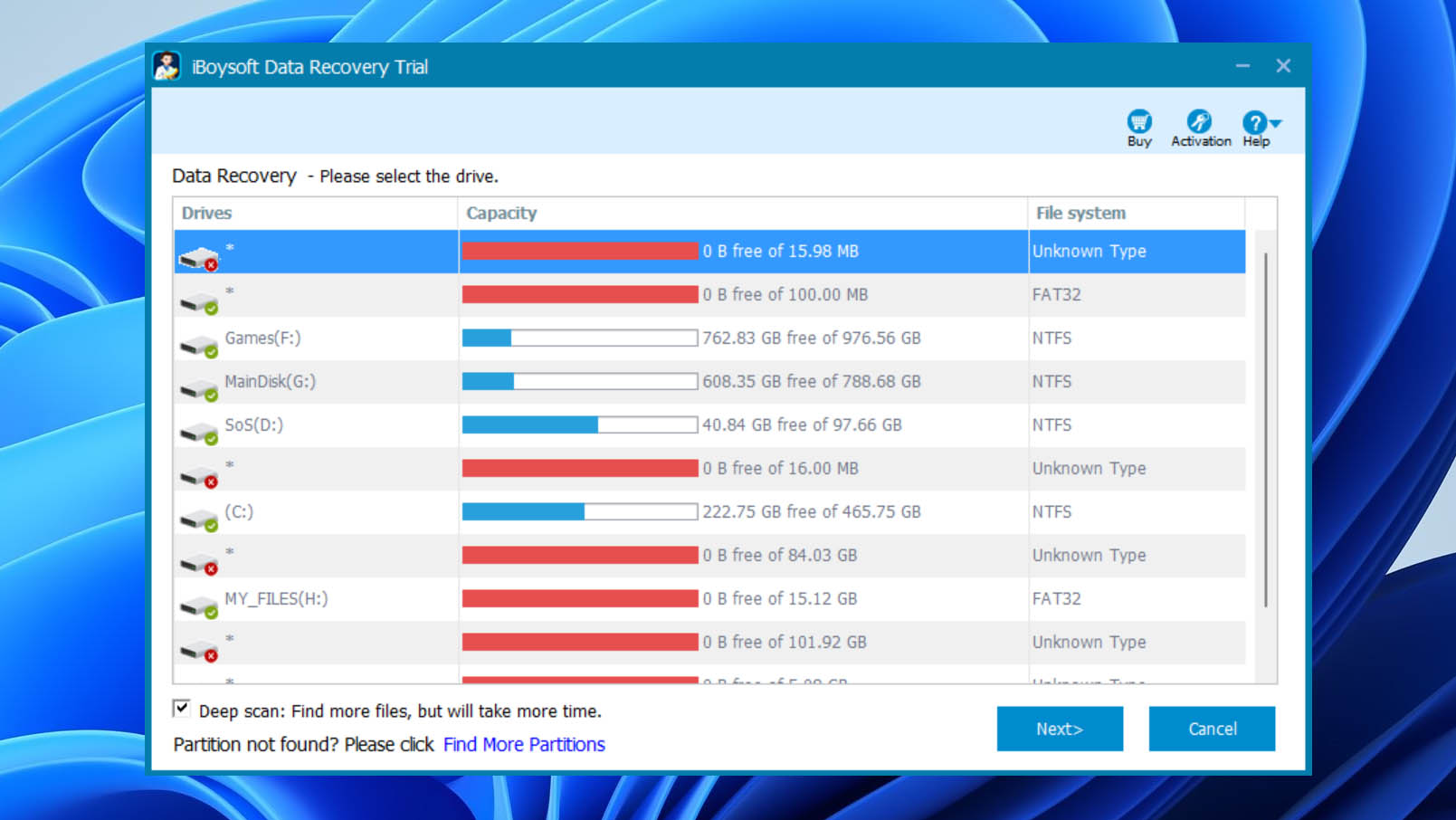
A quick reality check here: when developers say a disk is “broken” or “unusable,” they usually mean logical damage, not dead hardware. The device still needs to be detectable at a lower level by the system – you should at least see the drive in Disk Management, even if it has no letter, shows as RAW or Unallocated space. If the drive does not appear there at all, recovery software has nothing to work with.
Pre-Recovery and Preview Settings
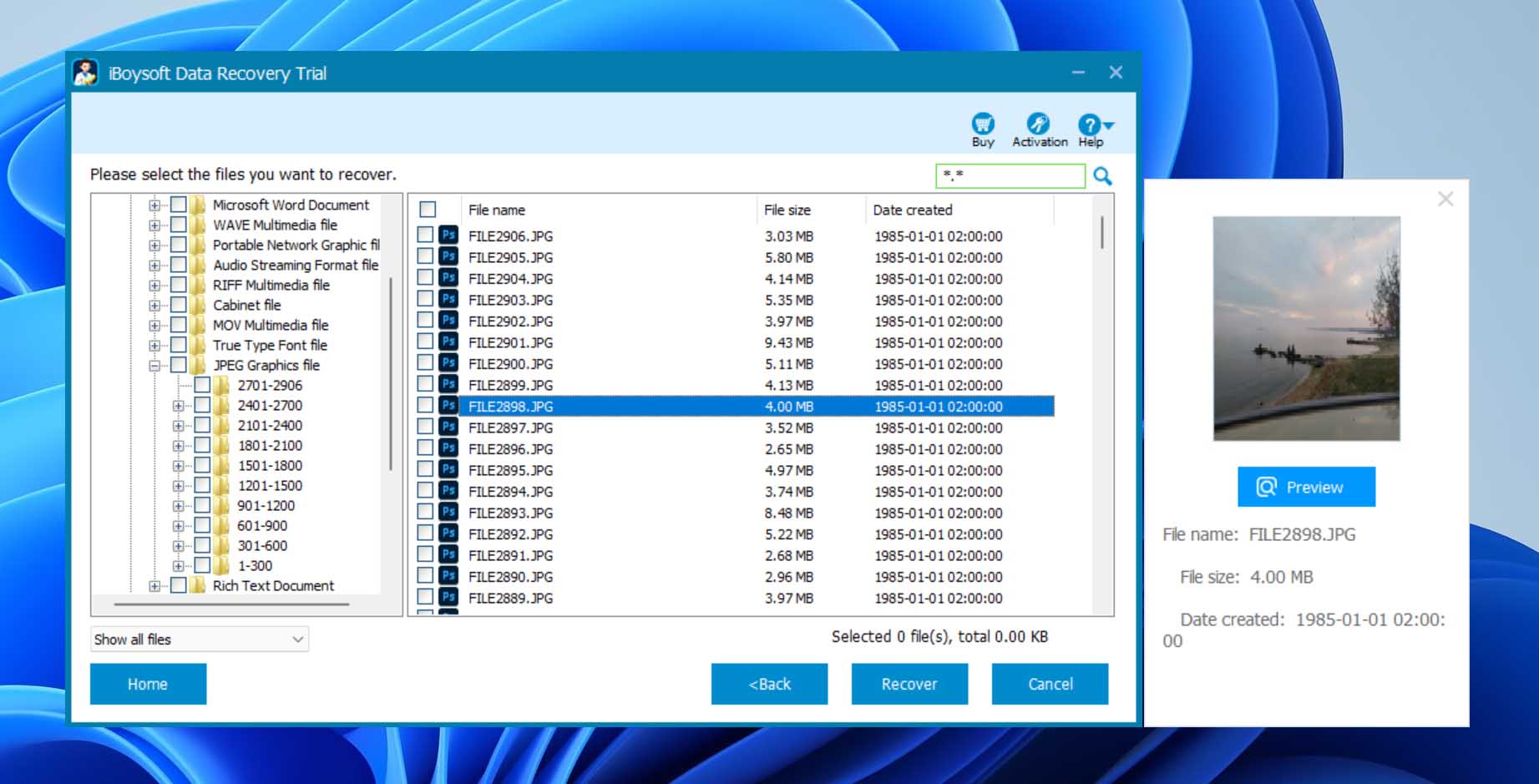
If you know the types of file extension you’d like to recover before beginning a scan, iBoysoft lets you omit all other data from the results. In addition, a handy preview tool lets you take a look at a recovered file to check it’s the correct version before restoring it to your computer.
This is fairly standard functionality you’ll find in most similar tools at this level, rather than something that stands out.
Save Session
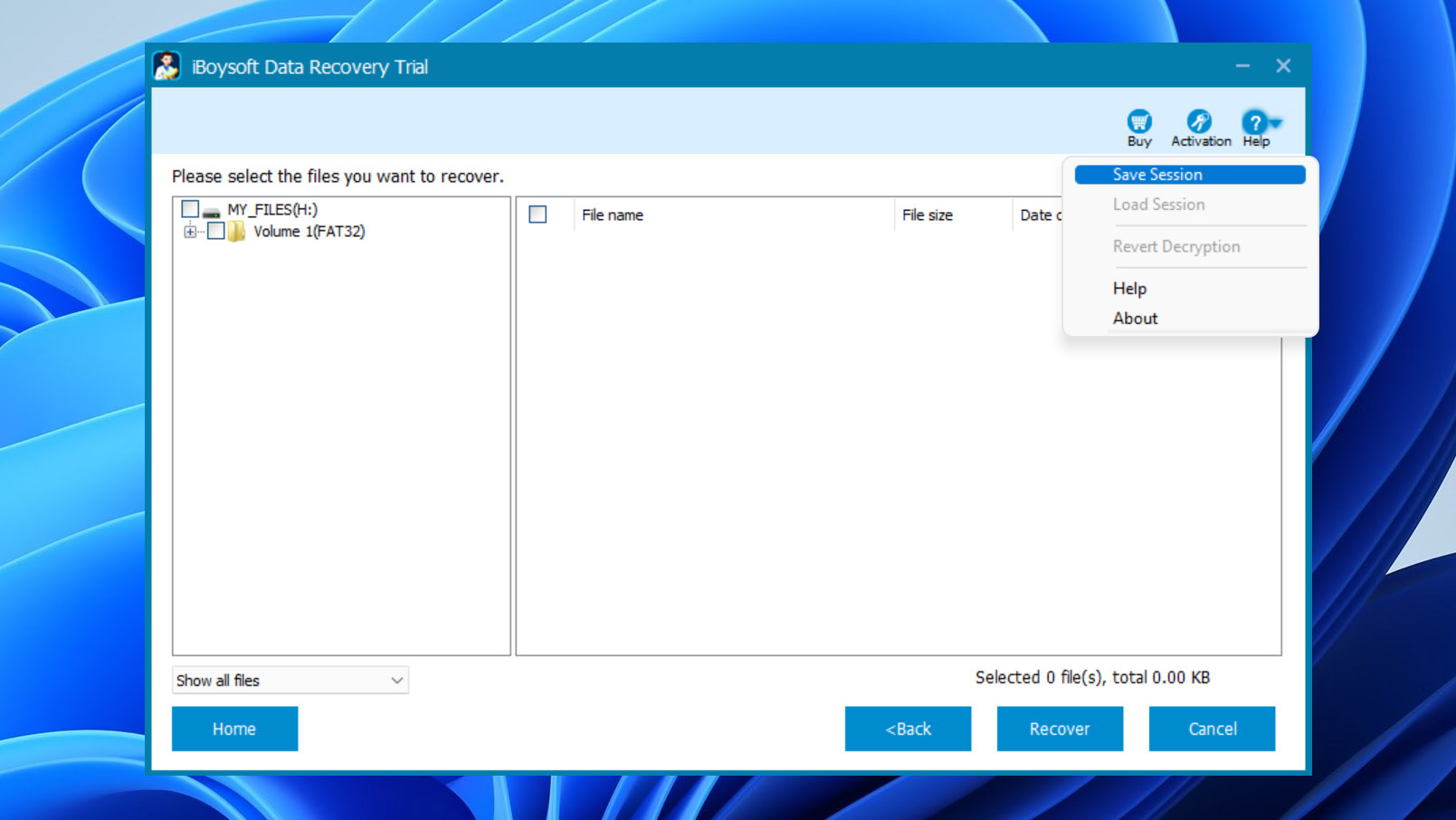
Among other usability features present in this software, there’s the ability to save a scan session and return to it later. As long as the drive’s contents haven’t changed, you can reload the results and continue recovery from where you left off.
This is an important baseline feature for tools in this category, especially when dealing with long scans or large volumes of data where finishing everything in one session isn’t always practical.
User Experience
The Windows version of iBoysoft Data Recovery is easy enough to use, but it also feels like a product that has not seen a major visual refresh in quite a while. The layout is functional: drive list on one side, scan actions up front, results in a familiar tree view. You can get around it, but the interface has that older desktop-software look many users will notice within minutes.
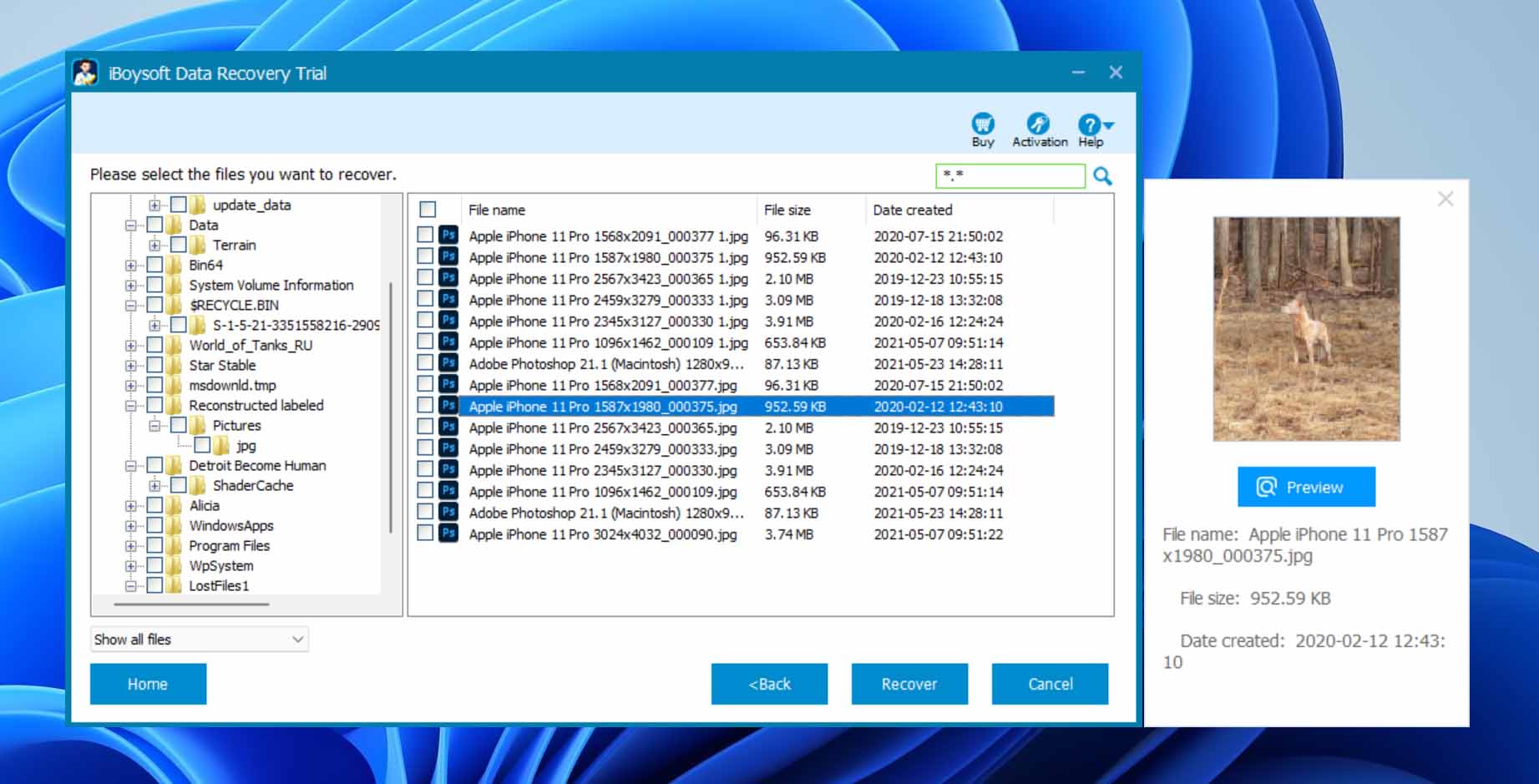
Buttons, icons, menus feel a bit dated compared with newer recovery tools. Nothing is broken, nothing feels messy, but it does not have the polished feel you now see in competitors that invested more heavily in design and workflow cleanup. During scans, progress screens are clear enough, though the experience lacks some of the smoother touches found elsewhere, like smarter preview organization or more modern file filtering.
Windows vs Mac Version Differences
The bigger story is feature parity between Windows and Mac. The macOS version looks more current and better aligned with modern UI standards. It feels like the platform that received more attention. It also includes some extras Windows users may expect but won’t find.
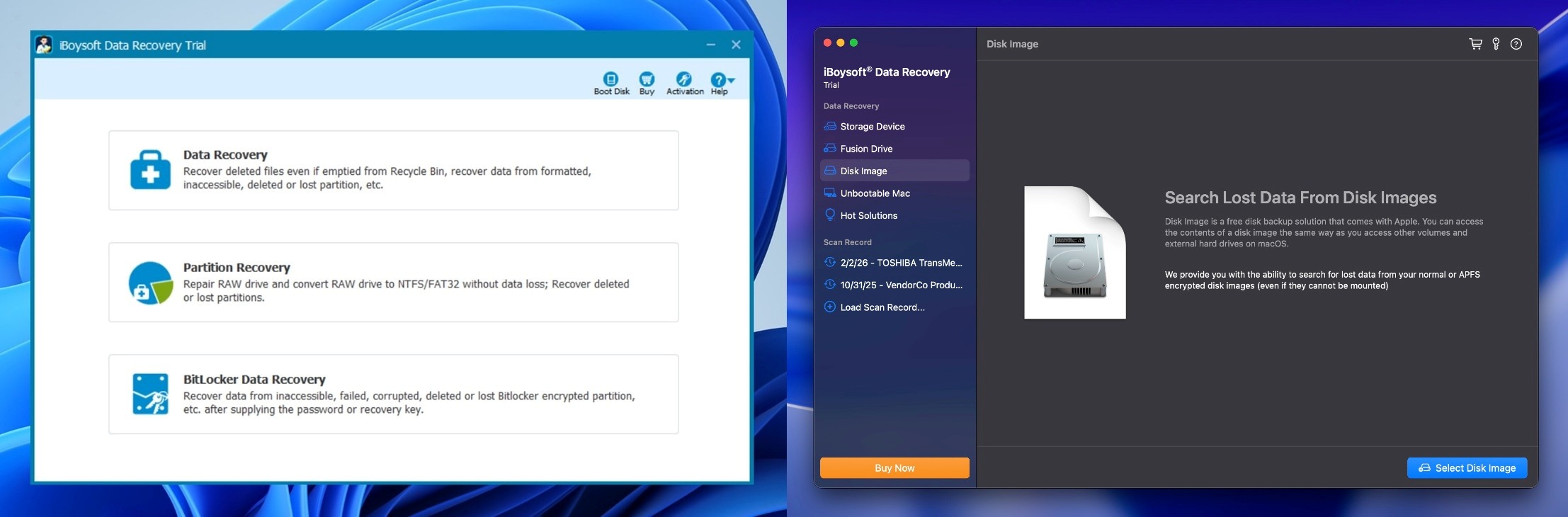
For example, the Mac version can work with disk image files, which is useful when you want to recover from a cloned drive instead of stressing failing hardware again. It also offers workflows for unbootable Macs through Recovery Mode, a good option when the system won’t start normally. Those are meaningful tools in real recovery situations. (That said, on Macs with T2 chips or Apple Silicon (M-series), hardware-level encryption means these methods will not produce recovery results for internal drives.)
The Windows version is more about standard direct-drive scanning. That keeps things simple, but it also means fewer advanced recovery paths than some rivals offer.
We’re giving iBoysoft a 3 out of 5 for features because it feels fairly barebones compared with stronger competitors in this space. It covers the baseline, but not much beyond that.
What holds the score back is the lack of standout extras. There’s no rich toolkit around backup imaging, advanced recovery modules, hardware health monitoring, deeper partition tools, broader power-user workflows that many competing apps now include. Even some functions available on the Mac version don’t fully carry over here.
Recovery Performance and How to Recover Data
Now we’re at the section most readers care about: how iBoysoft Data Recovery performs once you move past feature lists and put it on a real Windows machine.
We’ll cover what the actual experience looks like, from installation and scan flow to recovery speed, file organization, and results. For our hands-on check, we used typical scenarios people run into every day: accidentally deleted files, a formatted removable drive, and a drive Windows could no longer read properly.
Before we break down each test in detail, here’s a quick snapshot of how iBoysoft performed across our recovery runs – the full context coming right after.
| Test Case | Deleted Files / Formatted Drive | Corrupted / Unreadable Drive |
| Scanning Time | ~ 45 min | ~ 50 min |
| Total Data Recovered | ~1.84 GB | ~1.52 GB |
| Total Files Recovered | 179 | 140 |
| Documents Recovered | ~50 | ~40 |
| Photos Recovered | ~90 | ~70 |
| Videos Recovered | 22 | 17 |
| Archives / Other Files | 9 | 9 |
Our Testing Methodology
For our iBoysoft Data Recovery review, we stuck with the Windows edition, since that’s the version we’re evaluating here. We also didn’t change much from the test process we use for other mainstream recovery apps. For tools aimed at everyday users, consistency matters more than inventing dramatic torture tests.
Here’s the setup we used:
- OS: Windows 11 Pro (64-bit)
- CPU: Intel Core i7-12700K
- RAM: 32 GB DDR4
- System Drive: 1 TB NVMe SSD
- Test Device: 16 GB USB 3.2 flash drive
- Data Set: Around 2 GB of mixed real-world files
- File Mix: JPG, PNG, RAW photos, MP4/MOV videos, DOCX, XLSX, PDFs, ZIP archives, audio files
Software Version: Latest Windows build (4.3) available at the time of testing
We kept the environment clean, with no heavy background apps running and no unusual tweaks that could distort scan times. The test drive was loaded with the kind of random everyday content people actually lose: travel photos, phone videos, homework folders, work docs, compressed downloads, assorted clutter.
Our recovery scenarios were straightforward:
- 🗑️ Deleted Files – files removed permanently with Shift + Delete. No Recycle Bin.
- 💽 (Quick) Formatted Drive – the USB drive was quick-formatted after the data set was copied over – a common accidental format case.
- 📛 Corrupted / Unreadable Partition – we damaged partition metadata so the drive still appeared in Windows, but File Explorer could not open it and prompted for formatting.
These are the exact kinds of problems software like iBoysoft claims to solve.
How to Recover Data Using iBoysoft Data Recovery
Before we get into our test results, it makes sense to show how the software actually works. After all, recovery tools live or die on workflow. You can have strong scan engines, but if the app is confusing, that matters.
As we mentioned earlier, iBoysoft keeps things simple (maybe a little too simple from a design standpoint). The UI feels older and fairly stripped back, but the upside is that most people will know what to click.
Here’s how to get started:
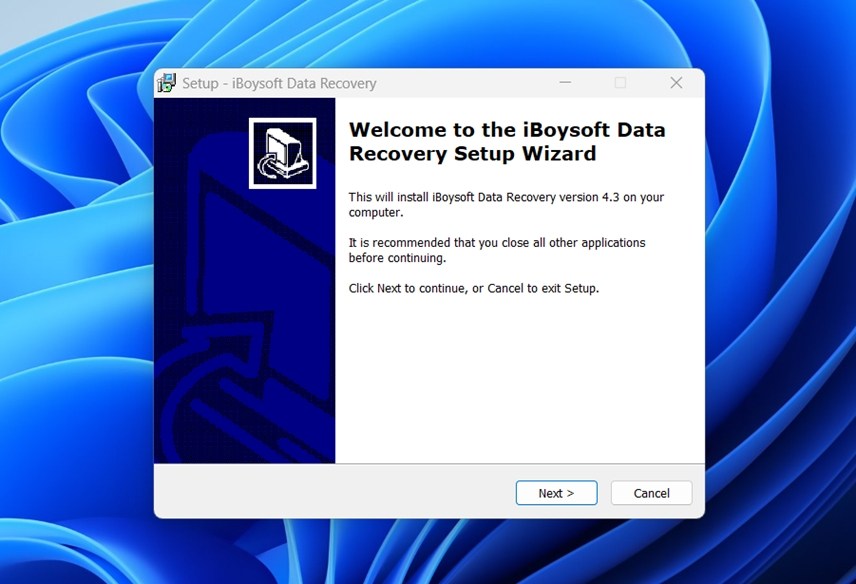
- Install the software, giving it the required permissions.
- When the program opens, you’ll see three main options: Data Recovery, Partition Recovery, and BitLocker Data Recovery.
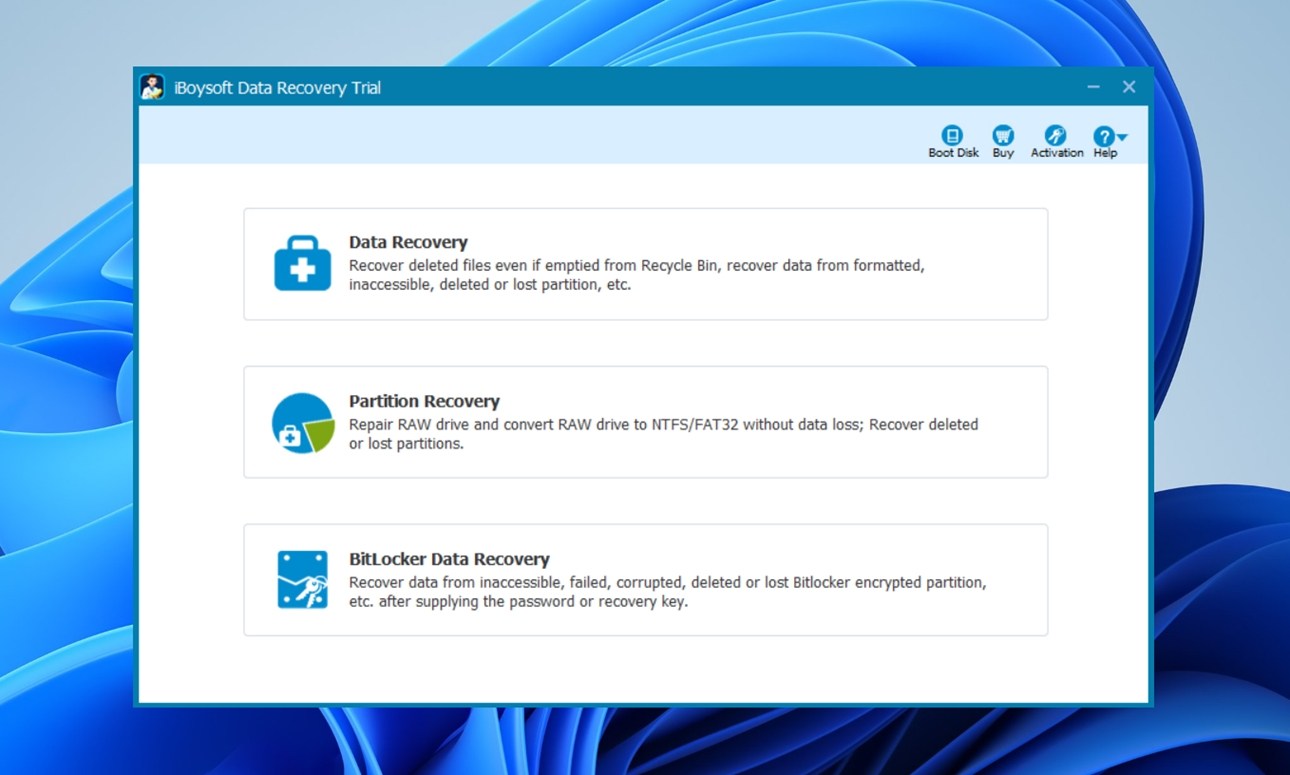
- Click Data Recovery. That’s the primary mode, the one aimed at common file loss scenarios. It’s the mode we used for the majority of our testing, since it reflects what most people will actually need.
- Then choose the drive where the files were originally stored.
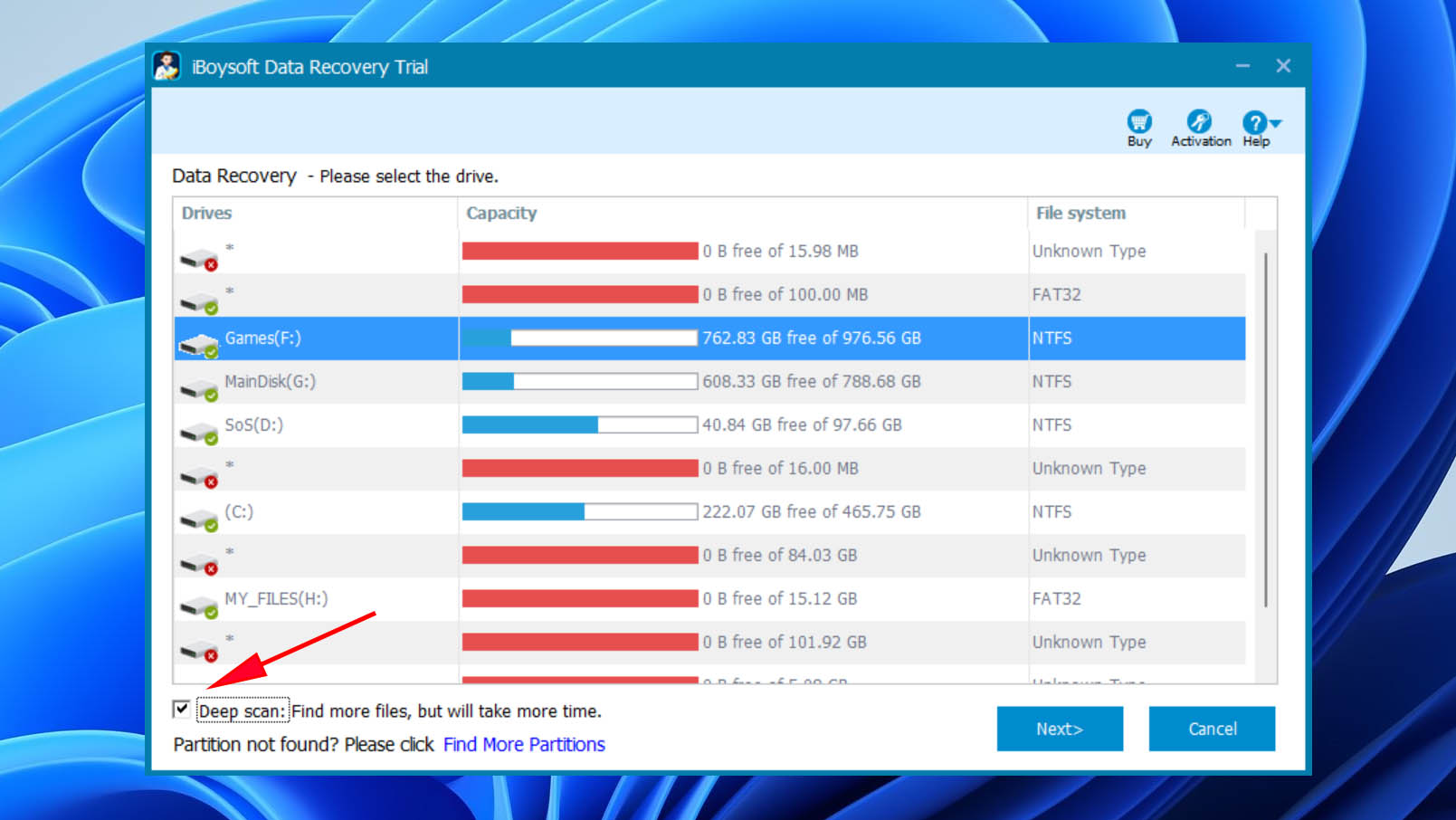
- You can also choose to use the Deep Scan feature, which will take longer to complete but will make a more thorough pass of your drive. (In cases involving a formatted drive, RAW partition, file system damage, you should absolutely use Deep Scan.)
- Click the scan button, and wait for the results.
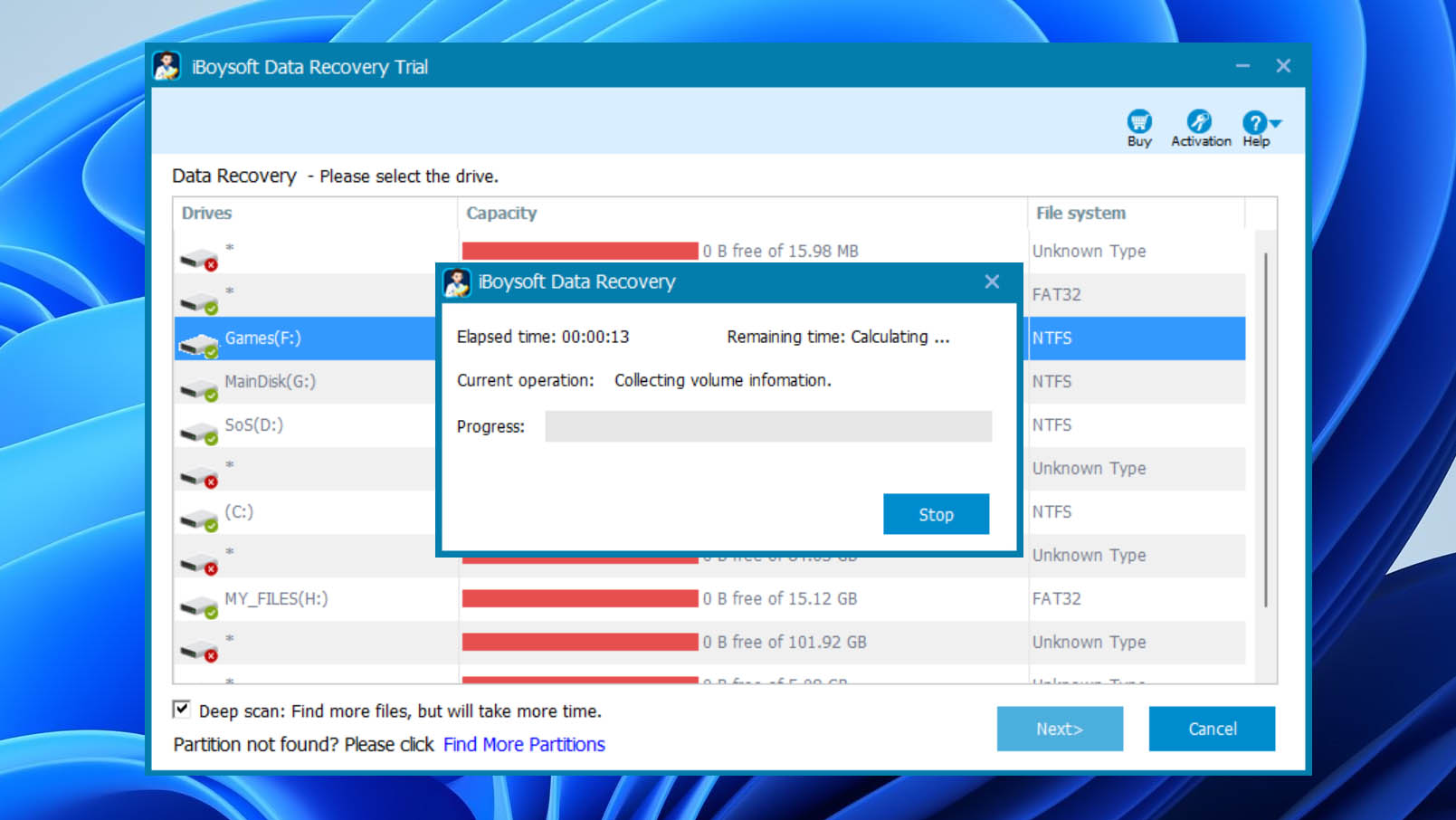
And that’s all there is to it! Once you find the files you want back, select them, click Recover, and choose a save location. One important warning: don’t restore the data to the same device you’re recovering from, since writing new files there can overwrite data that has not been recovered yet.
As for how comfortable this workflow feels, it’s decent but not especially great. Everything is straightforward, yet a few limitations show up once you start using it. One of the bigger annoyances is that you can’t preview and inspect found files while the scan is still running the way some competitors allow. You’re left waiting for the scan to finish before properly checking results.
That becomes more noticeable because scan times are not among the fastest we’ve seen. The wait can feel longer than it should. We’ll get into the actual speed numbers and performance results next.
Recovery Results
As for what we were able to recover with iBoysoft Data Recovery, the overall results landed squarely in the middle of the pack. Not terrible, but not class-leading either. That’s about what many users should expect.
- In the deleted files scenario, the software did well. This is usually the easiest test for any recovery tool, and iBoysoft handled it like it should. Almost all files came back with original names intact, folder structure was preserved, and common formats such as PDF, DOCX, JPG, MP4, CR2, XLSX, and 7Z archives opened normally after recovery. No major surprises there. Any decent recovery app should perform strongly in this type of case, and iBoysoft did.
- The other scenarios were less impressive. Once we moved into formatted drive and corrupted partition recovery, results became more mixed. File names were often missing (which can be normal when a tool relies more heavily on signature-based deep scanning). Many JPG photos and MP4 videos were still recoverable and opened fine, so it wasn’t a failure. But several larger MP4 video files came back damaged or incomplete, and some RAW photo files were not found at all. That weaker handling of fragmented or less common files lines up with what we suspected earlier: the recovery engine feels serviceable, but not especially advanced.
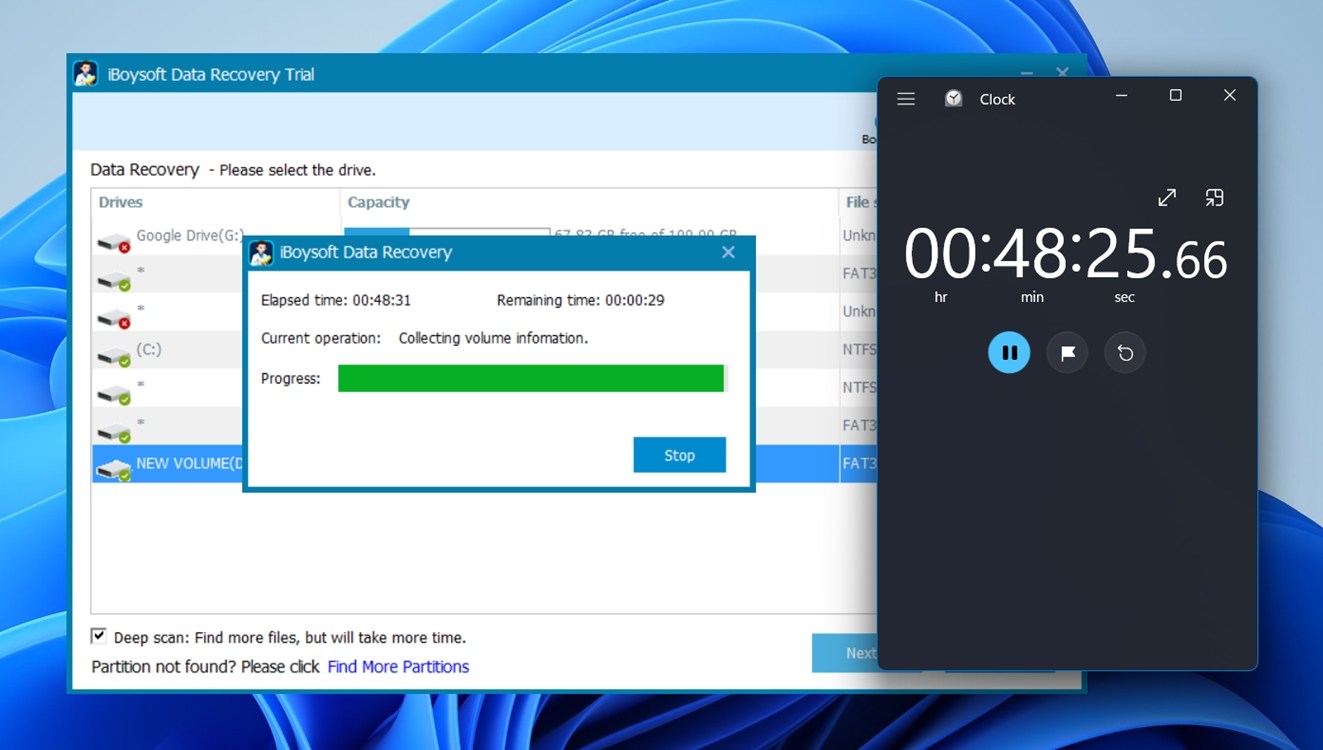
Speed was another issue. As we already mentioned, scan times were among the slowest we’ve seen in this category. A Deep Scan on a 16 GB USB 3.0 flash drive took close to 50 minutes in our test environment. Comparable apps on the same hardware often finish similar jobs in under 15 minutes (sometimes around 10). That’s a substantial gap.
The takeaway is fairly clear: iBoysoft can recover straightforward losses and many everyday file types, but its engine appears less capable in harder scenarios than stronger competitors.
We’d give recovery performance 3 out of 5, and that’s with a somewhat generous read. It sits around the middle of the market. Many people dealing with simple deletions may get what they need, but those facing more serious corruption, fragmented video files, or tougher edge cases may run into the tool’s limits faster than they’d hope.
Pricing and Plans
At the time of writing, the Windows version is split into multiple tiers, and the jump between them feels steeper than the feature differences suggest.
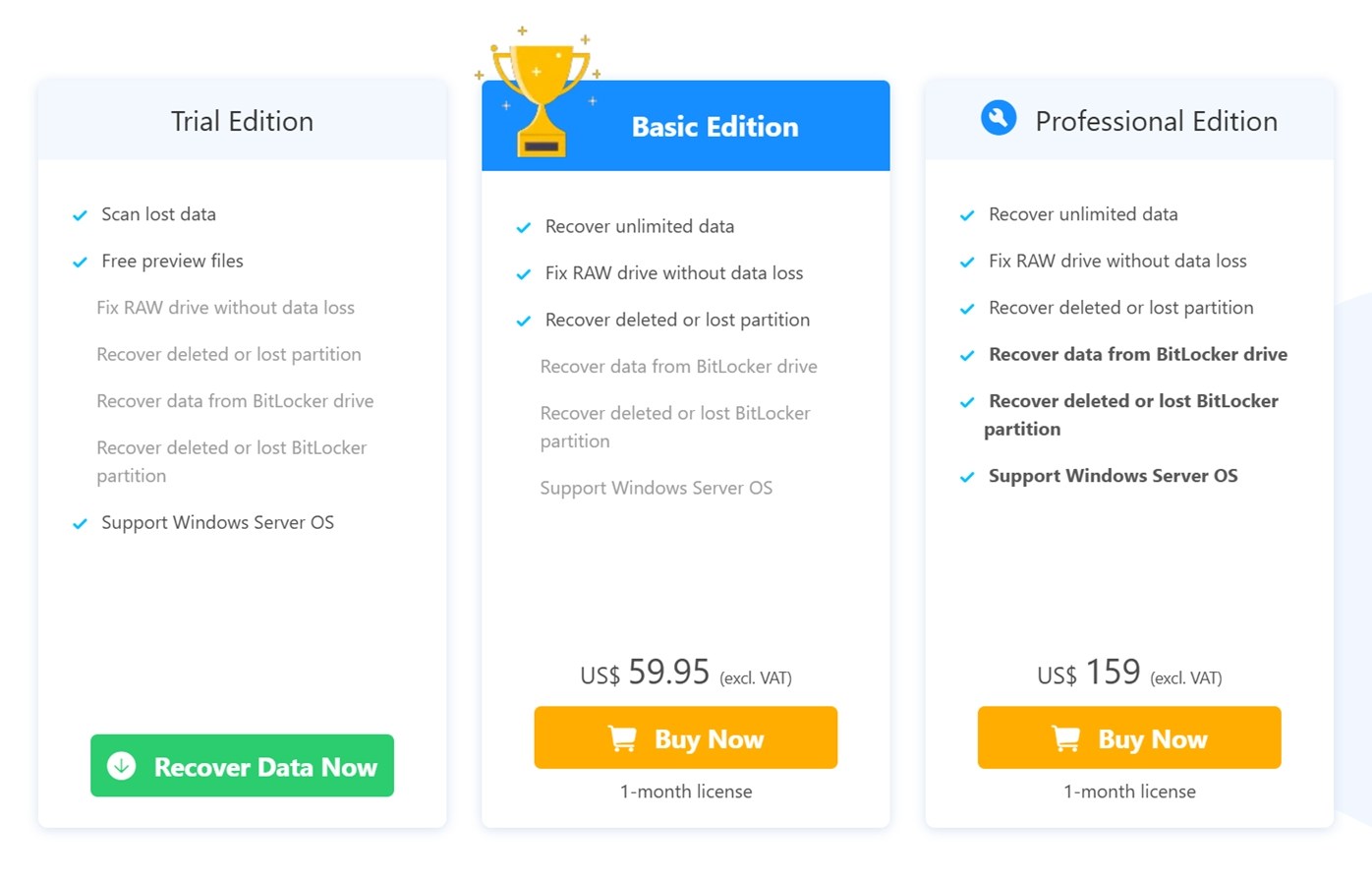
- Trial Edition – Free. Lets you scan lost data and preview files, but it does not give you full recovery. It is mainly a “check before you pay” version.
- Basic Edition – $59.95, excluding VAT. This is a 1-month license and includes unlimited recovery, RAW drive repair, and deleted/lost partition recovery. It does not include BitLocker recovery.
- Professional Edition – $159, excluding VAT. Also shown as a 1-month license. This adds BitLocker drive recovery, lost BitLocker partition recovery, and Windows Server OS support.
On first glance, the price gaps don’t feel fully matched to the feature differences you get in the higher tiers. The jump from Basic to iBoysoft Data Recovery Professional is substantial, yet for many home users the added value may only matter in specific cases like BitLocker or server environments.
That becomes clearer when you compare iBoysoft with more popular alternatives:
| Feature | iBoysoft | Disk Drill | EaseUS |
| 💰 Pricing | $59.95 Basic (1 month), $159 Pro (1 month) | $89/year, $149 lifetime | $69.95/month, $99.95/year, $149.95 lifetime |
| 🪪 License Type | Time-limited monthly tiers | Yearly or lifetime | Monthly, yearly, lifetime |
| 🆓 Free Version | Scan + preview | Up to 100 MB recovery | Up to 2 GB recovery |
| 💻 Supported OS | Windows, macOS | Windows, macOS (one license for both) | Windows, macOS |
| 🔍 Scan Modes | Quick + Deep | Quick + Deep | Quick + Deep |
| 💽 File System Support | NTFS, FAT32, exFAT, BitLocker, ReFS | FAT/exFAT, NTFS, APFS, HFS+, ext2/3/4, ReFS | NTFS, FAT/exFAT, ReFS, ext2/3, HFS+ |
| 🧰 Extra Features | RAW repair, partition tools, BitLocker recovery | Disk imaging, S.M.A.R.T. monitoring, Recovery Vault, Advanced Camera Recovery | Video repair, boot media, backup tools |
| 🎨 UI / Ease of Use | Simple but dated | Modern and polished | Modern |
| ⚡ Scan Speed (our tests) | Slow | Fast | Moderate |
Disk Drill often sits in a similar overall price range depending on promotions, but includes broader file system support, disk image tools, S.M.A.R.T. monitoring, stronger camera/video recovery options (dedicated Advanced Camera Recovery module), and licenses that feel more generous long term. In simple terms, you tend to get more software for the money.
EaseUS Data Recovery Wizard is also priced relatively competitively with one-month, yearly, and lifetime options. It commonly offers a larger free recovery allowance than iBoysoft and many rivals, and a more polished Windows UI with live scan result browsing. Whether you like EaseUS or not, the pricing structure is easier to justify for many casual users.
Again, we give pricing and value 3 out of 5. On its own, the price is not outrageous. Plenty of recovery tools charge similar numbers. The issue starts when you place iBoysoft next to direct competition – the value case weakens. Other tools in the same range often offer more generous feature sets, faster scans, or better recovery performance overall. That makes iBoysoft harder to recommend as a first pick.
Customer Reviews
As with most software we review, we also factor in general user feedback when building our final scores. Hands-on testing matters most, but long-term owner experience often reveals things short tests can miss. So for iBoysoft, we checked discussion forums, Reddit threads, Trustpilot, and other review platforms to see what everyday users were saying.
Leonardo (G2.com)
“I fully trust its effectiveness for recovery and I would like to have this application for Linux, but unfortunately it is only developed on Mac and Windows.”
Dale Stogryn (Trustpilot)
“The product is very useful but not as intuitive to set up and use as it could be.”
Yantheuser (Macupdate.com)
“Useless after a reformat. Found a lot of my missing files, but all recovered files came out damaged and were unreadable. I couldn’t get a refund at all even when I contacted support.”
MacMac (Trustpilot)
“The application does what it is supposed to do, but it is unstable and crashes from time to time.”
The feedback is mixed, which usually tells you something. There are clearly people who had successful recoveries and were happy they found the software. Some users also praised the straightforward interface and said the tool found files other apps missed.
On the other side, complaints were common enough that they can’t be ignored. The most repeated issues involved pricing frustration, trial limitations, refund disputes, scan speed, and results that did not meet expectations.
Final Verdict
We gave iBoysoft Data Recovery 3 out of 5 in each major category, so the math is pretty simple here:
That score reflects a tool that is competent, but hard to get excited about in a crowded market. It can recover deleted files, handle some formatted / corrupted drive cases, and the interface is simple enough that most people won’t feel lost. If your recovery needs are modest, it may do the job.
Where the score stalls is consistency and value. In most cases, you’d be better off with Disk Drill. It’s more versatile, easier to use, faster in scans, and much more comfortable during recovery thanks to real-time previews while the scan is still running. It also gives you extra tools: disk imaging, Advanced Camera Recovery for fragmented video files, disk health monitoring, Recovery Vault, and more. That makes Disk Drill feel like a fuller recovery toolkit. It delivers better bang for the buck.
So who is iBoysoft Data Recovery for? It can still find a place on the computers of people with straightforward “undelete” needs. But there are simply a lot of better alternatives once you start comparing.
FAQ
Yes – generally, iBoysoft Data Recovery is a legitimate and safe recovery tool, not malware or spyware, when downloaded from the official iBoysoft website or trusted app stores. The recovery scans are performed locally and the software does not upload your files during normal recovery use.
A few practical notes:
- Use the official source only. Avoid random download sites or cracked copies.
- Granting permissions is normal. Recovery apps often request full disk access.
- Read-only scanning is a good sign. iBoysoft uses read-only access during scanning, which is standard for safer recovery tools.
- Safety and legitimacy are separate from effectiveness – whether it works well for your case depends on the device, file system, and data loss scenario.
Yes and no. iBoysoft Data Recovery offers a free trial/free edition that lets you scan drives, preview recoverable files. Full unlimited recovery requires a paid license.
No, there is no official iBoysoft Data Recovery portable edition in the same sense as a no-install Windows portable app you run directly from a USB stick. iBoysoft Data Recovery is distributed as a standard installer for Windows and as a regular app package for macOS.
